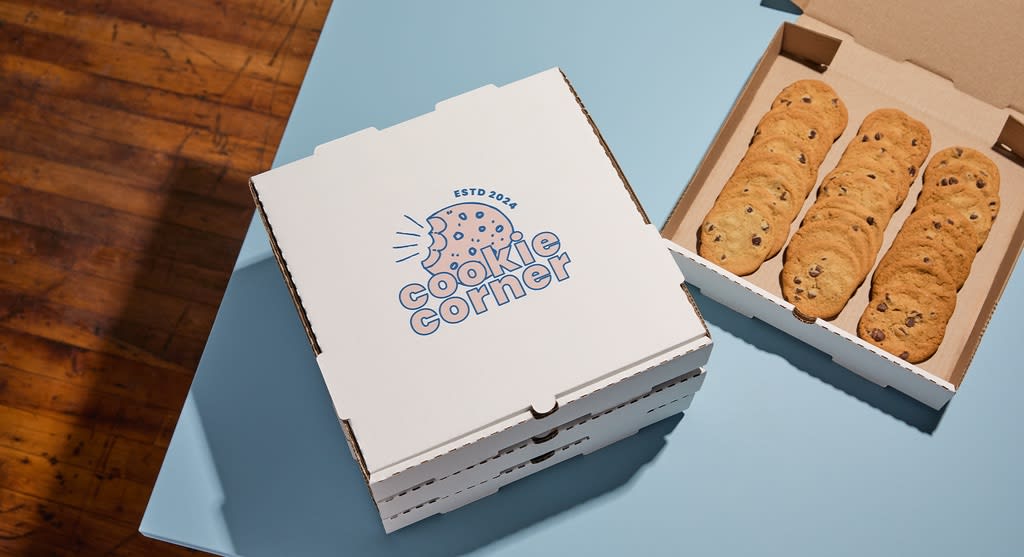
Food and beverage packaging has a lot to handle. It protects shelf life, survives transport, communicates ingredients, carries branding, supports compliance and shapes how a product feels before anyone tastes it. In many cases, it also needs to look good under grocery store lighting, hold up in delivery bags and still make sense in a customer’s camera roll five minutes later.
That’s where things start to get complicated. Businesses are expected to balance sustainability, cost, usability and growing digital expectations all at once. The good news is that food and beverage packaging becomes far more manageable once you break it into clear decisions.
This guide covers the main packaging types and materials, how to choose the right solution for your product, practical design and branding considerations, ways to build stronger “phygital” experiences as well as the food and beverage packaging trends shaping 2026.
- Food and beverage packaging needs to protect products, preserve quality and meet safety, usability and compliance requirements.
- Packaging influences customer behavior by shaping first impressions, convenience, perceived quality and repeat purchase decisions.
- Popular food and beverage packaging materials include paperboard, plastic, glass, aluminum and compostable alternatives.
- Creating effective packaging starts with defining product needs, then selecting the right material, format, structure and branding approach.
- Key food and beverage packaging trends for 2026 include smart eco-packaging, inclusive packaging design, connected packaging and tactile premium finishes.
What makes food and beverage packaging different from other packaging?
Every product category comes with its own packaging demands. Electronics need shock protection. Cosmetics lean on aesthetics and shelf appeal. Food and beverage packaging plays a tougher game. It has to handle perishability, meet strict safety requirements and hold up from kitchen prep to customer delivery, often across several touchpoints.
For small businesses, that raises the stakes. A single piece of packaging has to support the product and represent the brand at the same time, with little margin for mistakes along the way.
Here’s how those responsibilities break down in practice.
The five core jobs of food and beverage packaging
At a practical level, every packaging choice ties back to a small set of functions. If one falls short, it usually shows up in wasted product, negative reviews or lost repeat orders.

- Protect the product: Guard against contamination, crushing, leaks and exposure to light, oxygen, grease or moisture. Poor protection tends to fail before the food reaches the customer.
- Preserve freshness and quality: Help maintain texture, flavor and shelf life by managing airflow, humidity and temperature impact. This is what keeps food consistent beyond the point of prep.
- Inform clearly: Include required labeling along with useful storage or reheating guidance. Clear information cuts down on confusion and unnecessary customer support.
- Support sales through branding: Shape how the product is perceived through design, messaging and structure. This is where inclusive packaging design plays a visible role in attracting and retaining customers.
- Perform across real-world use: Hold up across shelves, fridges, freezers, takeout bags, delivery apps, shipping boxes and customer homes. Weak performance at any stage tends to reflect back on the brand.
Why food and beverage packaging has stricter demands than many other product categories
Those five core jobs carry more weight in food and beverage packaging because the margin for error is smaller and the consequences show up faster. A dented box is an inconvenience. A leaking container or mislabeled ingredient can lead to lost customers or legal compliance issues.
In practice, every packaging decision has to account for a tighter set of constraints:
- Direct or indirect food contact: Materials must be food-safe and suitable for the specific product, whether they touch the contents directly or act as a barrier.
- Temperature sensitivity: Packaging needs to perform across hot, cold or frozen conditions without breaking down or affecting the product.
- Spoilage risk: Oxygen, moisture and light exposure need to be controlled to prevent early degradation.
- Material migration concerns: Inks, coatings and adhesives must not transfer harmful substances into food or drinks.
- Legal labeling requirements: Ingredients, allergens and other mandatory information have to be accurate, visible and compliant.
- Ease of use: Customers expect packaging that works in real life – easy to carry, open, reseal and dispose of without friction.
These constraints shape how packaging is designed, produced and experienced. They also set the stage for the role packaging now plays in influencing where people choose to eat and drink.
How branding shapes where people eat and drink now
Packaging decisions don’t stay behind the counter anymore. It appears in Google results, delivery apps and social feeds, often before anyone has tasted the food.

Source: Food packaging design by Luz Viera Studio via 99designs by Vista
On the shelf, it still competes in crowded, fast-moving environments. Online, it’s reduced to a thumbnail where clarity matters more than detail. And that first impression carries a lot of weight. VistaPrint’s research shows 92% of consumers care about packaging and presentation, with 41% saying it’s very important.
The interaction continues after purchase. Packaging arrives, gets opened and becomes part of the meal. When it feels considered, people notice. In fact, about 35% of customers say they’ve shared food online because the presentation stood out.

That same impression carries into the next purchase decision. Nearly two-thirds of consumers, 62%, say packaging quality has influenced whether they would order again, with an even stronger impact among younger audiences.
Check how your packaging appears at thumbnail size on delivery apps. If key elements don’t read instantly, refine the design before scaling production.
The different types of food and beverage packaging by function
You’ll often see packaging grouped into three layers.
- Primary packaging touches the product directly.
- Secondary packaging groups items together and supports branding.
- Tertiary packaging protects products during shipping and storage.
While useful shorthand, it mainly explains structure, not how packaging performs in real use. Day to day, the more practical question is simple: what does this packaging need to do?
Looking at packaging through that lens makes decisions easier, especially when you’re balancing cost, compliance and customer experience.
| Function | What it does | Why it matters | Typical formats | Best for |
| Moisture barrier packaging | Prevents humidity & water ingress | Keeps texture intact, avoids sogginess or drying out | Sealed pouches, coated paper wraps | Chips, baked goods, powders |
| Grease-resistant packaging | Stops oil from soaking through | Maintains structure & cleaner handling | Waxed paper, lined boxes, wraps | Pastries, burgers, fried foods |
| Oxygen barrier packaging | Limits air exposure | Extends freshness & preserves flavor | Vacuum packs, sealed bags | Coffee, snacks, dried goods |
| Light barrier packaging | Blocks UV & visible light | Protects sensitive ingredients from degradation | Opaque bottles, cartons | Juices, oils, beverages |
| Tamper-evident packaging | Shows if a product has been opened | Builds trust & supports safety expectations | Seals, stickers, shrink bands | Bottled drinks, takeaway |
| Temperature-resistant packaging | Withstands hot, cold or freezing conditions | Essential for delivery & storage performance | Insulated cups, freezer-safe containers | Coffee, soups, frozen meals |
| Resealable packaging | Allows multiple uses after opening | Adds convenience & reduces waste | Zip pouches, screw caps | Snacks, coffee, pantry items |
| Portion-control packaging | Provides pre-measured servings | Supports on-the-go use & consistency | Sachets, small tubs | Sauces, meal kits |
| Eco-friendly / smart eco-packaging | Reduces environmental impact through material choice & design | Helps meet sustainability expectations & regulations | Paper-based packs, mono-material designs | Takeaway, retail |
| Connected packaging | Adds a digital layer through scannable elements | Enables engagement, product info & traceability | QR labels, scannable codes | Beverages, packaged goods |
Most packaging solutions combine several of these functions. A takeaway container, for example, may need to be grease-resistant, temperature-stable and tamper-evident at the same time.
Once you’ve identified which functions your packaging needs to perform, the next step is choosing materials that can deliver those properties.
Popular food and beverage packaging materials and when to use each one
Material choice drives how your packaging performs, how it’s perceived and how much it costs to run at scale. Before comparing options, it helps to look at the key characteristics that shape those outcomes.
When choosing the type of packaging materials, you’re usually balancing:
- Barrier properties: Resistance to moisture, oxygen, grease and light
- Strength and durability: How well it holds up during handling and transport
- Temperature resistance: Performance across hot, cold or frozen conditions
- Weight and transport efficiency: Impact on shipping costs and storage
- Printability and surface quality: How well your branding shows up
- Sustainability and disposal: Recyclability, compostability and regulatory fit
With that lens in place, here are the materials you’ll most likely work with.
Paper and paperboard
For many small brands, paper and paperboard are the natural starting point. You’ll see them across cartons, sleeves, labels, takeaway boxes, folding cartons and coated cups. They’re widely available, easy to print and familiar to customers.

Source: Packaging design by KisaDesign via 99designs by Vista
Core characteristics:
- Lightweight and semi-rigid
- Smooth surface that supports high-quality printing
- Can be coated or lined for added resistance
| Benefits | Limitations |
| Strong branding surface with clean print results | Limited natural resistance to moisture & grease |
| Widely recyclable & easy for customers to understand | Often requires coatings or liners for certain foods |
| Cost-effective across many applications | Can weaken when exposed to liquids without protection |
Best for: Dry goods, bakery, takeaway, branded outer packaging and labels.
Corrugated cardboard
Once packaging needs to move through delivery or shipping, corrugated cardboard becomes essential. Its structure is designed to absorb impact and protect contents in transit.

Source: Packaging design by 1990_design via 99designs by Vista

Source: Packaging design by goopanic via 99designs by Vista
Core characteristics:
- Multi-layer structure with a fluted inner layer
- Strong and impact-resistant
- High strength-to-weight ratio
| Benefits | Limitations |
| Protects products during transport | Limited resistance to moisture & grease unless treated |
| Lightweight relative to strength, helping control shipping costs | Not suitable for direct food contact without liners |
| Customizable in size, structure & print | Bulkier than flexible options, takes up more storage space |
| Widely recyclable & aligned with sustainability expectations | Can lose strength in humid conditions |
Best for: Shipping, meal-kit transit, beverage case packs, bakery delivery, tertiary packaging.
Plastic formats (PET, HDPE, PP and flexible films)
Plastic covers a wide range of everyday formats, from clear beverage bottles and deli tubs to pouches and films. It remains widely used because it handles moisture, extends shelf life and prevents leaks.

Source: Packaging design by ProveMan via 99designs by Vista
Caption: Source: Packaging design by goopanic via 99designs by Vista
Core characteristics:
- Available in rigid and flexible formats
- Strong barrier against moisture and oxygen
- Can be transparent or opaque
| Benefits | Limitations |
| Extends shelf life by limiting exposure to air & moisture | Recycling can be complex, especially for multi-layer formats |
| Durable & resistant to leaks or breakage | Environmental perception challenges |
| Lightweight, reducing transport costs | Requires careful selection to ensure food-safe use |
| Versatile across many product types |
Best for: Bottled beverages and cold drinks, snack packaging, sauces, dips and ready-to-eat items, products requiring longer shelf life.
Glass
Glass is often chosen where product quality and presentation carry more weight than logistics efficiency. It’s common in premium categories where taste integrity matters.
Source: Packaging design by Windmill Designer™ via 99designs by Vista
Core characteristics:
- Rigid and non-porous
- Impermeable to gases and liquids
- Available in clear or tinted formats
| Benefits | Limitations |
| Preserves flavor & product quality effectively | Heavy, increasing transport costs |
| Creates a premium look & feel | Fragile and prone to breakage |
| Fully recyclable without quality loss | Less practical for on-the-go use |
Best for: Sauces, jams, premium beverages and products where flavor neutrality is important
Aluminum and metal
Metal packaging is built for stability and long shelf life. It’s commonly used for products that are sensitive to light and air or need extended storage.

Source: Packaging design by Pepper Pack Design via 99designs by Vista
![Blue metal cookie tin with illustrated city skyline and premium cookies branding]](data:image/svg+xml;base64,PHN2ZyB4bWxucz0iaHR0cDovL3d3dy53My5vcmcvMjAwMC9zdmciIHdpZHRoPSI3NTAiIGhlaWdodD0iNjAwIj48cmVjdCB3aWR0aD0iMTAwJSIgaGVpZ2h0PSIxMDAlIj48YW5pbWF0ZSBhdHRyaWJ1dGVOYW1lPSJmaWxsIiB2YWx1ZXM9InJnYmEoMTUzLDE1MywxNTMsMC41KTtyZ2JhKDE1MywxNTMsMTUzLDAuMSk7cmdiYSgxNTMsMTUzLDE1MywwLjUpIiBkdXI9IjJzIiByZXBlYXRDb3VudD0iaW5kZWZpbml0ZSIgLz48L3JlY3Q+PC9zdmc+)
Source: Packaging design by Sonia Maggi via 99designs by Vista
Core characteristics:
- Strong barrier to light, oxygen and moisture
- Rigid or semi-rigid structure
- Conducts temperature efficiently
| Benefits | Limitations |
| Extends shelf life & protects sensitive products | Higher material cost compared to some alternatives |
| Durable & resistant to damage | Opaque, so product visibility is limited |
| Highly recyclable & widely accepted | Less flexible in format compared to plastics |
Best for: Cans, closures, tins and specialty packaged foods
Compostable and bio-based options
These materials are gaining traction as sustainability expectations and regulations evolve. They’re often used by brands aiming to reduce reliance on conventional plastics.

Core characteristics:
- Made from plant-based or renewable sources
- Designed to break down under specific conditions
- Performance varies depending on material
| Benefits | Limitations |
| Supports sustainability positioning & brand values | Often more expensive than conventional materials |
| Reduces reliance on fossil-based inputs | Requires specific disposal infrastructure |
| Appeals to environmentally conscious customers | Barrier performance can be lower than traditional plastics |
Best for: Takeaway packaging, short shelf-life products, events, catering and sustainability-focused brands
Enhancements that can change how your packaging performs
In many cases, the base material is only part of the decision. Coatings, liners and adhesives are often added to improve how packaging performs – especially in the food and beverage industry.
- Coatings and liners: Add resistance to moisture, grease or heat, allowing materials like paperboard to handle foods that would otherwise damage them.
- Adhesives: Ensure labels and seals stay intact across refrigeration, freezing and condensation without peeling or failing.
These additions expand what each material can do, which is why most packaging solutions rely on a combination of components rather than a single material choice.
How to create effective food and beverage packaging
Once you understand what different materials can do, the next step is putting them to work in a way that fits your product, your operations and your brand.
Step 1: Define what your packaging needs to do
Every decision that follows depends on this step, so it’s worth getting it clear upfront.
- Product needs: Is it hot, cold or frozen? Dry, oily, wet, carbonated or fragile? Short shelf life or long shelf life?
- Channel needs: Is it sold in person, shipped, delivered or stocked in retail?
- Compliance needs: What information must be included, such as ingredients, allergens or storage instructions?
- Budget and order quantity: Are you testing a product or scaling production?
- Brand expression: What should it communicate at a glance, whether that’s premium, fun, functional or health-focused?
Step 2: Choose the right packaging solution for your product
With your requirements set, this is where you narrow down to a specific direction – not every option that could work, but the one that makes the most sense for your product and channel.
Start by eliminating what won’t hold up:
- Product type: Rules out incompatible formats immediately (e.g. hot soup rules out thin paper wraps, oily foods rule out uncoated paper, carbonated drinks rule out anything that can’t hold pressure)
- Barrier needs: Removes materials that won’t protect the product (e.g. products sensitive to air or moisture eliminate basic paper formats without liners or films)
- Sales channel: Limits what can survive delivery, shelf or shipping (e.g. delivery removes fragile or leak-prone options, retail shelves require more structure and visual consistency)

Source: Food packaging design by Diggitigirl ♥ via 99designs by Vista
Then compare what’s left based on how it performs in day-to-day use:
- Will it stay intact in a delivery bag or shipping box?
- Does it hold its shape when hot or chilled?
- How does it affect packing speed and storage space?
- Will your branding still look clean after handling?
- Does it meet sustainability expectations for your audience?

Source: Food packaging design by gromovnik via 99designs by Vista
A couple of quick examples. Fried takeaway typically narrows down to coated paperboard boxes or lined wraps, since they handle grease and heat without collapsing. A cold-pressed juice, on the other hand, usually ends up in PET or glass bottles, where visibility and protection from air matter more than insulation.
Step 3: Select packaging format and structure
Once you’ve narrowed down the material, the next decision is how that material takes shape in the real world.
Start with the format. A rigid container, a flexible pouch, a bottle or a simple wrap all handle products differently. Some protect better – others save space, cost less or are easier to use on the go.
Then look at portioning. Single-serve packs are easier to grab and go, and help with consistency. Multi-serve formats reduce packaging overall and often feel like better value, especially for retail.

Source: Food packaging design by katerina k. Via 99designs by Vista
Structure is where small details start to matter. Can it be stacked without collapsing? Will it hold up in a delivery bag? Does it need to reseal, or stay tightly closed after opening? These choices directly affect how the product travels and how it’s used.
Finish with the basics of handling. If it’s awkward to open, hard to carry or messy to use, customers notice. The best formats stay out of the way and make the product easy to enjoy, wherever it ends up.
Step 4: Design your F&B packaging
With structure in place, design turns that packaging into something customers recognize and trust.
At a minimum, your packaging needs to include:
- Product name
- Ingredients
- Allergens
- Storage instructions
- Business information
- Barcode or QR code
If you need a deeper dive, these product packaging design tips cover the fundamentals.
Visual hierarchy
When designing, remember that customers don’t read packaging line by line – they scan. So, what they notice first should be deliberate, usually the product name, followed by a key benefit or claim.

Source: Food packaging design by Advant7 via 99designs by Vista
For “Better For You” products, that often means bringing claims like protein content, non-GMO or low sugar forward so they’re easy to spot without effort. These cues shouldn’t compete with each other or get buried in small text.
Clutter works against you here. Too many badges, icons or messages dilute the impact. Prioritize what matters most and let the rest support it quietly. Visual structure can help improve scannability when information must be included.
Brand expression
Design should follow a clear system. Color, type and tone need to match the category and price point, whether that’s clean and minimal for health-focused products or bold and playful for snacks.

Source: Food packaging design by Luz Viera Studio via 99designs by Vista

Source: Food packaging design by Luz Viera Studio via 99designs by Vista
Keep it consistent across channels. The packaging should align with your website, menu or in-store setup. When those elements don’t match, it creates confusion and weakens recognition.
Step 5: Make your packaging compliant
Before anything goes into production, confirm that your packaging meets food, labeling and material requirements. Fixing compliance issues after packaging has already been printed tends to be expensive.
Make sure that:
- Required product information is visible and easy to read: Ingredients, allergens, storage instructions and mandatory labeling should be clear and easy to locate.
- Food-contact materials are appropriate for the product: Packaging materials, coatings and adhesives should be suitable for the contents they come into contact with.
- Labels and seals perform reliably in real conditions: Refrigeration, freezing, moisture and regular handling should not cause them to peel, smudge or fail.
- Sustainability requirements are considered early: Regulations such as Extended Producer Responsibility (EPR) increasingly tie packaging costs and obligations to factors like material type, weight and recyclability.
- Disposal instructions are clear and accurate: Recycling and disposal guidance should help customers handle packaging correctly.
Skipping this step tends to create problems later, usually when it’s more expensive to fix.
Step 6: Prototype, test and refine
Finally, this is where plans get tested. What works on paper doesn’t always hold up in real conditions.

Run your packaging through the situations it will actually face:
- Transport: Movement, stacking and handling during delivery or shipping
- Temperature: Exposure to heat, refrigeration and freezing
- Moisture and grease: How it reacts to condensation or oily products
- Labels: Adhesion, smudging and wear over time
- Usability: How easy it is to open, read and handle in context
Food and beverage packaging trends for 2026
Nowadays, food and beverage packaging is moving toward clearer communication, smarter material use and stronger customer interaction.
Smart eco-packaging and mono-material design
Sustainability is becoming more practical and more measurable. Brands are simplifying packaging structures to improve recyclability and reduce material complexity.
Source: Packaging design by P.D.S. via 99designs by Vista
Key shifts towards sustainable packaging include:
- Mono-material pouches and wrappers that are easier to recycle
- Fewer mixed layers, foils and hard-to-separate coatings
- Clearer disposal and recyclability labeling
- Lightweight formats that reduce shipping impact
Need inspiration? Check out our eco-friendly packaging ideas across product lines.
Inclusive packaging design
Packaging is being designed for a wider range of users from the start. That includes clearer typography, stronger contrast, easier-open formats and layouts that reduce friction for older or younger customers, visually impaired shoppers or people using products on the go.
Resealable packs that are easier to grip, labels that stay readable under refrigeration and straightforward instructions all improve usability without changing the product itself.
Connected packaging and digital experiences
QR codes are becoming a standard part of food and beverage packaging, but their role is expanding beyond basic product pages. Brands are using connected packaging to link customers to sourcing details, loyalty programs, recipes, subscriptions and limited campaigns directly from the label.
This is also happening alongside the gradual shift toward 2D barcodes, which are expected to become more common across retail systems by 2027. As packaging takes on more digital functions, layout and scannability are starting to shape design decisions earlier in the process.
Better-for-you branding and functional front-of-pack design
BFY brands are prioritizing speed and clarity in how products communicate on shelf.

Source: Food packaging design by Stefan Tomic via 99designs by Vista
The strongest designs make key information immediately visible:
- Protein content
- Sugar reduction
- Non-GMO, organic and regenerative claims
- Functional ingredients
- Flavor identification
- Sustainable sourcing
At the same time, layouts are becoming cleaner and more structured, with less clutter, stronger hierarchy and faster scanning in retail and delivery environments.
Right-weighted premium packaging
Premium packaging is becoming more selective. Instead of adding weight everywhere, brands are focusing on the areas customers actually notice: closure quality, label texture, structural rigidity or print finish.

Source: Packaging design by 7plus7 via 99designs by Vista
This “rightweighted” approach keeps packaging elevated without driving unnecessary material use or shipping cost. A lightweight can with a textured label or a rigid paperboard box with a soft-touch finish can still feel premium when the details are handled well.
Aesthetic trends shaping F&B packaging
Several visual directions are becoming more prominent across food and beverage packaging. Current packaging design trends point toward packaging that feels more expressive, tactile and personality-driven.
Narrative Pop
One direction gaining traction is editorial-style packaging built around oversized typography, layered storytelling and long-form product detail. Origin stories, maker notes and ingredient sourcing are treated as part of the visual identity rather than pushed to the side panels.
Apothecary aesthetic
Source: Packaging design by Windmill Designer™ via 99designs by Vista
At the same time, vintage pharmaceutical and apothecary references continue to influence premium food categories. Symmetrical layouts, serif-heavy typography, botanical illustrations and muted color palettes are showing up across coffee, wellness, sauces and specialty pantry products.
Tactile finishes

Source: Packaging design by Senchy via 99designs by Vista
Finally, physical texture is becoming part of the brand experience:
- Matte coatings
- Embossing and debossing
- Uncoated paper stocks
- Soft-touch finishes
These details add contrast and depth that stand out in increasingly crowded retail environments.
Ready to create effective packaging for your food and beverages?
Creating effective food and beverage packaging gets much easier once the decisions are broken down into stages. Start with what the product needs, narrow down the right material and format, then refine the structure, branding and performance details that shape the customer experience. From shelf life and transport to visual hierarchy and compliance, strong packaging works because each part supports the next.
Trends will continue to shift, but the fundamentals stay consistent: clear communication, functional design and packaging that fits the product it’s built for. Whether you need labels for bottled drinks, stand-up pouches for snacks, takeaway boxes or custom food packaging for retail shelves, VistaPrint offers a wide range of packaging solutions designed to help food and beverage brands launch, grow and stand out.
Food and beverage packaging FAQs
Can I use standard VistaPrint labels for products that require refrigeration or freezing?
It depends on the conditions the label will face. For chilled or frozen products, choose label materials and adhesives designed for cold environments and test them on your actual packaging before ordering at scale.
How much should I budget for food and beverage packaging as a small business?
Packaging costs vary based on material, print complexity, order volume and format. Simple labels or paper packaging can stay relatively affordable, while custom pouches, specialty finishes or rigid formats increase costs quickly.
For small businesses, it’s usually smarter to prioritize functionality and clear branding first, then invest in premium upgrades as volume grows.
What’s the minimum order quantity (MOQ) for custom food packaging?
MOQ depends on the packaging type and production method. Digital printing often allows smaller runs for labels, stickers and some flexible packaging, which works well for testing new products or seasonal launches. More complex formats typically require larger quantities to keep production economical.
How do I know if my packaging will work for delivery and takeaway?
Test it under real conditions before committing to a full run. Check how it handles stacking, movement, heat retention, condensation and transit time. A container that works perfectly in-store can fail quickly in a delivery bag, especially with hot, greasy or moisture-heavy foods.

