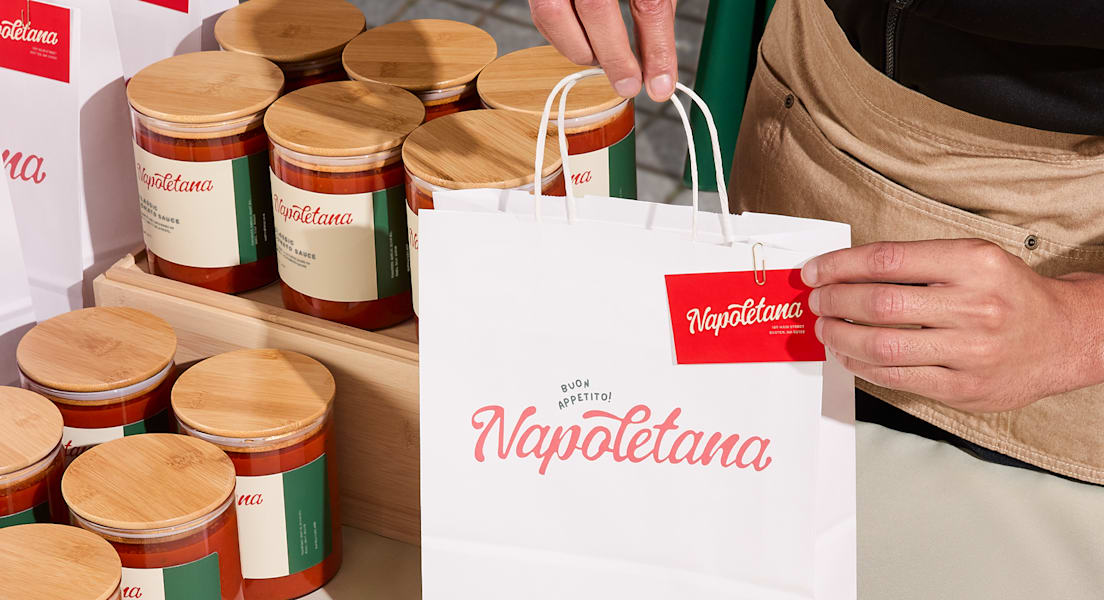
A sturdy, well-designed kraft paper bag helps customers associate your business with quality, care and value. Choose a reusable option and your logo gets another outing every time customers reach for it. Many paper bags are also recyclable, adding to their appeal for shoppers looking to reduce packaging waste.
Choosing the right bag starts with the products you sell and the impression you want to make. Compare kraft paper bag sizes, paper weights and handle styles to find a fit that makes packing easier and gives every purchase a polished finish.
This guide covers dimensions, gusset calculations, materials and printing so you can choose practical packaging for your store, bakery or event.
- Measure the complete purchase, including boxes and wrapping, before comparing bag dimensions.
- Allow extra room in every direction, using a 1 to 1.5-inch gusset buffer as a practical starting point for bulky products.
- Compare GSM alongside fiber quality, seams and the supplier’s finished-bag load rating.
- Choose handles for your customers’ carrying comfort and your heaviest typical order.
- Use bold artwork that stays readable against brown kraft’s natural color and texture.
Why choose custom kraft paper bags: benefits & material quality
Kraft paper bags are made from renewable wood fibers and offer a sturdy surface for custom printing. Their durability depends on fiber quality and bag construction as well as paper weight.
A useful place to start is paper weight, which you’ll see listed as GSM, or grams per square meter. Within comparable paper grades, a higher GSM generally means more material and a firmer feel. Use the ranges below to narrow down your options, then check each bag’s load rating, since fiber quality, adhesive and construction also affect performance. Understanding how to choose packaging materials means considering the weight and shape of everything your customer will carry.
| Paper weight to compare | Practical starting uses | Carrying capacity |
|---|---|---|
| 80–100 GSM | Stationery, small accessories and lightweight merchandise | Confirm the finished bag’s rating. |
| 120–150 GSM | Boxed gifts, books and heavier retail purchases | Confirm the finished bag’s rating. |
| Approximately 120 GSM, VistaPrint’s current handled bag* | Everyday shopping and event purchases | Published maximum: 13.2 lb, approximately 6 kg |
*VistaPrint’s rating applies to its specific finished bags. It isn’t a capacity promise for every 120 GSM bag.
Virgin kraft vs. recycled kraft
Unbleached virgin kraft uses fresh wood fibers. Long fibers help resist tearing, making this stock useful for demanding loads. Recycled kraft uses recovered fibers, which can produce a more varied surface and appearance. How well recycled materials perform depends on the fiber mix and processing, so recycled content doesn’t automatically mean a weak bag. Some papers blend fresh and recovered fibers to balance strength and printability.
If using recycled materials is part of your sustainability message, check the recycled percentage when choosing your bags. Shorter recovered fibers can reduce tear resistance, while a rougher surface can make fine printed details less crisp. However, the fiber blend and surface finish can help compensate, so the percentage alone won’t tell you how a bag performs. Check its load rating and ask for a printed sample to find an option that suits your products and shows off your branding.
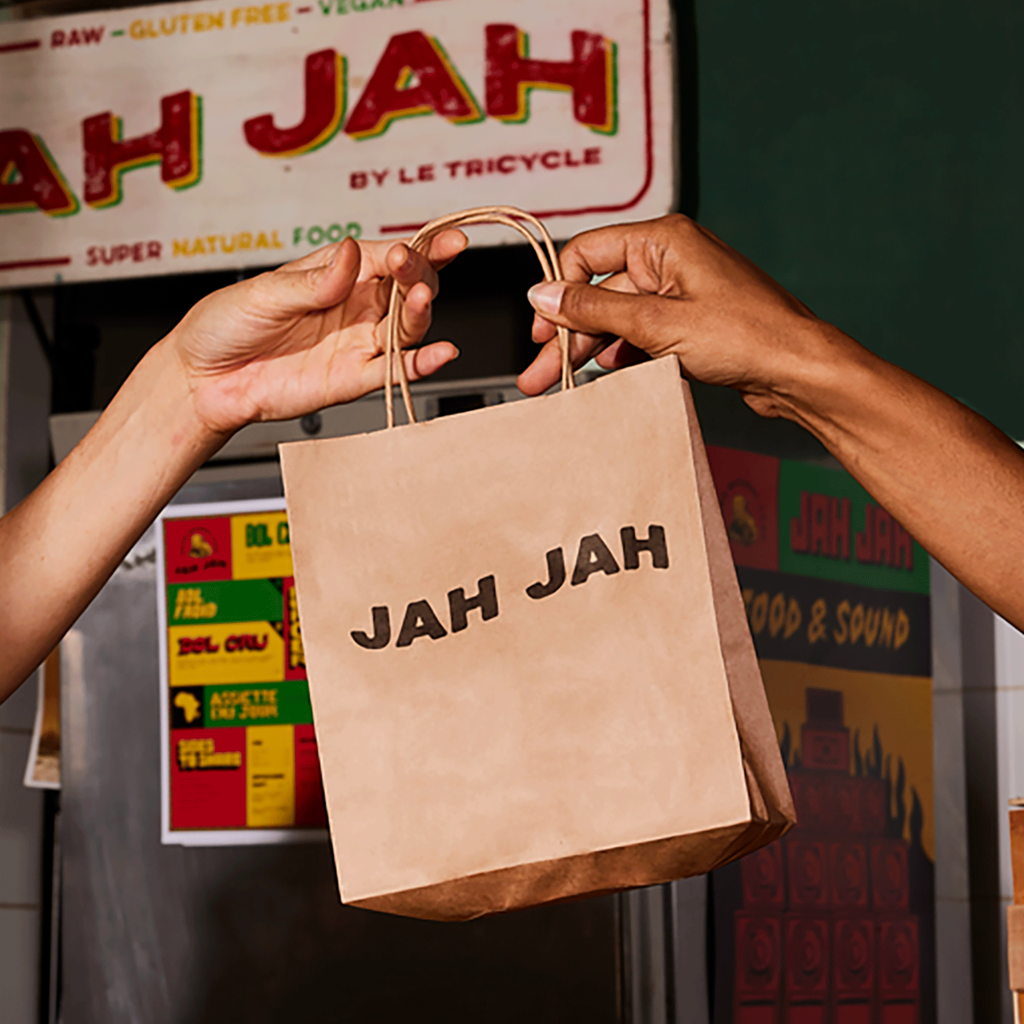
Everyday paper bag benefits
A flat-bottomed bag stands upright for easier checkout packing. A visible logo carries your branding beyond the counter, and every time customers reuse the bag, your business gets another chance to catch someone’s eye.
If environmental benefits are a priority, choose a bag that fits your products without using excess paper. Check which materials and finishes your local paper recycling program accepts, too. Coatings and added components can affect acceptance, so make sure any recycling instructions you share apply to the finished bag.
For heavy bases or sharp edges, consider strong virgin kraft around 120 GSM or higher, plus suitable reinforcement. Protect corners and confirm the whole bag’s carrying capacity before ordering.
Standard kraft paper bag dimensions & sizing chart
Small, medium and large are convenient labels, but exact brown paper bag sizes vary by supplier.
| VistaPrint handled bag | Width x gusset depth x height | Suggested uses (subject to measurement) |
|---|---|---|
| Small | 7.48 x 3.15 x 8.86 inches | Jewelry boxes, cosmetics and small accessories |
| Medium | 8.66 x 3.94 x 11.81 inches | Folded apparel, slim books and event gifts |
| Large | 10.24 x 5.51 x 13.39 inches | Larger boxed purchases and retail bundles |
These are VistaPrint’s current US dimensions. Listed height excludes the handles. Use this kraft paper bag dimensions chart as a shopping reference, then confirm the selected product’s specifications.
Common kraft paper bag sizes aren’t universal standards. Some suppliers label dimensions length x width x height, while others use width x depth x height. Match each number to the diagram before comparing products.

Measure your product and the opened bag
Measure a paper bag’s gusset depth with the bag fully opened, from the front panel to the back panel across the base. The inward-folded half of the side panel isn’t the full usable depth.
Record the bag’s front-panel width and its height from the base to the opening. Check whether the supplier lists internal or external dimensions, as seams and folds can reduce usable space.
For your products:
- Arrange the complete purchase as customers will carry it, including wrapping and any protective boxes.
- Measure its widest width, front-to-back depth and total height.
- Add clearance, then compare all three measurements with the available bag.
Apply the product-to-bag buffer
Use this starting estimate for each dimension:
Product size + 10 – 15% buffer = target bag dimension
For bulky boxed products, also check:
Target bag gusset = product depth + 1 – 1.5 inches
Importantly, these are planning allowances, not manufacturing standards. For depth, use whichever calculation provides more room, then verify with a sample. Don’t add both allowances together. So, let’s look at a couple examples of how to apply these.
A box that’s 4 inches deep suggests a 5- to 5.5-inch gusset using the second formula. VistaPrint’s current large bag has a 5.51-inch gusset, making it a candidate if the box’s width and height also fit. Leave room beneath the handles so they close together comfortably.
For lightweight, nearly flat purchases, VistaPrint’s custom paper merchandise bags offer a handle-free option. Check their separate size range instead of applying shopping-bag dimensions.

Download the printable paper bag sizing & ordering checklist to record measurements and compare suppliers.
Kraft paper bag handles: types, weight capacity & comfort
Paper bag handles affect comfort and load distribution, but carrying limits factor in the material, style and size of the complete bag.
The functional weight limits of handles and bags are product-specific. There is no universal pounds-or-kilograms limit for a handle style.
Twisted handles are separate paper cords attached to the bag. Die-cut handles are openings in the bag itself, so the surrounding panel takes the strain. Favor reinforced twisted handles for everyday retail and consider die-cut designs for lighter purchases.
| Handle style | Reinforcement to check | Carrying feel and uses | Relative carrying strength |
|---|---|---|---|
| Twisted paper | Secure interior attachment, often with a paper patch | Rounded grip for general retail | Moderate to high when reinforced. Suitable for everyday and heavier retail purchases. VistaPrint’s current bags have a 13.2 lb, approximately 6 kg maximum. |
| Flat paper ribbon | Wide glued attachments, with patches where specified | Broad grip for takeout and short trips | Moderate for everyday loads. Reinforced attachment points can increase strength, so well-built flat handles may perform similarly to twisted handles. |
| Die-cut | Reinforced top panel around the opening | Compact grip for light merchandise | Lower for basic, unreinforced designs. Best for light loads because the paper around the opening carries the weight. Extra reinforcement can support heavier contents. |
| Cotton or nylon cord | Reinforced holes, knots and top panel | Soft grip for premium gifts | High potential for heavier loads. Strong cord handles need a reinforced top panel and sturdy base to make full use of their strength. |

Check where the load goes
Interior reinforcement patches spread pulling force over a larger area. A glued, folded top header adds material around the attachment zone. Both can reduce tearing, but they depend on sound adhesive bonds and construction. Reinforcement helps prevent handle pullout, but it doesn’t make the entire bag unbreakable.
Ask suppliers for their load rating and testing method. Repeated lifting is more informative than a photograph of a bag holding a weight. Industry testing methods assess finished-bag carrying performance.
For example, an 8 lb order weighs about 3.6 kg. Choose a rated bag that comfortably accommodates it, including its protective packaging, then try a realistic carry test. Walk with it, stop and lift it again, and check the handles, seams and base.
For customers browsing a market or walking home, test grip comfort too. A comfortable handle and a balanced load matter more than a premium-looking finish.

Design & printing considerations for custom kraft paper
Brown kraft changes how printed colors appear, so artwork should work with the paper’s natural background.
| Material or finish | Design consideration |
|---|---|
| Natural brown kraft | Favor strong contrast, bold lettering and simple artwork. |
| White kraft | Consider it when brighter colors and clearer color separation matter. |
| Uncoated surface | Let the paper texture contribute to the design. |
| Specialty coatings or finishes | Confirm availability, appearance and recycling compatibility with the supplier. |
Porous, uncoated kraft absorbs ink, while the brown base influences the final color. Black, dark navy and deep burgundy are useful starting choices. Opaque white can create contrast when the printer offers a white-ink process. Be aware, however, that white areas in an uploaded design don’t necessarily print white.
Keep your logo prominent on the main panel. Use gussets for secondary information only when the chosen print option includes them. Place QR codes on a flat, readable area away from folds and test a printed sample.
VistaPrint offers single-color, multicolor and all-over options on its current handled bags. Check the selected template and preview before ordering.
Clear artwork, strong contrast and thoughtful placement can turn a simple kraft bag into a recognizable part of your brand. VistaPrint’s product packaging design tips and packaging design trends offer ideas for bringing those elements together in a way that feels like your business. If your artwork needs a refresh, VistaPrint’s AI Logomaker or a designer through 99designs by Vista can help you create a look that works across your products and packaging.

Put your kraft bag plan into practice
The right custom kraft paper bags fit your products, support their weight and feel comfortable to carry. Measure the complete order, allow clearance and compare the finished bag’s rating with your actual load. Then check a sample with your products and artwork.
If you’re reviewing your wider setup, explore types of packaging and build those choices into your packaging strategy. A couple of well-chosen bag sizes can keep checkout simple while giving different purchases a polished finish.
Kraft paper bag sizes FAQs
How should I store unused kraft paper bags?
Keep bags flat in a dry, ventilated space, away from damp floors and splashes. Avoid crushing the handles under heavy cartons. Moisture can weaken paper and encourage mold, so follow the supplier’s storage guidance.
Can kraft paper bags touch unpackaged food?
Choose a bag specifically approved for the intended food contact. Brown paper alone doesn’t establish suitability. Ask the supplier about the paper, inks and adhesives, including suitability for hot or greasy foods. For more tips, check out our guide to food delivery packaging.
How many custom bags should I order initially?
Multiply expected bagged transactions by the number of trading days before your next delivery. Add an allowance for busy periods and damaged stock, then divide the order between sizes using your usual sales mix.
Can I use a shopping bag as an outer shipping package?
A shopping bag is designed for carrying purchases. Parcel delivery adds sorting machinery, impacts and weather exposure. Use packaging specifically intended and accepted for the delivery service, with the branded bag inside if useful.
How can I compare quotes fairly?
Compare the total delivered cost per usable bag, including printing, setup charges and freight. Keep dimensions, stock, load rating and print coverage consistent across quotes so a cheaper price doesn’t hide a different specification.

