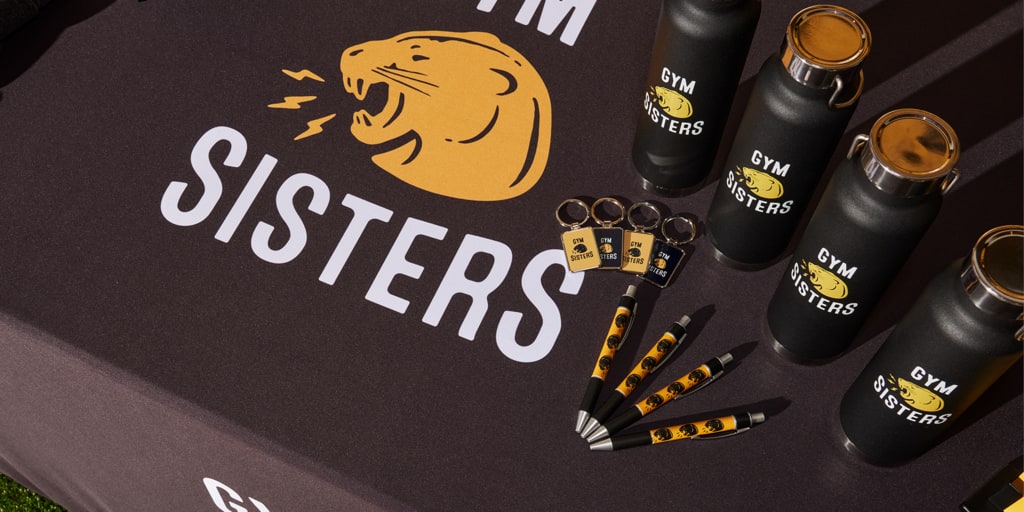
Promotional merch turns customers into advocates because the right item creates genuine psychological ownership, social currency and a sense of belonging, all of which drive organic word-of-mouth far more effectively than passive brand awareness. These days, every brand wants loyal customers who spread the word – and promotional merch is one of the most underrated ways to make that happen.
The right branded item creates a genuine sense of belonging, turns everyday moments into brand touchpoints and gives happy customers something tangible to share. Whether you’re a small business owner just getting started or you’ve been handing out swag for years, we’ll help you organize a promotional merch strategy that leads to real brand advocates, not just awareness. Before you commit to a large order, read our guide on how to make merch for your brand so you know exactly what to expect from the process.
- Promotional merch works best when it’s genuinely useful, not just branded. If an item wouldn’t be worth keeping without your logo on it, it’s not worth giving away.
- The right merch builds psychological ownership, social currency and “in-group” belonging. People keep and share things that make them feel good, and that feeling transfers directly to your brand.
- Match items to the customer journey, from new leads to loyal repeat buyers to true advocates. The right item at the right moment is far more powerful than a one-size-fits-all giveaway.
- Track ROI with cost-per-impression, user-generated content and acquisition metrics. Merch is measurable; you just need to know what to look for.
- In 2026, “high-value/low-waste” and QR-enabled “phygital” merch will lead the pack. Fewer, better items that connect to a digital experience will outperform cheap giveaways every time.
What is promotional merch, and why does it work?
From those printed pens you find at hotels, to that brewery logo T-shirt your brother always wears, to that colorful tote bag that caught your eye at the market – promotional merch comes in so many shapes, sizes and uses. That’s really good news, too, because no matter how your brand might be best translated to merch or how you choose to use it, there’s an easily customizable option out there for you.

Merchandise has expanded to include all kinds of novel and useful products, including:
- Office supplies, such as pens, pencils, organizational tools and notebooks.
- Tech accessories, such as power cords, mouse pads, USB storage, charging stations and earbuds.
- Clothing, such as T-shirts, sweatshirts and hats.
- Drinkware, such as tumblers, can coolers, water bottles and mugs.
- Household items, such as magnets, flashlights, tools and safety kits.
- Food items, such as candy, snacks and gum.
But what’s the difference between promotional merchandise and some other marketing tool, like a brochure or business card? For one, people should find merch valuable on its own, even without your branding. It should mean something to them, and they should be more likely to keep and use it over time compared to, say, a promotional postcard about an upcoming event.
The best product merchandise are items people use every day. Every time they use your gift, they will be reminded that you exist. And people around them will see it too (more on that in a bit). That is a big win for a growing small business, because brand recognition is the ultimate way to stand out in a crowded market.
Promotional merch vs. traditional promotional products and print marketing
Unlike a flyer or brochure, promotional merch isn’t just a vehicle for information; it’s a product in its own right. The key principle: An item should be worth keeping even without your branding on it. A well-made tote bag, a quality water bottle or a genuinely useful notebook – these items earn a place in someone’s life. A postcard about last month’s sale does not.
Why it works: The psychology behind brand advocacy
There’s real psychology behind why promotional merchandise builds brand awareness that sticks. The endowment effect means that once someone owns something, even a freebie, they assign it more value and feel more positively toward the brand that gave it to them. High-quality, useful items start to feel “mine,” which increases the likelihood a customer will defend, recommend and return to your brand.
Then there’s social currency. People share what makes them look and feel good. A cool branded sweatshirt or a sleek reusable cup signals something about the person wearing or using it – and merch that functions as an “in-group” signal (think: the tote that shows you shop at that local market) builds community, not just awareness.

The desk-test framework
Before you order, run any item through this quick filter. If it passes, it has a real chance of building brand advocacy. If it doesn’t, it’s likely landfill marketing.
- Is it useful weekly?
- Is it durable?
- Does it look good in public?
- Is it on-brand without being shouty?
- Is it easy to share (via QR, tag, hashtag, referral)?
How branded merch spreads the word – online and offline
Offline visibility: Impressions you don’t have to re-buy
Humans are social beings. We share everything we do (well, most of it) with our friends, family and online communities. So promotional merch has the added benefit of being visible as we live out our lives. When hiking with friends, they’ll see that branded water bottle. When posting photos on Instagram, they’ll see that sweatshirt with a cool logo on the front. Visiting a local market or strolling around town? Passersby are sure to notice that handy tote bag.

Online visibility: UGC, unboxings and “seen in the wild”
What’s more, in this day and age of brand ambassadors, it’s much easier for an online influencer to share news about your business if they have natural elements and useful tools at their disposal. You also have a better chance of seeing your brand “out in the wild” or spotting it in an organic social media post. This may be far more effective than any paid placement and a true testament to the quality of your merch.
Seeing merch perks curiosity and begs the question, “Where did you get that?” It’s also fun to watch online personalities unbox swag bags and boxes or share the merchandise they’ve received from brands. If you’re doing any kind of influencer outreach, adding some branded items to your package is a must.
Day 1 tactic: Spark instant UGC
Here’s a simple play you can action immediately. Include a card in every merch order or giveaway bag with:
- A photo prompt (“Show us where you take your [brand name] tote”)
- A QR code linking to a landing page or entry form
- A small monthly prize – store credit works well
- Your social handle, so tagging is frictionless
The lower the friction, the more likely people are to share.
For in-person and online retail purchases, throw in a custom die-cut sticker to add a splash of your brand personality that customers can put on their favorite gear.
Strategic use cases for promotional merch
Acquisition (new leads)
Merch makes a surprisingly effective lead magnet, but only if it’s something people actually want. Promo merch ideas that consistently work include stickers, tote bags, water bottles and notebooks, because people keep them. Pair any item with a QR code tied to a specific offer: a first-purchase discount, a free sample, a waitlist signup or a free consult. That way, every promo item for your marketing campaign has a measurable next step.
Retention (repeat purchase and loyalty)
For existing customers, merch shifts from “awareness” to “belonging.” Thank-you bundles for first-time buyers, VIP tiers with exclusive drops and seasonal packaging inserts all signal that a customer is valued, not just a transaction. When choosing items for retention, lean toward high-value/low-waste options: one great item beats three forgettable ones, and it reflects better on your brand.
Trade shows and in-person events
A smart booth strategy uses two tiers: a lower-cost item (sticker, pen, badge reel) for general foot traffic, and a premium item (insulated tumbler, quality tote, branded notebook) reserved for qualified leads or genuine conversations. Include a QR code on premium items that links to a follow-up resource, a demo booking, your catalog or an email capture page. That way, your merch works even after the event is over. For more ideas on what to bring, see our guide to giveaways for career fairs and events.

Build a branded merchandise strategy (not just promo merch ideas)
Superfan segmentation matrix
Different customers need different things from your merch. Here’s a simple way to think about it:
| Customer stage | Merch goal | Best item types | CTA idea | Success metric |
| New lead | Utility + intro offer | Sticker, tote, notebook | QR to discount or sign-up | QR scans, email sign-ups |
| First-time customer | Delight + retention | Branded insert, mug | “Share your unboxing” | Repeat purchase rate |
| Repeat customer | Belonging + upgrade | Apparel, premium drinkware | Loyalty redemption, referral | Referral rate |
| Advocate/superfan | Exclusivity + status | Limited-edition superfan merch, kits | UGC challenge, ambassador program | UGC volume, referrals |
Branded merchandise ideas by category
Once you know your goal and audience, here are the branded merchandise ideas by category that consistently perform:
- Drinkware: Tumblers, water bottles, mugs: high perceived value, high retention rate
- Office supplies: Pens, notebooks, desk accessories: daily-use items that stay visible
- Tech accessories: Power banks, mouse pads, cable organisers: strong for B2B and tech audiences
- Apparel: T-shirts, caps, tote bags: high social visibility when the design earns its place
- Packaging inserts: Stickers and cards: low cost, high delight, easy UGC prompt
How to measure branded gifts ROI (and prove it)
What to track
These are the metrics worth your attention:
- Impressions: Estimated number of times an item is seen (uses × views per use)
- Cost per impression (CPI): Total spend ÷ total impressions
- QR scans and conversions: The most direct measure of merch-driven action
- UGC posts and engagement: Organic reach your merch generates
- Referral codes and affiliate links: Track advocacy directly
- Event leads influenced: Pipeline attributed to trade show or event merch
CPI calculator walkthrough
Here’s how to work out whether your merch is earning its keep:
- Item cost × quantity = total spend (e.g., 200 tote bags at $8 each = $1,600)
- Average uses per item × average views per use = total impressions (e.g., 3 uses/week × 3 views = 9 per week × 52 weeks = 468 impressions per bag × 200 = 93,600 total)
- CPI = total spend ÷ total impressions ($1,600 ÷ 93,600 = $0.017 per impression)
Compare that to a digital ad CPI, and most quality merch looks very good value.
Make tracking easy with QR and “phygital” links
Assign a unique QR code to each campaign, not just each product, and link to a dedicated landing page with UTM tags. That way, you can track exactly which merch drove which action, make smarter reorder decisions and prove ROI to yourself (or a stakeholder).
2026 promotional merch trends to watch
High-value/low-waste merch
Fewer, better items, made from recycled or natural materials like organic cotton or bamboo, will always outperform a bag of cheap giveaways. Durability and reusability aren’t just good for the planet; they’re good for your brand.
“Phygital” integration (QR-enabled merch)
A QR code on a water bottle can link to a VIP community, a limited drop or a referral reward, turning a physical item into an ongoing brand experience. That’s where promo merch for brand advocates gets really interesting.
Tips to get started on your merch journey
So, merch works hard for your brand, and there are plenty of spaces where you can display it for sale or give it away as freebies. But how do you get started? Thankfully, it’s easier than ever to find a product you like and get your brand name, logo and a QR code added.
When perusing your options, keep these three tips in mind:
Order early (and test for quality first)
Especially if you’re preparing for an event, make sure to plan out your merch with plenty of time to spare. If you’re planning a larger order or trying out a new type of exclusive merch for your VIP customers, you may also want to order some test products so you know they will work as intended before placing the full order.
Consider season and context
Look for items that can be used year-round, such as pens or baseball hats, or opt for season-specific items that fit a particular theme, such as water bottles for a summer outdoor event or cozy beanies during the colder months.
Show brand consistency (and keep it wearable/usable)
Does all your swag tell a story about you? While you can certainly mix up your merch with various pieces, sometimes consistency can be good. A brand that always brings the best T-shirts to the annual community event will stick out among the competition.
Plan your distribution and replenishment
Think beyond the product itself. Where is it going? Packing slips, events, VIP bundles, partner kits and influencer packages all call for different items and quantities. Decide in advance and build replenishment into your budget so you’re never caught short before a big event.
Keep your customers engaged over time by regularly adding new merchandise and designs to your inventory.
Great promotional merch isn’t about putting your logo on as many things as possible, but rather it’s about giving people something they genuinely want to keep, use and share. When you match the right item to the right customer moment, track what’s working and keep the quality high, merch becomes one of your most cost-effective tools for building merchandise for brand advocates. Pick one campaign goal, pick one item, track one metric and go from there.
FAQs
What is the difference between a brand ambassador and a brand advocate?
A brand ambassador is typically paid or formally contracted to promote your business. A brand advocate is a genuine fan who recommends you because they love what you do, no payment required. The best promotional merch strategy turns customers into advocates first; some may eventually become ambassadors.
How can I measure the ROI of my promotional merchandise?
The clearest measures of branded gifts ROI are cost per impression (CPI), QR scan rates and any referral or discount codes tied to specific items. Track these consistently across campaigns, and you’ll quickly learn which items earn their place and which don’t.
How does promotional merchandise build brand awareness and advocacy?
Merch builds promotional merchandise brand awareness through visibility. Every time someone uses your branded item in public, new eyes see your brand. It builds advocacy through the endowment effect and social currency: People feel ownership over items they’ve received and share things that reflect well on them.
What are the most effective promotional products for brand advocates in 2026?
High-value, daily-use items consistently outperform novelty giveaways. In 2026, drinkware, quality apparel, reusable totes and QR-enabled “phygital” items are the best promo merch for brand advocates, particularly when made from sustainable materials and built to last.
Why is “high-value/low-waste” important for modern merch strategies?
Cheap, disposable merch ends up in landfill, and savvy customers notice. High-value/low-waste merch signals that your brand is thoughtful, quality-conscious and aligned with values your customers care about. It’s also more likely to be kept and used, which means better branded gifts ROI and stronger advocacy.

