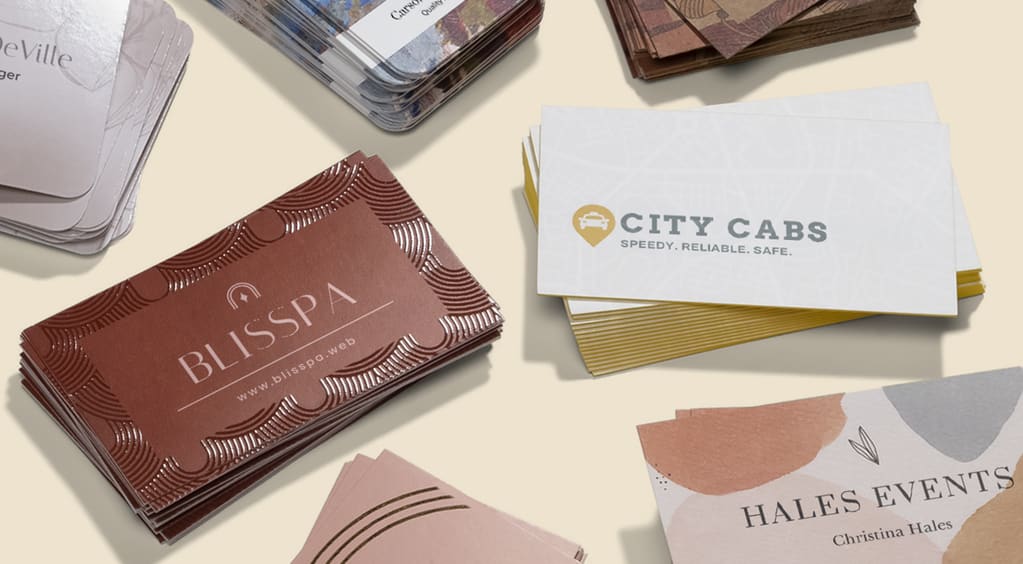
In the world of professional networking, business cards have always been a staple, offering a quick, tangible way to make a lasting impression. But what you might not know is that the history of business cards is filled with constant evolution, adapting to the times, trends and technological advancements. From displaying simple contact information to interactive, high-tech designs, business card innovation has shaped how we connect.
In this article, we’ll take you through the evolution of business cards, showcasing how, at VistaPrint, we have embraced changing trends and customer needs to stay at the forefront of this essential networking tool.
- Business card history started in 15th-century China with Meishi, used by the elite for introductions and to showcase status.
- In the 20th century, business cards evolved from social tools to practical marketing assets, with standardized sizes and mass production making them accessible to more professionals.
- Modern business cards have vibrant designs, creative shapes and premium finishes, and are made using innovative materials, offering endless customization options.
- Future business card innovation involves more sustainable materials, increased personalization through AI and the integration of digital and physical solutions like QR codes and digital business cards
Business cards history: From calling cards to marketing tools
While initially a social tool, calling cards set the stage for business networking by establishing the professional practice of exchanging contact information.
Business cards in 15th-century China
The history of business cards goes back to 15th-century China with the Meishi, which had detailed designs and was often made using red ink. These cards weren’t about business – they were used by society’s elite to introduce themselves to important people and show off their status, making sure that their names would be remembered.
Business cards in 17th-19th century Europe
Fast forward a few centuries, and the idea of the business card began to evolve in Europe, becoming a little more practical but still keeping its social purpose. In 17th-century France, visite billets – elegant, hand-engraved cards that helped aristocrats make introductions and cement their place in high society – were used in much the same way as Meishi.
In London, calling cards took on a more business-focused role. In an era before street numbers, trade cards featured maps, business names and product descriptions, helping to guide customers to shops. Kind of like a rudimentary GPS system, but in print form.
Trade cards evolved with time, as the printing process became more advanced, featuring copperplate engravings and illustrations of products. What began as a tool for finding shops shifted toward branding, helping businesses advertise their goods and build their brand identity. These early trade cards laid the foundation for modern business cards.
The modern business card
By the late 19th century, calling cards and trade cards started to merge into what we now know as the modern business card. Thanks to advancements in printing, business cards were mass-produced, making them more accessible to a wide range of professionals, not just the elite.

This era also brought about standardized business card sizes, where 3.5” x 2” became the standard. This was a turning point in business card innovation, transforming from a luxury item into an essential tool for networking, branding and marketing.
International and cultural adaptations
As the world became more connected, business cards adapted to cater to different markets. Different cultures used relevant color schemes, greetings and language preferences to resonate with local customs. For example, in Japan, the exchange of business cards is a formal ritual, with a high level of attention to detail. In other parts of the world, business cards feature bold designs and vibrant colors to stand out.
If you are attending a trade show in another country or thinking of expanding your business and network, learn about international business card etiquette in our guide to make the best first impression.
The evolution of business card design
Business cards have transformed from simple, monochrome prints to bold, personalized designs that capture the essence of a brand. The wide range of materials, shapes and finishes available can turn a basic card into a powerful branding tool.
Here’s how business card design has evolved and what it means for networking today.
Traditional business card design
From the mid-20th century to the early 2000s, business card design was all about simplicity and function. These cards were straightforward and focused on providing essential contact details.
Traditional business card design involved:
- Easy-to-read serif fonts and minimal branding
- Predominantly black and white designs, with some secondary color (full-color printing was expensive)
- Standard 3.5″ x 2″ format, making them easy to store in wallets or rolodexes
- Thin cardstock with matte finishes (glossy finishes came later)
Custom business cards were expensive and required large bulk orders, making them out of reach for many small companies. VistaPrint, the print-on-demand company founded by Robert Keane in 1995, aimed to solve that big problem for small businesses by printing business cards in smaller quantities at a much lower cost while maintaining quality.
Modern business card design
Thanks to new printing techniques and affordable custom options, companies can now create high-quality cards without the hefty price tag.
As marketing grew more competitive, businesses realized their cards could be powerful branding tools, incorporating logos, colors and taglines to leave a lasting impression. This led to business card design becoming more creative and strategic than ever before.
Bold business cards with vibrant designs
Business cards have come a long way from their simple black-and-white origins, with even those who choose a more classic look adding special touches to stand out. Some print and design innovations include the following:
- Move away from monochrome: Bright colors, gradients and full-color printing.
- Neon and metallic accents: Eye-catching details that grab attention.
- High-contrast typography: Bold fonts help ensure your card is remembered.
Full-color business cards make it easy to create vivid, high-impact designs that capture attention. For those looking to add a touch of luxury, premium business cards with foil accents offer a premium finish that elevates any design.

Need help with your designs? Check out our guide on how to design a business card that covers everything from choosing colors and fonts to figuring out what to include.
Textured and specialty materials
It’s not just the colors and fonts that have evolved – thanks to business card innovation, the materials have also taken a leap forward. Modern business cards aren’t confined to basic cardstock – today, there’s a variety of business card paper choices that can enhance a card’s feel and increase its impact.
Here’s a closer look at some popular business card materials.
Cotton and linen business cards: Known for their high-quality texture, cotton and linen add a sophisticated, premium feel to business cards. Cotton paper is soft to the touch, while linen paper has a slightly textured, fabric-like finish that delivers a tactile experience.
Metal and plastic business cards: These make a bold statement while offering unmatched durability. Metal cards have a sleek, polished finish that feels weighty and luxurious, while plastic cards are lightweight and flexible.
Translucent and frosted cards: These cards are a favorite for businesses in creative or tech-driven industries. Clear cards have a semi-transparent quality, giving them a high-tech look, while frosted cards have a matte, translucent finish that adds a sleek, elegant touch.

Eco-friendly business card solutions
As well as innovative paper stocks, eco-friendly options have also become a distinct business card trend. As businesses put increasing value on sustainability, they are using eco-friendly materials that reduce environmental impact while still offering a high-quality look.
Recycled paper business cards
Made from post-consumer waste, recycled business cards provide the same professional look as traditional cards but are more environmentally responsible.

Natural textured uncoated stocks
With an uncoated, matte finish, natural textured cards have a raw, organic feel and are fully biodegradable, making them a great choice for sustainable brands.
Kraft paper business cards
Offering a rustic, earthy look, Kraft paper’s rough texture and brownish hue make it ideal for businesses with a vintage or natural aesthetic.
Bamboo paper
A renewable, lightweight option with a unique texture, bamboo paper provides a modern, sustainable choice for businesses.
Hemp blend paper
Known for its durability and slightly rough texture, hemp blend paper is an eco-friendly business card material that’s perfect for environmentally conscious brands.
The rise of customization and personalization
With a wide range of paper and design options, businesses strive to make their business cards as distinctive as their brands. Beginning in the 2010s, as branding became a higher priority, business card designs have evolved to become more personalized and unique. Endless customization options ensure that business cards leave a lasting impact and stand out from the crowd.
Creative business card shapes and unique layouts
These business card layouts and shapes offer professionals and businesses the opportunity to create an unforgettable first impression.
Popular unconventional business card shapes and styles include:
- Business cards with rounded corners: Offering a softer, modern aesthetic that feels friendly and approachable.
- Square cards: Compact and trendy, these work well for minimalist brands or professionals looking to break from tradition.
- Vertical orientation: A fresh take on the classic horizontal card, offering a more dynamic design.
- Unique shapes: Custom-shaped cards, such as circles, ovals and leaf, allow businesses to make a bold statement.
- Mini business cards: Slim and sleek, these smaller cards have a contemporary edge.
High-end business card finishes for a luxurious look
For businesses that want to make a statement without changing the shape of their card, premium business card finishes provide a luxurious touch:
- Matte and soft-touch finishes offer a sleek, modern feel that’s fingerprint-resistant.
- Spot UV coating adds contrast and depth, highlighting specific design elements.
- Embossed gloss creates a tactile, high-end texture with raised text and logos.
- Raised foil finishes, in gold, silver or holographic, give cards an elegant shine.
- Painted edges provide a subtle yet stylish way to incorporate brand colors, helping cards to stand out.
Business card innovation in the digital age
As networking becomes increasingly digital, business cards are keeping up with new technology, making it easier to connect in person and stay in touch online.
QR code business cards
QR code business cards provide quick access to websites, portfolios or LinkedIn profiles with a simple smartphone scan. They can serve different purposes depending on your business:
- Restaurants and cafes: Link to digital menus, reservations or online ordering.
- Creative professionals: Showcase portfolios and recent projects.
- Service providers: Direct potential customers to booking pages or contact forms.

For even more flexibility, dynamic QR codes let you update the linked destination without reprinting your cards. Some providers also offer analytics showing how often your code is scanned.
Link your QR code to a dedicated landing page with a contact form or booking option. Use website analytics to track visits and completed actions, helping you assess how many leads your business cards generate.
Digital business cards and AI enhancements
Digital business cards take this convenience a step further, allowing you to share contact details, websites and social media profiles via email, messaging apps or QR codes. They’re especially handy for virtual meetings, and you can update your information anytime without reprinting your cards.
Meanwhile, AI-powered design tools are making it easier to create professional-looking business cards, helping with layouts, color combinations and personalized designs. Combined with traditional printing options, these innovations give small businesses more ways to create cards that reflect their brand.
Innovative business card ideas for different industries
From specialty finishes to QR codes, modern business card innovations offer creative ways to stand out and connect with customers. Here’s how to put them to work across different industries.
| Industry | Innovative business card ideas |
|---|---|
| Creative professionals | Custom shapes and spot UV: Experiment with unconventional cuts and glossy accents that highlight your artwork or logo. Add a QR code linking to your portfolio. |
| Real estate agents | Premium cardstock and dynamic QR codes: Create a polished first impression while giving buyers access to updated property listings or virtual tours. |
| Beauty and wellness | Soft-touch and raised foil: Pair a velvety finish with metallic accents for a luxurious, tactile feel that reflects your brand. |
| Restaurants and cafes | Recycled and kraft paper: Choose natural textures for an artisanal look, or use QR codes to share seasonal menus and loyalty offers. |
| Tech companies and startups | Minimalist designs and digital integration: Combine high-contrast typography with a QR code linking to an interactive product demo or free trial. |
| Consultants and professional services | Embossing and painted edges: Add subtle raised details or brand-colored edges for a distinctive, professional finish. |
The future of business cards: What’s next?
Throughout business card history, these small tools have evolved from simple contact-sharing devices to powerful branding tools. We’ve explored how business card trends have shifted in response to modern branding needs, technological advancements and the growing importance of sustainability.
Looking ahead, the future of business cards will likely bring more sustainable materials, AI-assisted personalization and closer integration between print and digital experiences. With features like QR codes connecting physical cards to online content, business cards will continue to evolve alongside the way we network.
Business cards innovations FAQs
What are the latest eco-friendly printing innovations?
Innovations include FSC-certified paper, alternative fibers such as bamboo and hemp, and vegetable-based inks. More efficient digital printing processes can also help reduce setup waste and make smaller print runs practical, so businesses can order closer to what they actually need.
How does dynamic QR code technology compare to NFC?
Both connect printed cards to digital content, but they work differently. QR codes use a smartphone camera, while NFC requires an embedded chip and a compatible device. Dynamic QR codes can also offer editable links and scan analytics without adding electronic components to the card.
What are the most popular modern finish trends for business cards?
Soft-touch coatings, raised foil, spot UV and painted edges are popular choices for adding texture and visual contrast. Combining finishes is another option, such as pairing a matte background with glossy details to draw attention to a logo.
How can I make my business card interactive?
Add a QR code linking to a digital contact card, video introduction, product demonstration or downloadable resource. Choose a destination that gives recipients a useful next step, and include a short call to action, such as “Watch our work in action,” so they know what to expect when scanning.

