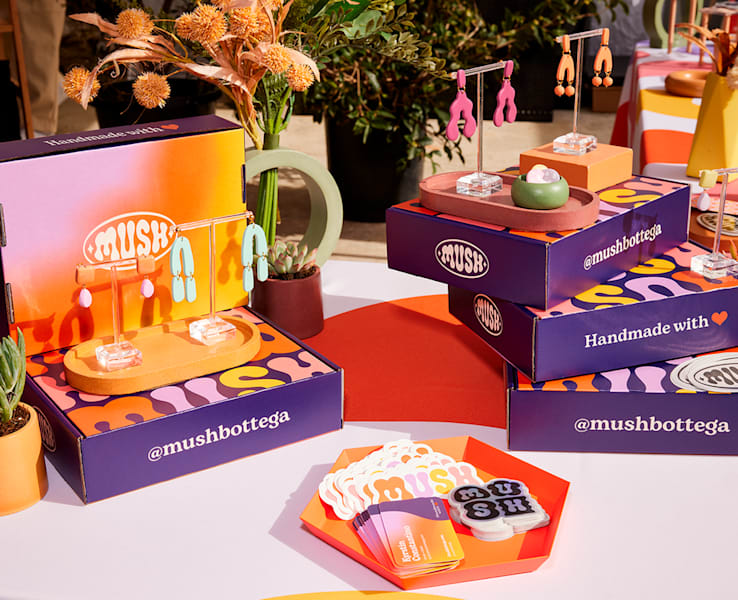
Effective packaging ideas protect your products, make your brand recognizable and transform unpacking an order into a memorable experience. The trick is to start with packaging that fits your product, then add coordinated colors, practical protective layers and one thoughtful detail that gives customers a reason to remember you.
That detail doesn’t have to be expensive. A stamped kraft box, neatly folded tissue paper or a useful thank-you card can make a simple order feel considered, especially when everything looks like it belongs together. The aim is to choose the touches your customers will notice while keeping packing time and costs manageable.
- Choose your packaging around the product’s size, weight and protection needs.
- Repeat your logo, colors and fonts across boxes, labels and inserts for a consistent look.
- Upgrade stock packaging with stamps, custom tape or labels before committing to larger print orders.
- Give customers a useful next step through a QR code, such as care advice or a loyalty sign-up.
- Reduce unnecessary layers and design reusable packaging with a clear second purpose.
Why custom packaging is so important for small businesses
The best packaging ideas help an order arrive safely while showing customers what your business stands for. Good presentation can lead to repeat purchases and word-of-mouth recommendations, although it needs to work alongside a product and experience that people value.
Think about three ways your packaging can earn its place:
- Brand perception: Neat wrapping, readable labels and consistent colors show that you’ve paid attention to the details.
- Customer retention: Clear care instructions help buyers enjoy their purchase, while a reorder link makes returning to your site easier.
- Social sharing: A distinctive reveal gives customers something to photograph, with your logo or social handle helping others find you.

What counts as packaging?
Packaging contains and protects your product, explains what’s inside and introduces your brand. For online orders, it also needs to withstand the journey from your packing table to the customer’s door. Build your choices around four practical layers like these:
- Outer box or mailer: A corrugated box or flexible mailer carries the order.
- Protective wrap: Paper, cushioning or fitted supports limit movement and damage.
- Brand accents: Product boxes, labels, tape and hang tags identify what you’re selling.
- Digital engagement inserts: A printed card with a QR code connects customers to useful online content.
How packaging design ideas can bring your brand to life
Strong brand packaging design starts with consistency across the details customers see. If you don’t already have your brand style, choose a small set of colors, readable fonts and a clear logo, then repeat them in ways that suit each surface.
Plan the opening sequence too: an exterior logo introduces the business, colored tissue builds anticipation and a short message inside makes the reveal feel personal. You don’t need to print every surface to make those connections.
For packaging that photographs well, use strong contrast, leave space around your logo and choose one recognizable visual feature, like a bold stripe or hand-drawn pattern. Place your social handle where it’s visible after opening, and check the arrangement through a phone camera before ordering your packaging.
Which packaging layers do you need?
Choose the structure for protection first, then decide where branding will have the most impact. The three main components are the shipping container, internal protection and product packaging or inserts. Use this comparison as a starting point.
| Packaging option | Relative budget | Protection and durability | Environmental considerations |
|---|---|---|---|
| Stock corrugated box with a label | $ | Sturdy, but fragile goods need cushioning | Clean, uncoated cardboard is often accepted in local recycling |
| Custom printed corrugated mailer box | $$ | Structured protection (check weight limits) | Can be reused but coatings may affect recycling |
| Poly mailer | $ | Resists moisture but offers little crush protection | Lightweight, usually needs a separate film collection route where available |
| Tissue paper | $ | Helps limit light scuffs but doesn’t offer impact protection | Keep quantities modest and check local acceptance |
| Rigid gift box | $$$ | Holds its shape, may need an outer shipping box | Useful for storage, although mixed materials can complicate recycling |
| Hang tag | $ | Provides information rather than protection | Uncoated card can be recycled |

What should go on your shipping box or mailer?
A corrugated mailer box gives you room for a clear exterior logo and a message inside the lid. Keep shipping labels away from key artwork, and leave enough space for barcodes and delivery information. Before choosing a size, pack a real order with its protective materials. An oversized box needs more filler and can increase shipping costs, while an undersized one may leave the product vulnerable.
Elevate your packaging creatives with our guide to packaging design for small businesses.
Which fillers and protective wraps work best?
Internal protection should stop products moving and keep delicate surfaces apart. Scrunched kraft paper can fill gaps, while paper cushioning or fitted inserts may give more structured support.
Wood wool, made from fine wood shavings, adds texture to gift boxes, but its scent and loose fibers won’t suit every product. Cornstarch packing peanuts are another option – check the supplier’s material details and disposal guidance instead of assuming they’re suitable for every composting system. Tissue alone won’t protect glass or ceramics from impacts, so test your complete package for movement and damage then adjust the cushioning before sending customer orders.

Choose product packaging that suits what you sell and how your business operates
Product packaging is the box, wrap or container closest to the item itself. When looking for product packaging inspiration, start with how customers store, display and use your product so the format serves a practical purpose.
When to choose a product box
Folding cartons usually arrive flat, so they’re useful when storage space is limited. Rigid boxes keep their shape and can give gift sets a substantial feel, but they take up more room and generally cost more.
For retail, make the product name visible on the panel customers see first. For e-commerce, check that the box fits efficiently inside your shipping packaging. Unusual shapes can look distinctive but leave awkward gaps.
Use these box design tips for custom packaging to plan a layout that works around folds, openings and display needs.
When wraps and pouches make sense
A belly band is a printed strip that wraps around a product or box. Try one around a notebook, folded tea towel or soap carton to add branding while leaving much of the item visible. Stand-up pouches suit products like coffee, dry snacks or bath salts when their materials meet the product’s requirements. Match the barrier properties and closure to the contents – a zipper alone doesn’t make a pouch leakproof or suitable for liquids.

How to make stock packaging look custom on a small budget
Some of the most effective unique packaging ideas start with a plain box and one repeatable detail. Look for low minimum order quantities (MOQs), but compare the total order cost as well as the price per piece. Calculate your cost per packed order, including materials, packing time and shipping. Then trial a small batch before adding more details.
Three simple upgrades to try
- Custom packing tape: Choose stock boxes that fit your orders, then design a repeating logo or short message for the tape. Follow its application instructions and check that it has the sealing strength your box needs.
- Labels across several surfaces: Create a logo label that fits both a kraft bag and a tissue fold, then choose a compatible adhesive. Test it on each surface before ordering so it sticks securely without ruining the opening experience.
- Stamp plain packaging: Use a simple rubber stamp design with bold lines, test the ink on uncoated kraft card and let it dry fully. Stamp flat boxes before assembly for a more even impression.
| Budget tier | Packaging combination | Best reason to choose it |
|---|---|---|
| Starter | Stock box, protective paper and one stamp or label | Keeps the upfront commitment small |
| Growing | Stock box, branded tape, tissue seal and insert | Adds consistency across more orders |
| Premium | Printed box, fitted support and gift finishing | Suits collections where presentation is part of the offer |
Decorative packaging ideas that add a human touch
Creative packaging works best when decoration helps reveal the product or makes the experience more useful. Choose a few details with a purpose so customers aren’t working through unnecessary layers.
A die-cut window can show off your product
A die-cut is a shape cut into a card or another material. A small window can reveal patterned socks or colorful stationery, while a shaped opening can represent your logo. Keep enough material around the opening to maintain strength. If the product needs a protective window film, consider how customers will separate it from the card afterward.
Tissue paper makes simple packaging feel special
Use tissue in a brand color, fold it neatly and close it with a matching sticker or roll label. Custom printed tissue can add a repeating illustration or logo when your budget allows.

What to include on a packaging insert
Give the insert one main job, whether that’s explaining product care, saying thank you or inviting a return visit. A postcard can carry a short message on one side and useful instructions on the other.
Try collectible art prints for an illustration business, a styling suggestion for accessories or a voucher with clear terms for a future purchase. A handwritten first name or brief note can add warmth without making every order time-consuming to pack.
For more ways to plan the reveal, explore how packaging shapes the unboxing experience.
Use QR codes on packaging to encourage repeat sales
A QR code directs customers to whatever link you chose. Consider a rewritable link, which lets you change the QR destination without reprinting the code, making it useful for packaging that stays in circulation after a promotion ends. Choose one destination and explain the benefit beside the code: “Scan for care tips,” “Join our rewards program” or “Tell us what you think.”
A helpful mobile page gives customers a reason to engage, while a relevant reorder link makes the next purchase easier. Print the code on an insert card or flat area inside the lid. A tissue seal can work too, provided the code stays smooth and intact long enough to scan.
Use strong contrast, keep enough clear space around the code and test a printed sample on several phones. Check your provider’s ongoing fees and link availability, then compare scans with completed sign-ups or purchases. A scan alone doesn’t show retention, so ask for honest reviews and keep review requests separate from discounts.

Labels and tags make product information clearer
Labels and tags need to help customers identify, understand and use your product. Give key information room to breathe so decoration doesn’t make the label hard to read.
Where to use stickers and roll labels
Die-cut stickers can echo a product shape, while a simple rectangular label leaves room for practical details. Use the same base design across plain boxes and kraft bags, then change a small color accent or product name for each range.
Check the surface before choosing the label, as a refrigerated container, textured box and smooth paper bag need different materials or adhesives.
What belongs on bottle labels and hang tags
For bottles, use clear contrast and check the readability on the actual container, including around curved edges. A dark label can work well with light text, so judge the printed result rather than ruling out a color.
Leave space for the information your product category calls for, and confirm the relevant requirements before printing. Hang tags can carry sizes, care tips or your brand story, but they don’t automatically replace required permanent labeling.
Custom gift box ideas for small businesses
A successful gift box brings related products together and makes the set feel ready to give. Start with a structure that holds everything securely, then use your packaging design ideas to create a coordinated reveal. Magnetic closures are another option, although their material mix can complicate recycling.
Three gift box combinations to adapt
- Seasonal sampler: Arrange small products in a folding box with dividers, then change the belly band for each holiday. The same base packaging can support several collections.
- Boutique keepsake set: Use a two-piece rigid box with a removable product insert and restrained branding. A ribbon or foil accent can add a special finish and makes the box useful for storage.
- Choose-your-own gift: Keep a standard box and create fitted spaces for compatible products. Add a gift message card so customers can personalize the set without needing a custom box design.
How packaging should change for specialty products
Food delivery calls for containers suited to the food’s temperature, moisture and grease, with closures that help prevent spills. Frozen products need containers and lids suited to freezing plus labels that can handle condensation, like speciality ice cream packaging. For more details on package options and design, see our small business guide to food and beverage packaging.
For packing delicate items like candles, secure the vessel so it can’t knock against other items and make sure product information is accessible.

How to make packaging greener and reusable
A useful second life starts with the design. Make a rigid gift box easy to use for desk supplies by adding a removable insert, or package accessories in a drawstring pouch that can hold jewelry during travel.
Keep permanent branding understated and put seasonal messages on removable bands so customers can regift the container. If you suggest reusing a jar, recommend an appropriate purpose such as holding small craft supplies rather than assuming it’s suitable for food.
For recycling, start by removing materials you don’t need while keeping enough protection to prevent products from getting damaged. Then choose materials your customers can realistically reuse or dispose of sustainably. Prioritize easily separated components and check how coatings, adhesives or mixed materials affect disposal.
Cornstarch-based or paper packaging isn’t automatically compostable or recyclable everywhere, so use specific supplier-backed information and clear instructions instead of broad “eco-friendly” claims.
Start building your unboxing experience
Experimenting with layered packaging allows you to protect your products while building a memorable brand identity. Start small with custom tape and inserts, and gradually build a signature packaging experience that keeps customers coming back.
FAQs about small business packaging ideas
How can small businesses lower packaging costs without looking cheap?
Use well-fitting stock packaging and repeat one strong brand detail like a logo stamp or colored label. Standardize sizes where possible and count packing time alongside material costs before buying in bulk.
What makes packaging stand out during unboxing?
A clear visual identity, an easy opening sequence and a thoughtful detail make the experience feel considered. Coordinate colors and reveal the product neatly, then include something useful rather than adding decoration for its own sake.
How can small businesses use more environmentally responsible packaging?
Reduce excess material, choose appropriate protection and check local disposal options. Reusable boxes and pouches work best when they have a practical second purpose that you explain to customers.
What packaging options suit boutique and e-commerce products?
Corrugated mailers suit many boxed orders, while flexible mailers can work for soft goods. Folding cartons, pouches and belly bands suit different product needs, with rigid boxes offering another option for gift collections.
How do dynamic QR codes help retain customers?
They make it easier to reach useful content, rewards or a reorder page, and their destinations can change without reprinting. Measure completed actions as well as scans to understand whether customers are returning.

