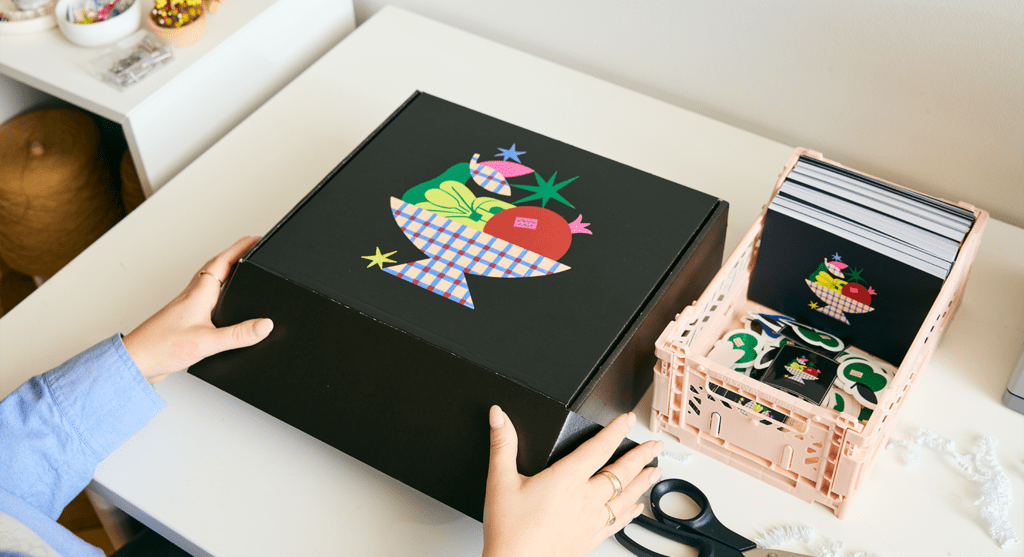
Packaging has had a surprisingly successful side career. While most people treated it as a protective shell with decent survival skills, it picked up a few additional responsibilities along the way – encouraging repeat purchases, supporting cross-sells, strengthening gifting experiences and helping brands stay top of mind after delivery day. Some businesses are getting far more value out of packaging than simply using it to move products from point A to point B.
In this guide, we’ll explore packaging ideas for promotional campaigns that small businesses can realistically put into action. We’ll cover seasonal campaigns, gift sets, influencer kits, smart inserts, QR experiences and ROI tracking, with a focus on ideas that attract attention and support clear business goals.
- Promotional packaging works best when it combines protection, strong branding, sustainability, a memorable unboxing experience and clear customer touchpoints.
- Seasonal marketing ideas for packaging can include sleeves, limited-edition stickers, holiday mailers and countdown experiences that refresh campaigns without requiring a full redesign.
- Smart insert options such as reorder cards, personalized offers, referral cards and review requests can help increase retention and encourage repeat engagement.
- To choose the right packaging idea, start with the outcome you want to influence, whether that is stronger loyalty, higher order values, seasonal sales or brand visibility.
- Track ROI by connecting packaging elements to measurable actions through QR codes, campaign-specific offers, referral codes and other attribution tools.
What makes promotional packaging work?
Some promotional campaigns get remembered long after the discount code expires. Others vanish right after the package gets opened and the box heads straight for the recycling bin.
The difference usually has less to do with budget and more to do with structure.
The strongest packaging ideas for promotional campaigns are built around a handful of principles that shape how customers experience the brand from the moment a box lands on their doorstep or a package changes hands at an event. Miss one and you might get away with it. Miss three, and the whole thing starts feeling like a rushed afterthought wearing a branded sticker.
The 5 pillars of promotional packaging
| Pillar | What it does | Why it matters |
|---|---|---|
| Protection | Keeps the product safe and professional | Damaged products create friction fast. Customers tend to connect packaging quality with brand quality. |
| Branding | Makes the package instantly recognizable | Strong visual identity helps people remember who sent the package before they even open it. |
| Sustainability | Builds trust and reduces waste | Smart material choices signal that the brand pays attention instead of adding unnecessary waste. |
| Unboxing | Creates a memorable customer experience | Thoughtful unboxing experience design can turn a routine delivery into something customers actually remember and share. |
| Connectivity | Links packaging to digital actions via QR codes or NFC | Packaging can drive measurable actions such as sign-ups, content views, loyalty participation or campaign engagement. |
Most effective branding packaging ideas don’t rely on a single pillar doing all the work. The best-performing concepts usually combine two or three together, creating packaging that protects the product, reinforces brand recognition and gives customers a reason to keep engaging after the box is opened.
Learn more about package marketing in our article.
Seasonal packaging ideas for promotional campaigns
Seasonal campaigns already come with built-in momentum. Holidays, summer launches, back-to-school promotions and year-end sales naturally create attention spikes. The challenge is turning that attention into something customers actually remember.
Many businesses assume seasonal packaging means rebuilding everything from scratch. Usually, that creates extra costs, inventory issues and headaches for the team packing orders at 6 p.m. on a Friday. Small changes often do the job better.
A good seasonal update should feel relevant to the campaign, easy to roll out and realistic for your budget and fulfillment process.
1. Seasonal sleeves
Printed sleeves give standard boxes, bottles or jars a temporary campaign layer. The package underneath stays the same, which keeps ordering and fulfillment far easier to manage.

Source: Seasonal sleeve packaging design by Jessie Wong via Behance
Why it works: You can introduce seasonal packaging designs without replacing existing inventory.
Action: Build one sleeve format and swap campaign visuals throughout the year. For example:
- Holiday campaigns: Metallic accents, gift tag graphics or limited-edition messaging such as “Packed for holiday gifting.”
- Summer promotions: Bright color palettes, travel themes or seasonal product bundles.
- Valentine’s Day offers: Heart motifs, personalized notes or gift-focused messaging.
- Back-to-school periods: Notebook-inspired graphics, student discounts or productivity-themed designs.
2. Limited-time sticker sets
Some campaigns only run for a few weeks. Sticker sets are useful when a full packaging run makes little financial sense.
They work particularly well for smaller businesses, limited drops and testing campaign ideas before committing to larger production orders.

Why it works: Low production cost and easy adaptation for different campaigns.
Action: Create seasonal sticker sheets with elements that customers can immediately connect to the campaign.
3. Holiday-ready mailer boxes
As gift-buying seasons arrive, presentation starts influencing buying decisions. Packaging that feels suitable for gifting can raise perceived value before the product is even opened.
Material selection also shapes how customers read the package:
- Corrugated cardboard for durability
- Kraft paper for a clean, natural appearance
- Recycled board for lower material waste
- Compostable tissue for finishing details
Why it works: Products feel more intentional and gift-ready.
Action: Review seasonal packaging and ask whether someone would comfortably hand it to another person as-is.
4. Countdown packaging
Countdown packaging turns one delivery into a multi-step experience. Instead of revealing everything at once, the package includes numbered elements that customers open in order over several days.
This works well for advent campaigns, product launches or limited-time promotions where you want attention to last longer than a single unboxing.

Why it works: Creates anticipation and gives customers a reason to return.
Action: Skip expensive custom structures and keep it simple with:
- Numbered stickers on products or samples
- Daily offer cards inside the package
- QR codes that unlock different content each day
- Numbered inserts for multi-day campaigns
5. Seasonal thank-you cards with a next-purchase offer
Seasonal campaigns often attract first-time buyers. A thank-you card can help extend the relationship after the campaign ends.

A message such as “Thanks for shopping small this holiday season – here’s 15% off your January refill” creates a clear next step tied to future behavior.
Why it works: Encourages another purchase after the seasonal period ends.
Action: Match the offer to the next likely purchase rather than using a generic discount.
Gift set and bundle packaging ideas
Gift and bundle packaging sit in an interesting spot. Customers are already spending more, often buying multiple products in one order and in many cases purchasing for someone else. Small packaging decisions carry more weight here because buyers are paying for convenience along with the products themselves.
A well-designed bundle package can also increase order value without feeling overly promotional. People tend to respond well when the package helps them make decisions or removes extra work from the process.
6. Ready-to-gift packaging
Many customers want the gift part handled for them. They don’t want to search for wrapping paper, buy a gift bag on the way home or wrestle with tape that somehow sticks to everything except the paper.
This works particularly well for candles, skincare products, food gifts, stationery and pet products.

Why it works: Removes effort from the buying experience.
Action: Create a ready-to-use gift packaging kit with interchangeable elements – tissue paper, gift tags and branded ribbon.
7. Build-your-own bundle boxes
Some customers know exactly what they want. Others want options without having to build a shopping cart from scratch.
Build-your-own bundles allow customers to choose products while keeping the presentation consistent once the package arrives. The structure behind it matters more than the customer sees. A flexible insert system prevents the package from looking empty, whether someone selects three products or six.
Why it works: Personalization tends to increase perceived value and encourages larger orders.
Action: Design adjustable inserts or divider systems that accommodate different product combinations.
8. “Complete the set” insert
Cross-selling often becomes awkward when brands push too hard. Packaging gives you a smarter, less pushy way to introduce related products.
A small insert card can point customers toward an item that naturally fits with what they already purchased. Someone buying a cleanser may see a moisturizer recommendation. Coffee buyers might receive a card featuring matching syrups or mugs.

Source: Packaging insert design by Luz Viera Studio via 99designs by Vista
Why it works: The recommendation feels useful because it follows existing buying behavior.
Action: Keep the suggestion focused on one logical companion product rather than creating a list of five unrelated options.
9. Sample add-on packaging
People generally like finding unexpected extras inside a package. They usually enjoy aggressive sales language a lot less.
Mini samples packaged in small branded pouches or envelopes can introduce products customers might never have purchased on their own.
Why it works: Encourages product discovery in a lower-pressure way.
Action: Include a coupon or offer linked specifically to the sample so customers have a clear next step if they like it.
10. Reusable gift boxes
Some packaging survives about 30 seconds before heading toward the trash bin. Other packaging ends up on desks, shelves or closets for months.
Reusable boxes work best when they have a clear second purpose. Storage for stationery, cosmetics, accessories or office supplies gives the package a longer lifespan and keeps your brand in view long after the purchase is finished.

Source: Packaging design by Sonia Maggi via 99designs by Vista
Why it works: Extends visibility beyond the initial transaction.
Action: Design around practical use first. People keep useful packaging. People do not keep empty branded boxes simply because a logo looks nice.
Smart insert ideas that turn packaging into a sales channel
Many brands put serious effort into unboxing experience design, then stop the conversation right after the box gets opened. Inside sits a generic thank-you card, a random discount code or an insert that nobody remembers five minutes later.
The better approach is to treat inserts as part of the campaign itself. Small pieces of paper can handle cross-selling, retention, referrals and customer loyalty. Some of the most effective packaging ideas for promotional campaigns are surprisingly low-tech.
11. Personalized coupon inserts
Generic discounts ask customers to figure out what to buy next. Personalized offers, on the other hand, remove that extra step.
Someone ordering pasta could receive a card for matching sauces. A shampoo purchase can naturally lead to conditioner recommendations. Notebook buyers rarely hate discovering a pen set that actually matches what they just bought. If first-time buyers tend to reorder within 30 days, add a timed reorder card. The goal is to match the insert to the next most likely customer action rather than promote a random product.

Why it works: Relevance performs better than broad discounts because the recommendation already fits the purchase.
Action: Connect the insert to one logical next product rather than turning it into a mini catalog.
12. Reorder reminder cards
Certain products come with an expiration date in real life, even if there is no expiration date on the package. Vitamins run low. Candles burn out. Coffee eventually reaches the stage where people start shaking the bag and hoping for good news.
A reorder card works best when it aligns with actual product use instead of randomly pushing another purchase.
Why it works: Supports retention and removes friction from repeat purchases.
Action: Add a direct prompt such as “Running low? Reorder before day 30 and save 10%.”
Include:
- A QR code for one-click ordering
- A small discount code
- A reminder tied to actual product usage
13. Loyalty program invitation card
Most loyalty cards fail for a simple reason: They ask customers to join before explaining why they should bother.
Lead with the payoff instead:
- Earn points toward free products
- Get early access to launches
- Unlock member-only offers

Why it works: Converts one-time buyers into customers you can reach again without paying for another acquisition campaign.
Action: Keep the card visually simple and send customers directly to sign up through a QR code.
14. Review request insert
Packaging creates a direct moment with customers while the purchase is still fresh. A review insert can turn that moment into a feedback channel.
Timing matters, though. A customer opening skincare on delivery day probably has nothing useful to say yet beyond “the box looked nice.” The request should match actual product use.
For example:
- “Used it for a week? We’d love to hear how it went.”
- “Finished your first bag? Tell us what you thought.”

Why it works: Reviews based on real product experience create stronger social proof and more useful feedback.
Action: Add a QR code linking directly to the review page so customers can leave feedback in a few seconds.
15. Referral card
Packaging gives customers a small window where excitement around a purchase is still high. A referral card can turn that moment into a campaign by making sharing simple and rewarding.
A short message like “Give a friend 15%, get 15%” usually works best.
Why it works: Turns existing customers into active promoters while the product is still top of mind.
Action: Add unique referral codes or QR links to track results and reward successful referrals.
Influencer and PR packaging ideas
Since the first reaction often becomes the content, PR packages rarely get a second chance. A creator opens the box, decides within a few seconds whether something feels interesting and then either reaches for the camera or moves on.
This is where many brands overcomplicate things. Extra layers, unnecessary filler and packaging that requires a small engineering degree to open can slow everything down. The better packaging ideas for promotional campaigns usually make the experience clear, easy to navigate and naturally shareable.
16. Camera-ready PR kit
Some PR packages look good on a desk and fall apart the moment a phone camera points at them. Products disappear into crinkled filler, labels face different directions and the overall presentation feels visually busy.
A camera-ready kit should be arranged with content creation in mind. When the box opens, the creator should immediately understand what they are looking at.
Include:
- A clean product layout
- Branded tissue paper
- Visible product labels
- A short creator note

Source: Influencer PR packaging design by HEAZ ®via Behance
Why it works: Influencer-ready kits are easier to film, easier to understand and more likely to appear in content.
Action: Open the box and view it through a phone camera before finalizing the layout.
17. Personalized creator note
Creators can spot mass outreach from a distance. And while you don’t need a life story in a personalized note, a few lines explaining why the creator was selected usually do more than generic enthusiasm ever will.
For example: “We loved your skincare routine series and thought this collection would fit naturally into your content.”

Why it works: Creates a stronger personal connection and increases the likelihood of coverage.
Action: Mention one specific reason the creator was selected rather than using identical notes across every package.
18. “Unbox in this order” experience
Good unboxing experience design gives people a natural flow. PR packaging can use that same idea by guiding creators through the experience rather than dropping everything into the box at once.
Numbered products, reveal cards or staged layers create a simple structure that also translates well into content.
Why it works: Gives creators a ready-made content structure without forcing it.
Action: Add numbered cards or small reveal prompts to create a clear sequence.
19. Social prompt card
PR packages often generate an immediate reaction, then leave creators searching through emails to find campaign details. A social prompt card keeps the important information inside the package, where it is easy to find and use.
Include:
- Campaign hashtag
- Brand handle
- Key campaign message
- Optional talking points
Why it works: Removes small points of friction and makes content creation easier without taking control of the message.
Action: Keep the card short and focused. Give creators useful direction, not a pre-written caption.
Phygital and smart packaging ideas
For a long time, packaging had one assignment: get the product from point A to point B without creating problems along the way. Once the box was opened, its job was over.
Today, that line has become a lot blurrier. Packaging can now lead customers somewhere else entirely: a tutorial, a rewards page, a product recommendation or a campaign experience that continues after delivery day. Some of the most effective packaging ideas for promotional campaigns keep working after the package leaves the customer’s hands.
20. QR code product tutorial
Customers usually have a next question after opening a product. How do I use it? How do I style it? How do I assemble it? How long should this sit in the oven?
Packaging can answer those questions immediately through QR codes linked to useful content. For example:
- Furniture → Assembly instructions
- Skincare → Application routine
- Food products → Recipes
- Apparel → Styling ideas

Source: Packaging design by ANGEL PackLab via 99designs by Vista
Why it works: Adds value after purchase and reduces friction.
Action: Send customers to specific content rather than a homepage where they have to hunt for answers.
21. QR code freebie or exclusive experience
A QR code doesn’t have to lead customers to another product page. It can open something interactive tied directly to the campaign itself.
For example, a beverage brand could use packaging that launches an AR animation when scanned. A beauty brand could offer virtual product try-ons. Limited-edition packaging could unlock games, digital collectibles or behind-the-scenes campaign content.
These experiences tend to work particularly well for launches, seasonal promotions and social campaigns because people are more likely to share something they can interact with.

Source: Packaging design by StanBranding via 99designs by Vista
Why it works: Adds a layer of discovery and keeps customers engaged after the package is opened.
Action: Use QR codes to unlock experiences such as:
- AR filters or animations
- Virtual try-ons
- Interactive games
- Exclusive campaign content
- Digital rewards or giveaways

Source: Packaging design by ●GG● via 99designs by Vista
22. NFC-enabled premium packaging
Some campaign experiences work better when they feel seamless. NFC-enabled packaging allows customers to access content with a quick tap instead of scanning codes or typing URLs.
Embedded tags can trigger actions such as:
- VIP content access
- Product authentication
- Exclusive campaign experiences
- Members-only offers
This approach tends to work best for premium products where the packaging itself is part of the experience.
Why it works: Adds an interactive layer that feels polished and higher-end.
Action: Use NFC packaging for VIP campaigns, premium launches or limited-edition product releases.
Retail and event packaging ideas
Retail and events play by different rules. People move quickly, carry too many bags and collect enough brochures to accidentally build a second recycling bin at home. Attention shifts constantly and most interactions last a few minutes at best.
That puts extra pressure on packaging. The conversation rarely ends at the booth or checkout table, so the package often becomes the thing customers take home and revisit later.
23. Trade show sample packs

A product sample on its own can disappear into a tote bag and never resurface. A small branded kit gives the sample context and creates a reason to revisit the brand later.
Keep it compact and purposeful, including a product sample, your business card, a postcard with a QR code and a limited-time offer.
The QR code can lead to a landing page, giveaway, product guide or event-specific offer.
Why it works: Keeps the conversation moving after the event ends.
Action: Add an expiration date to the offer to create a reason for people to act while they still remember where they picked it up.
24. Pop-up exclusive packaging
People pay attention when something feels temporary. Packaging available only at a market, pop-up or trade show creates a simple reason to buy during the event instead of postponing the decision.
The update doesn’t have to be dramatic. A custom sleeve, event-specific artwork or location-based messaging often does the job. For example:
- “Chicago Pop-Up Edition”
- “Summer Market Exclusive”
- “Only available this weekend”
Why it works: Creates urgency without requiring a large production run.
Action: Use smaller packaging elements such as sleeves, labels or inserts rather than creating entirely new packaging systems.
25. Co-branded partnership packaging
Some products already have natural companions. Coffee and pastries. Candles and flowers. Hot sauce and snacks. Customers often make those connections on their own, which makes packaging a good place to turn them into a campaign.
Co-branded packaging brings two complementary brands into one experience. Done well, it feels less like a partnership announcement and more like a package that simply makes sense.
Why it works: Introduces both brands to new audiences while making the offer feel more valuable.
Action: Start with a shared customer habit or occasion and build the packaging around it. People should immediately understand why the products arrived together.
How to choose the right packaging idea for your campaign
Packaging ideas tend to look equally tempting when they live on mood boards and Pinterest collections. Then reality arrives with budgets, campaign goals and the uncomfortable question of whether anyone actually needs a holographic limited-edition insert for a refill promotion.
The easiest way to narrow things down is to start with the outcome you want. Different goals call for different packaging ideas for promotional campaigns, and choosing the right fit early usually saves time, money and several unnecessary brainstorming sessions later.
| Goal | Best packaging idea |
|---|---|
| Increase repeat purchases | Reorder reminder cards, smart inserts |
| Grow average order value | Build-your-own bundle boxes, complete-the-set offers |
| Build brand awareness | Camera-ready PR kits, social prompt cards |
| Drive seasonal sales | Seasonal sleeves, limited-time stickers, holiday mailers |
| Improve loyalty | Thank-you cards, reusable gift boxes |
| Track ROI | QR codes, unique discount codes |
One quick rule worth keeping in mind: if a packaging idea looks interesting but doesn’t support a specific goal, it may be decoration wearing a campaign badge. The strongest branding packaging ideas usually have a clear purpose attached from the beginning.
How to track ROI from promotional packaging
Coming up with packaging ideas usually gets the energy in the room. People start talking about colors, campaign concepts and unboxing moments. The less exciting question shows up later: did any of it actually produce results?

The uncomfortable part is that campaigns can look successful long before they actually are. Launch week arrives, people share orders, comment on the packaging and post campaign hashtags. Useful signals, sure. But revenue signals? Not necessarily.
Packaging often influences smaller customer actions after the purchase, which means the impact can disappear into the background if nobody decides in advance what should be measured.
Start with the outcome you want to influence and track:
- QR code scans
- Coupon redemptions
- Repeat purchases
- Bundle sales
- Referral code usage
- Review volume
- UGC and social mentions
The next step is figuring out where those actions came from. And you need to remember that raw numbers can be deceptive – 10,000 scans sounds great until you realize most people clicked, looked around for 10 seconds and left.
So, you need to build a way to connect customer behavior to specific packaging elements. To do that, use:
- Different coupon codes for each campaign
- UTM links attached to QR codes
- A/B tests between insert versions
- Post-purchase surveys asking where customers discovered the offer
For a quick reality check, keep a simple calculation on hand: Packaging ROI = Revenue from packaging-driven actions − campaign packaging cost
Common promotional packaging mistakes to avoid
Packaging campaigns rarely fail in dramatic fashion. Usually, they unravel through small decisions that seemed perfectly reasonable during a meeting and much less reasonable after launch.
A quick pre-campaign check helps avoid expensive surprises:
| Mistake | Fix |
|---|---|
| Making packaging look good but do very little | Match the packaging idea to a specific campaign goal |
| Adding too many inserts | Give each insert a job and remove anything without a clear purpose |
| Using QR codes without a destination plan | Link to a specific action, such as a tutorial, offer or campaign page |
| Choosing expensive packaging without checking margins | Run cost calculations before production |
| Ignoring shipping durability | Test packaging before scaling the campaign |
| Forgetting to track results | Add tracking methods before launch |
| Overdoing seasonal packaging and creating waste | Use sleeves, labels or inserts for short-term updates |
Ready to make packaging a part of your promotional campaign?
Promotional packaging works best when creativity has a job to do. Seasonal sleeves, smart inserts, PR kits and phygital experiences all serve different purposes, but the ideas that tend to stick are the ones tied to a clear goal. The campaigns people remember usually create a reaction and prompt a next step, whether that leads to another purchase, a referral, a review or stronger brand recognition.
FAQs about packaging ideas for promotional campaigns
What’s the difference between promotional packaging and regular branded packaging?
Regular branded packaging focuses on consistency and recognition across products. On the other hand, promotional packaging is tied to a specific goal or campaign, such as increasing holiday sales, driving referrals, supporting a launch or encouraging repeat purchases.
How much should small businesses budget for promotional packaging campaigns?
There is no fixed number, though many small businesses start by allocating a percentage of the campaign budget rather than the overall marketing budget. Test lower-cost options such as sleeves, inserts or stickers first, then scale investment once you see results.
What types of businesses benefit most from promotional packaging?
Businesses with repeat purchasing behavior or visually driven products tend to see the strongest impact. Skincare, food, apparel, candles, subscription products, gifts and ecommerce brands are common examples, though service businesses can also use promotional packaging for welcome kits and events.
How can I make promotional packaging more sustainable without losing the premium feel?
Premium doesn’t automatically mean heavier materials and extra layers. Textured recycled paper, reusable packaging, minimal designs and high-quality finishing details often create a stronger impression while reducing waste.
When should a business use custom packaging instead of packaging inserts or stickers?
Custom packaging makes more sense for larger campaigns, recurring promotions or products where packaging strongly influences perception. Inserts and stickers usually work better for smaller runs, seasonal updates and campaigns that need flexibility.

