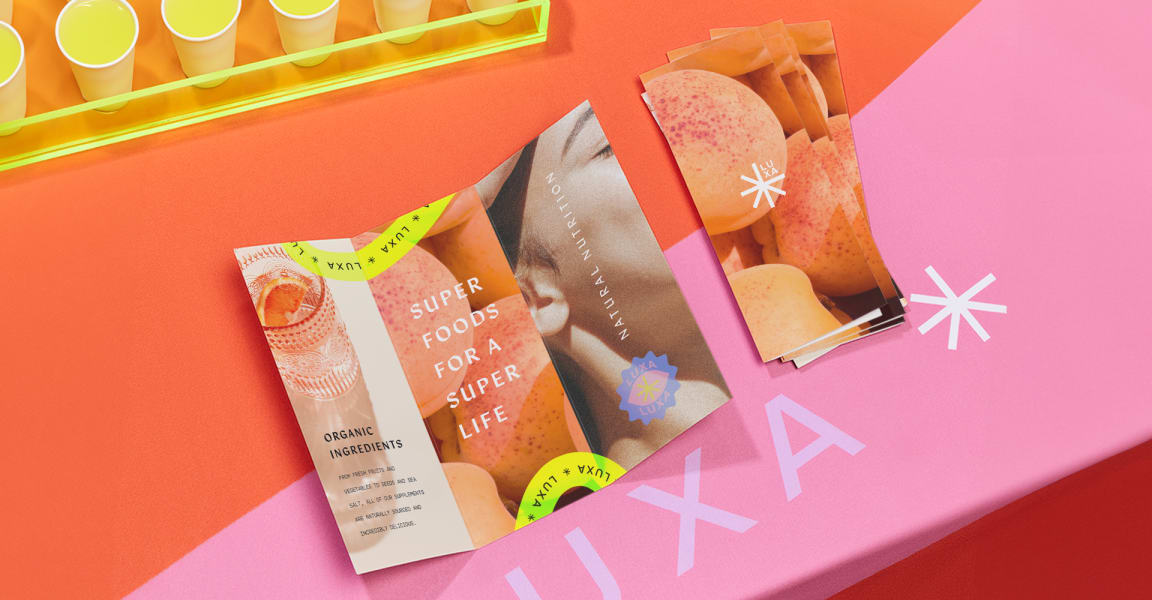
When it comes to print marketing, it’s important to know the difference between flyer vs brochure marketing (and pamphlets too) to understand which makes the most sense for your goals, budget and audience. Once you understand the differences between pamphlets, flyers and brochures, the right choice should become clear. We’ll walk you through when to use each material and how to decide which fits your marketing needs.
- Flyers are single-sheet, unfolded marketing materials designed to communicate a quick message to a broad audience, ideal for promotions, events and campaigns where fast awareness is the goal.
- Brochures are folded print materials with multiple panels that provide more space for information, helping businesses explain services, showcase products and build credibility.
- Pamphlets are similar to brochures in format but are typically used for informational and educational purposes rather than promotional messaging.
- The main difference between flyers and brochures comes down to format, messaging and marketing goals, with flyers focusing on quick visibility and brochures supporting deeper engagement.
- Choose between brochures and flyers based on budget, marketing message and distribution method.

Flyer vs brochure vs pamphlet: What’s the difference?
The main differences between a flyer and a brochure are format and purpose. A flyer is a single, unfolded sheet of paper designed to grab attention quickly with bold visuals and minimal text. A brochure folds into multiple panels, providing more space to tell your brand story, explain services or provide detailed product information. Understanding the differences between pamphlet, flyer and brochure formats helps make smarter marketing decisions.
Marketing materials comparison table
Compare brochure and flyer sizes, format, purpose, cost and distribution to see which makes the most sense for your business marketing needs.
| Flyer | Brochure | Pamphlet | |
|---|---|---|---|
| Format | Single sheet, not folded. | Brochures come in bi-fold, tri-fold, gate-fold and z-fold formats. | Multiple-page booklet; sheets are folded or stapled together to create multiple pages. |
| Purpose | Specific promotion: To advertise new products and services, promote events and offers, increase sales or share contact information. | Inform: To provide detailed information about a product, brand or service to inform, educate or engage audiences. | Long-term promotion: Substantial promotion, such as the evergreen promotion of a company and the services offered. |
| Marketing goals | Quick awareness and time-sensitive promotions, e.g. announcing sales, events, product launches or limited-time offers that require immediate attention and high visibility. | Education, persuasion and brand storytelling, helping potential customers understand your products, services or value proposition in more detail. | In-depth educational and informational purposes, providing detailed guidance, explaining complex topics or supporting lead nurturing with comprehensive content. |
| Size | Standard flyer sizes are 8.5″ x 11″ (US Letter) and 5.5″ x 8.5″, as well as 8” x 8”, 5” x 7” and 4.2″ x 5.5″, depending on the distribution method. | The most common brochure size (before folding/when opened) is 8.5” x 11” (US letter size). | Pamphlet size varies on how it is distributed. |
| Cost | Affordable in comparison to other print materials. | More expensive than flyers – in the middle of the marketing material price range. | Often the most expensive option due to multiple pages. |
| Audience | Flyers target broad, local audiences. | Designed with specific audiences in mind, an impactful brochure needs to speak to its target audience. | Target specific audiences so your pamphlet becomes a meaningful communication tool. |
| Distribution | Distribute or display in public and community spaces. Flyers are easy to hand out and distribute locally, mail or display on countertops. | Distribute brochures at events or in the mail as part of a sales or marketing campaign. Or you can display brochures in your store. | Commonly sent as mail marketing. |
What is a flyer?
Flyers are single, unfolded sheets of paper designed to deliver a quick promotional message, and are typically 8.5″ x 11″ (US Letter size). Displayed on community message boards, in public spaces or stapled to telephone poles, flyers are designed to be eye-catching, featuring large headlines, bold graphics and minimal text.
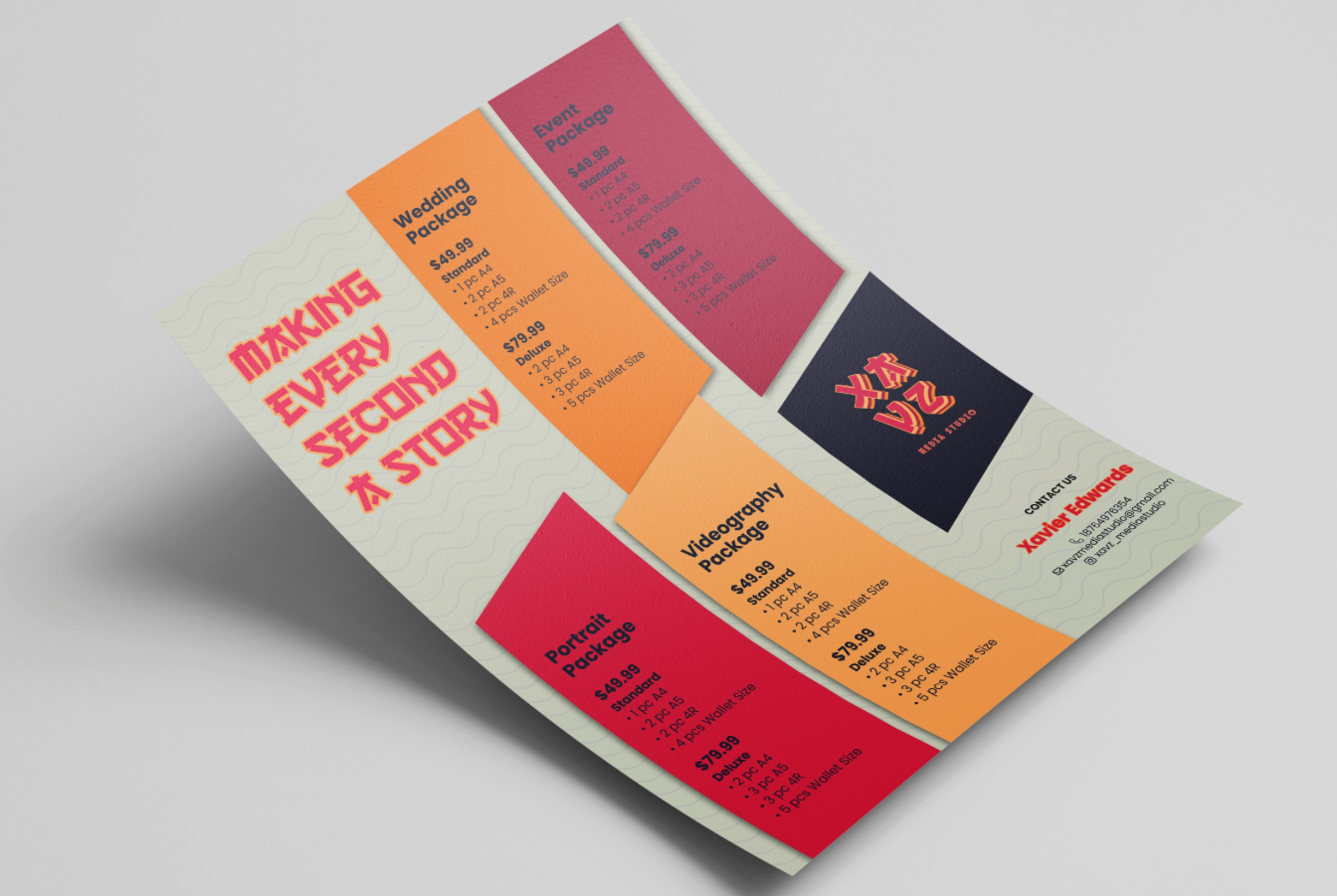
Flyer design by Fi2 Design via 99designs by Vista
The purpose of a promotional flyer is to grab attention. Sitting at the top of your marketing funnel, a flyer is often a potential customer’s first interaction with a brand, so it needs to make them want to learn more. Flyers have just enough text and a clear CTA so the viewer understands how to find out more information and what to do next. Flyers are used for limited-time promotions, upcoming events and short-term campaigns.

How to design a flyer
Unlike brochures and pamphlets, which are folded to create multiple pages, all of the design contents of a flyer need to fit onto one page. Although a flyer and a brochure might both use an 8.5” x 11” sheet of paper, a flyer’s design needs to be more unified because it doesn’t have separate pages to break up the content.
Need help getting started? Check out our step-by-step guide on how to design a flyer for layout tips, content structure and design best practices.
Because a flyer is often the first interaction a potential customer has with your company and branding, place relevant contact information in a prominent place and choose high-quality, on-brand images. Catch attention quickly with eye-catching offers and visual elements.
Create a flyer in four easy steps: choose a flyer template, edit your design and print. Browse flyer design ideas for inspiration.
Why do businesses need flyers?
Design and distribute flyers to advertise your business, product or service to a broad, local audience. Flyers are cheap to produce, easy to print in bulk, great at capturing attention, and effective at generating sales and raising a business’s local profile.

Choose a flyer if:
- You need fast awareness for a time-sensitive event or promotion.
- You’re working with a tight budget.
- You’re distributing marketing materials in high volume locally.
- Your flyer’s message is simple and action-oriented.
- You have a clear CTA, e.g. use this discount or attend this event.
If you need extra space for information, design and print your flyer double-sided. Ask what single action you want someone to take after reading your flyer. The CTA should clearly tell your reader what to do next.
What is a brochure?
Professional and budget-friendly, brochures are single printed sheets of paper folded to create multiple panels, typically in bi-fold, tri-fold or z-fold formats. Brochures typically have more text than a flyer but less than pamphlets.

Browse our guide to brochures and explore different brochure folds to see which suit your marketing needs.
Business brochures serve various purposes, including marketing and promotion, event promotion, education, brand awareness and sales support goals. You have likely encountered brochures in your mailbox, in places of business and at events where businesses are promoting their products or services.
Brochures are great for structured storytelling, listing services or products, and communicating brand value.

How to design a brochure
Keep customers informed using clean, simple and straightforward brochure design. Use photography, images, graphics and whitespace to enhance your message and make the brochure content more digestible. Create the perfect balance between text and visuals.
Design your brochure for its specific size, as different formats require different layouts. Consider your distribution method when choosing brochure sizes.

As you map out the placement of each graphic and text box, consider the path the reader’s eye will take and design a logical flow based on this. When creating a brochure, establish a clear hierarchy for your information and craft smooth page transitions.
Discover how to make a brochure in our step-by-step guide or customize brochure templates using your text and branding.
Why do businesses need brochures?
A business brochure is a great way to communicate information. For example, if you’re promoting group therapy sessions, design and print a brochure explaining goals, dates, times and location, and distribute them locally where prospective attendees spend time.
Choose a brochure if:
- You need to educate or persuade with detailed information.
- Customers will keep it as a reference to browse products or services.
- You want to establish brand credibility through comprehensive content.
- You’re targeting an audience already familiar with your brand.
When designing your brochure, consider what might make the recipient hold onto it, such as a map, price list or contact details. Once you’ve printed your brochures, display them in a brochure holder, on countertops or at your reception area.
What is a pamphlet?
Often used interchangeably with brochures, business pamphlets refer to booklets and other bound marketing materials. Pamphlets are compact and convenient, and easy to include in promotional handouts and giveaways. When it comes to a pamphlet vs brochure, although pamphlets and brochures have similar formats, pamphlets typically focus more on educational than promotional purposes.

Pamphlet design by haleykoch via 99designs by Vista
You might have received pamphlets at industry events and in the mail, sometimes after ordering them. Usually, pamphlets are used to generate leads – tangible products given away in exchange for recipients’ contact information.
Use a pamphlet to:
- Promote your business and its offerings.
- Describe in more detail the products or services your business offers.
- Explain why your product or service is suitable for the reader.
- Include more photographs and images of your products.
How to design a pamphlet
With more pages, pamphlets offer plenty of space for detailed information, images, charts and eye-catching graphics.

Use a grid system for your pamphlet layout, helping you align text, headings and images consistently. Think of a grid as the invisible structure keeping the content in place and making it easy to follow.
Effective graphic choices for pamphlets include:
- Graphs
- Infographics
- Maps
- Relevant imagery
Why do businesses need pamphlets?
Pamphlets help businesses connect with prospective customers by providing detailed information about services or products. Because customers receive a pamphlet once they’re already in the marketing funnel, this marketing material isn’t their introduction to your brand, but the next step in getting to know it better.
Pamphlets make the most sense for informational and non-promotional marketing purposes.
Choose a pamphlet if:
- You want to offer in-depth educational or informational content.
- You want to create lead magnets to collect contact information.
- You need professional leave-behinds for sales meetings.
- The content goal is more informational than promotional.
Order a test print to ensure the colors match your brand guidelines and design intentions. A print proof allows you to assess the final design of your materials and provides the opportunity for a final proofread.

Flyer vs brochure marketing: Choosing based on your goal
When comparing brochures and flyers, consider your immediate goals and long-term strategy. The flyer vs brochure marketing decision often comes down to your specific marketing goal:
- For awareness: Flyers work best when you need visibility for an event, sale or new product launch. They’re designed to catch attention fast with quick promotional messaging.
- For education: Brochures excel at explaining services in detail, showcasing product features or building brand credibility through detailed content.
- For events: Flyers drive awareness and foot traffic and attract attendees, while event brochures provide detailed information attendees can take home. The key is matching your format to your marketing goal.
Is a brochure better than a flyer for marketing?
Whether you choose a brochure vs flyer depends which fits your specific marketing needs, your goals, audience and distribution methods.
- Brochures are better when: You need to provide detailed information that recipients will reference later, you’re targeting an existing audience or you want to build credibility.
- Flyers are better when: You want to build awareness quickly, you’re working with a tight budget or you’re distributing to a broad, local audience.
- Use flyers and brochures together when: You’re running a multi-channel campaign, need event marketing materials or different materials for different stages of the marketing funnel.
Ready to design and print custom marketing materials?
Whether you need a flyer, brochure or pamphlet depends on your goals and distribution methods. All three types of marketing materials will help you share information and drive brand engagement. Which of them you use will be determined by how much information you need to include, and whether you’re introducing people to your brand or nurturing existing relationships.

