
No matter your industry, marketing materials for small businesses help your brand make a memorable first (and lasting) impression. From digital marketing materials like websites and email signatures to print marketing materials like business cards and brochures, marketing collateral is how you communicate your brand identity, increase brand awareness and stay top-of-mind.
But with so many options, it can be tricky to know which marketing materials your small business needs to get started or scale up. Rather than doing everything at once, the best strategy is to match your marketing assets to your business goals. In this guide, we’ve broken down 13 essential marketing items for small businesses, grouped by the outcomes they support, so you can prioritize the materials that will have the biggest impact.
- A website, email signature and social media profiles are foundational digital marketing tools, helping to build a brand presence, boost credibility and keep your audience engaged online.
- Print marketing materials like business cards, brochures, flyers and posters offer tangible touchpoints that help your brand stay memorable and professional.
- QR codes connect print and digital marketing materials, making it easy for customers to scan and access your website, offers or contact details.
- A consistent brand voice and visual identity improve recognition. When your print and digital marketing materials feel cohesive, customers are more likely to remember and trust your brand.
- Measure performance using QR codes, custom URLs and customer feedback. These insights help to understand what’s working and refine what’s not.

What are small business marketing assets?
Marketing materials are the bridge between your brand and your audience, helping your business to stand out and stay consistent. But not all marketing assets deliver the same value for small businesses. The best results come from choosing materials based on your business goals, whether that’s brand awareness, lead generation, customer retention or foot traffic.
Marketing materials help small businesses with:
- Promotion: to showcase products or services.
- Brand building: to establish and reinforce brand identity.
- Engagement: to connect with existing and potential customers or clients.
- Sales: to drive revenue, increase customer loyalty and business growth.
We’ve rounded up 13 essential marketing materials for small businesses, covering both digital and print, to help you build a strong, consistent brand presence.
Marketing materials for increased brand awareness and recognition
1. Logo
Your logo is the face of your business and one of the most powerful tools in your small business marketing arsenal! It shows up everywhere, from your website to your business cards and uniforms. It’s the first impression customers get of your business and sets the stage for everything that follows.

For your logo to represent your brand, boost brand recognition and connect with your customers, you need a great logo design. A logo is a vital step on the way to crafting an established brand identity.
Invest in a professional custom logo design or use our free AI Logomaker tool to get a logo quickly.
Great for: Creating the backbone of your brand identity.
2. Brand style guide
Create a brand style guide with rules for:
- Logo usage: Guidelines for logo placement, size, spacing and variations.
- Color palette: Approved colors and their usage, including primary, secondary and accent colors.
- Typography: Specified fonts for headings, subheadings and body text.
- Visual elements: Icons, graphics and imagery guidelines.
- Brand voice: Tone, style and messaging guidelines for consistent communication.
- Mission and values: A concise statement of the company’s mission and core values.
- Target audience: Ideal customer profiles outlining their needs and pain points.
- Brand story: Narrative explaining the brand’s history, purpose and vision.
- Design examples: Practical design applications for various brand materials.
- Usage rules: Rules for consistent brand representation across all mediums.
Once you have well-developed brand guidelines, use them to project a professional, recognizable and cohesive brand identity, helping to streamline processes and build trust among your audience.

Great for: Creating a cohesive brand identity, streamlining processes and building trust.
3. Social media profiles
A social media presence is important for a small business because it’s often where customers spend time. According to HubSpot’s Report, 29% of respondents said they discovered a product through social media.
Social media is a vital marketing tool for small businesses, especially when it comes to brand visibility, community building and customer engagement. Setting up business profiles on the right platforms and maintaining a consistent presence helps brands to connect with audiences in the digital spaces where they spend time.

Social media tips for small businesses:
- Identify the social media platforms that align with your target audience and business goals. Focus on the platforms where your target customers are most active.
- Develop a social media strategy. Define your goals, target audience, content strategy and posting schedule before setting up any profiles.
- Use a high-quality version of your logo as your profile picture.
- Complete all profile fields, including a compelling bio that succinctly describes your business and what you offer. Include keywords relevant to your industry.
- Select a username (handle) that’s easy to remember. If possible, make it the same across all platforms for consistency.
- Establish guidelines for the content you’ll share, including visuals, tone of voice and messaging.
- Create a content calendar outlining what you’ll post and when.
- Maintain a consistent posting schedule. Consistency builds trust and keeps your brand top-of-mind.
- Outline how you’ll interact with your followers. Reply to comments and messages, encourage user engagement and run contests or surveys.
- Use social media analytics tools to track the performance of your posts and overall account growth. Adjust your strategy based on what your audience interacts with most.
Great for: Building brand recognition, engagement and trust with audiences online.
Marketing materials for lead generation and building credibility
4. Press kit
A press kit is a key marketing material for small businesses looking to gain credibility and media exposure.
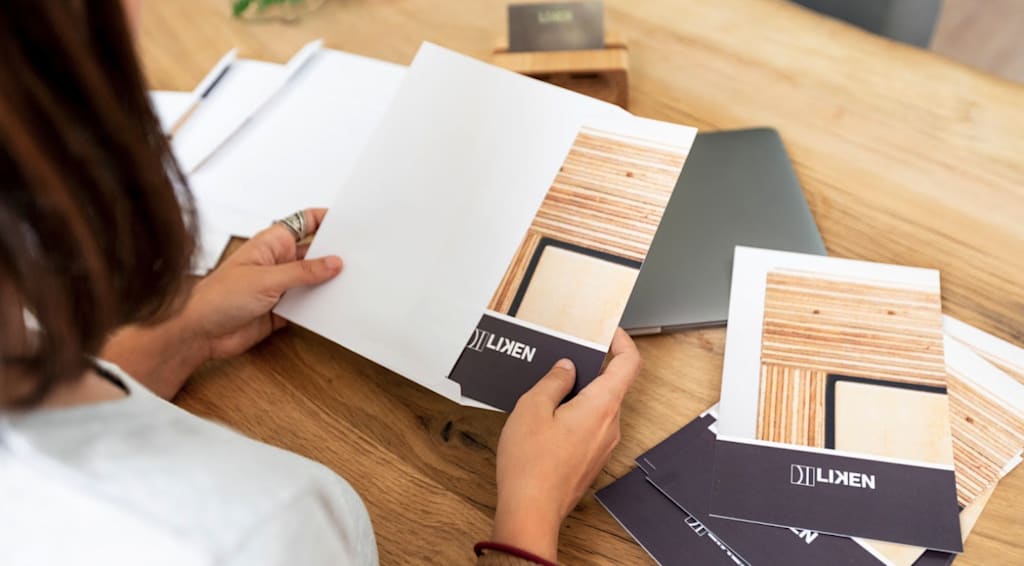
A press kit is packaged information and resources that make it easy for journalists, bloggers and influencers to write about your business. Press kit elements include:
- A company overview
- Executive bios
- High-resolution images and videos
- Product/service information
- Customer testimonials
- Past media coverage
- Contact information
- Brand assets
- Press release
A press release is a statement or announcement about your business, services or products that you send to the media. It should outline the most recent or significant business developments, from product launches to events. It should be concise, straight-to-the-point, adaptable and newsworthy. That way, it’s more alluring to journalists considering covering your business online or in print. Regularly update your press kit so that it contains relevant information about your business, making the journalists’ work easier (that’s how you build relationships with media and get more press coverage).
Great for: Securing media exposure, building credibility and sharing company developments with the press.
5. Business website
Most people look online to find out more about a business, making a well-designed website an absolute must. A website is one of the most important digital marketing materials for small businesses, acting as a sales tool and giving your business credibility. It’s also a great way to share information about your offerings, build trust with customers and show them why you’re the one they want to do business with.

“As more people use the internet to find products and services, a strong online presence is crucial. Search engines like Google favor well-structured, well-designed websites, resulting in higher rankings and more traffic.”— Moran Shadzunsky, Design Lead at Wix.com
Learn how to create a business website or use a website builder for professional-looking web design.
Elements of effective website design:
- Branding: Use your brand colors and fonts and include your logo on each page.
- Contact information: Include your email, phone number and address on your website.
- “About us” section: Tell potential customers who you are and the story behind your business.
- Product and service information: Tell customers what you do, including information about the products or services you offer.
- Hours of operation: Your customers need to know when you’re open for business online and offline.
- Social media handles: Include links to your social profiles so customers can easily connect with you.
Great for: Establishing an online presence, building credibility and increasing traffic from search engines.
“A well-designed site communicates a company’s mission, leaves a strong first impression and boosts customer engagement, trust and brand loyalty.”— Moran Shadzunsky, Design Lead at Wix.com
6. Business cards
When it comes to designing your business card, start with the basic business information (like your logo and contact information) and choose the right business card dimensions. Then use your card to make connections and get the word out about your business.
Business cards are an incredibly versatile small business marketing tool. Use them to:
- Connect with potential clients and customers
- Build visibility in your local community
- Market on the fly
Great for: Connecting with customers, building visibility in your local community and marketing on the fly.
Learn how to design a business card in our step-by-step guide.
7. Email signature
Email remains an exceptionally effective marketing tool. But before you start sending marketing emails, you need a professional email signature to help build trust and credibility. No matter the size of your company and the industry you operate in, it’s likely that you’ll use email from day one to reach out to media, leads, potential partners and suppliers.
Use your email signature to share your:
- Contact information
- Logo or photo
- Website URL
- Social media links
- Brief promotional content
Great for: Reinforcing brand credibility in everyday communication, making it easy for contacts to find your details and linking to your website or social media profiles.
8. Blog
Blogs are among the most cost-effective marketing materials for businesses, regardless of their size or industry. They serve as a cornerstone of content marketing, reinforcing your expertise and credibility while improving SEO. Most website builders offer user-friendly blog page integration or you can craft one from the ground up. To increase traffic, your blog should have a user-friendly design, look on-brand, be easy to navigate and offer high-quality, exclusive content.
Great for: Enhancing SEO, increasing traffic and launching content marketing initiatives.
9. QR codes
QR codes are versatile, cost-effective and user-friendly, allowing small businesses to connect their physical marketing materials with digital content. They facilitate engagement, provide valuable insights and enhance customer experience, making them a valuable asset in the marketing toolkit of small businesses.
QR codes serve as a bridge between digital and physical. Typically found on stickers, posters, flyers and business cards, QR codes can connect to a business’s website, blog, newsletter or social media profiles when scanned. Low-cost and easy to distribute, stickers are an easy way to use QR codes and test campaigns.
Great for: Connecting physical marketing materials with digital content.
Marketing materials for local reach, foot traffic and customer retention
10. Printed ads
Print ads help with local targeting and building brand credibility and recognition. In some markets, there’s less competition in print advertising, allowing your business to stand out to a niche audience more easily. Print ads speak to specific demographics or interests, meaning you can target potential customers more precisely. Print materials and direct mail also have a longer lifespan than digital ads, creating lasting impressions.
Combine print and digital advertising for a comprehensive marketing strategy, reaching customers through multiple touchpoints.
Great for: Local targeting, increasing brand credibility and reaching niche audiences.
11. Postcards and flyers
Postcards and flyers are some of the most versatile marketing materials for small businesses, especially for events or local marketing. Include information about your business, alongside visuals and promotional offers.
Leave a stack of postcards with other local business owners to reach new customers, or post flyers on local message boards to boost brand visibility. Slip postcards with discount codes into store purchases and packaged orders to encourage return customers. Postcards also work extremely well for mail marketing. Because of their size, they stand out from other types of mail, grabbing attention easily.
Great for: Increasing brand awareness and promoting special offers.
12. Posters
Use business posters to promote an upcoming event, daily specials or a new product or sale item. Use them within your store to promote a new offering to existing customers or as outdoor signage to attract new ones.
Great for: Attracting new customers and promoting content, events or special offers.
13. Brochures
Use brochures to market your business and share information with your customers. For example, a brochure can be used to tell your brand story (similar to the “About Us” section on your website), share detailed information about a particular product or service, promote an upcoming event or pitch to potential investors.

Great for: Sharing in-depth information about your company, promotions, products or services.
Choosing the right marketing materials for your goal and budget
| Material | Cost | Goal |
|---|---|---|
| Business cards | Low | Networking, local awareness |
| Flyers/postcards | Low | Promotions, events |
| Posters | Medium | Increasing foot traffic |
| Brochures | Low to medium | Sales, informing customers |
| Website | Medium to high | Credibility, lead generation |
| QR codes | Low | Tracking and digital connection |
How to make your marketing materials for business work harder
To make marketing materials for a small business work for you, it helps to understand the strategy behind them.
Designing effective marketing materials
To create impactful marketing materials for small businesses:
- Know your audience: The message, design and format should be aligned with who you’re speaking to.
- Be consistent: Use your brand guide to create a cohesive visual identity across all materials.
- Keep messaging clear: Whether it’s a postcard or a blog, prioritize clarity.
- Use design tools: Online tools like VistaPrint’s templates can simplify the design process.
Content strategy for marketing materials
Strong marketing materials start with great content. To build trust and stand out with your materials:
- Tell your brand story with clarity and heart.
- Balance visuals with concise, compelling copy.
- Make content consistent across print and digital channels.
Distribution strategy for marketing materials
Now that you’ve created your marketing materials, it’s time to distribute them. Think strategically about how to reach your target audience and use both online and offline channels to reach more people:
- Offline: Hand out business cards, flyers and brochures at events, in stores or by mail.
- Online: Share materials through email, social media, your website or as downloadable content.
Measuring the effectiveness of marketing materials
How do you know which small business marketing assets are impactful? Your materials should evolve with your business and your insights – if something works, do more of it! Keep an eye on performance by:
- Tracking QR code scans, UTM links and custom URLs.
- Asking customers how they found out about you.
- Monitoring engagement, response rates and conversions.
Trends in marketing materials for business
Marketing is always evolving, and your brand materials should evolve with trends, such as:
- Interactive print: Use scannable content and augmented reality to boost engagement.
- Sustainable design: Minimal, eco-conscious materials resonate with customers today.
- AI-powered customization: Use tools that personalize marketing, tailoring content to your audience.
Create marketing materials for your business today
There’s no need to do everything at once, just start with the marketing materials for a small business that align with your goals, audience and budget, then build from there.
Marketing materials FAQs
How often should I update my marketing materials?
Review your materials quarterly or whenever you make major changes, like a rebrand, product launch or service update. Keeping materials up to date helps maintain credibility and build trust.
What are the most cost-effective marketing materials for new businesses?
Business cards, digital flyers and social media templates are low-cost, high-impact tools. A simple but well-designed website also provides long-term value.
How can I make sure marketing materials feel consistent?
Use your brand guidelines to keep visual and messaging choices aligned across all materials, ensuring consistent use of colors, fonts and tone of voice.
What’s the best way to test if my marketing materials are working?
Start small and measure results. Use QR codes, UTM links or promo codes to track engagement. Ask new customers how they found you, and monitor changes in traffic or conversions after distributing materials.

