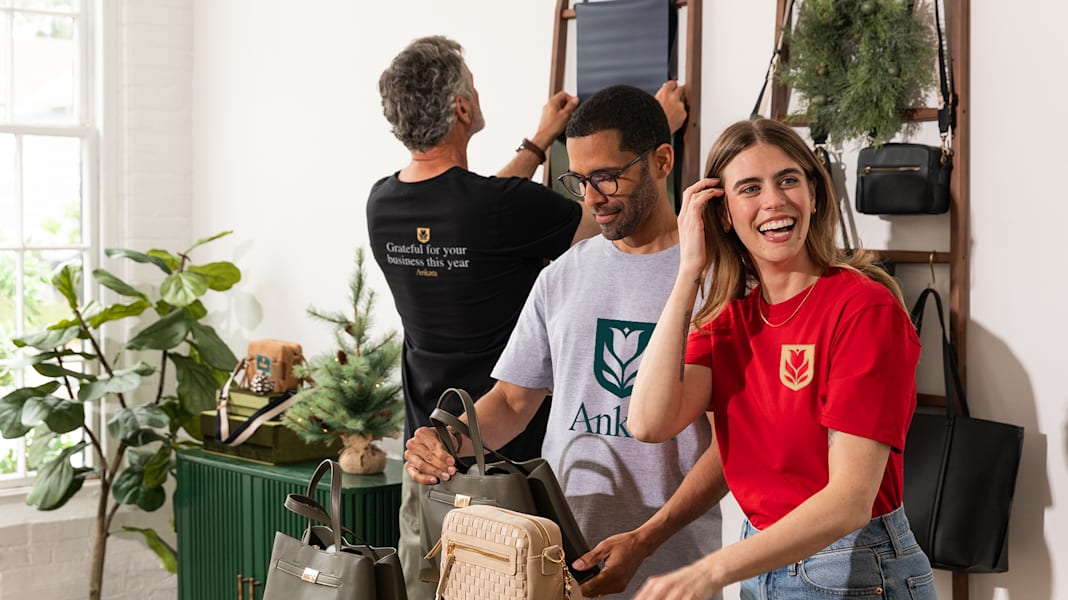
T-shirts are a staple of our everyday wardrobe, probably because of how incredibly versatile they are. They can work as a blank canvas for artwork in a way other clothing can’t, and that means the possibilities for T-shirt design are endless. The best T-shirt design ideas are wearable, memorable and communicate a message at a glance.
From businesses to basketball teams to bands to bachelorette parties, an awesome shirt design can make a huge statement. Whatever your message, the strongest T-shirt design ideas start with one clear concept, then match the artwork, garment and print method to it. We’ll help show you how to design a T-shirt that feels original, look for inspiration in subcultures, hand-made textures, typography, local pride and the visual world around your audience.
- Start with the message and the audience, then build the visuals around that.
- Use simple color palettes and strong placement to make designs look more professional.
- With the rise of AI, the best shirt design ideas in 2026 often feel more human and less overly polished.
- Match your artwork to the print method so important details actually survive production.
- A great tee should work as both a design piece and a wearable product.
2026 Design-to-print matrix
In 2026, the best T-shirt design trends are all about balancing style, wearability and print practicality, so this table quickly breaks down what’s popular, where each trend works best and which print method will help bring it to life.
| T-shirt design trend in 2026 | Best use cases | VistaPrint product | Best print method | Why it works |
|---|---|---|---|---|
| Intentional imperfection | Artist merch, creative brands, indie retail lines | Custom short-sleeve T-shirts | DTG | Holds onto hand-drawn lines, distressed textures and analog-style details without over-cleaning the artwork. |
| Oversized back prints | Streetwear, band merch, event tees | Men’s or unisex backside T-shirts | Screen printing | Gives the design high visual impact and works especially well for bold graphics and limited-color artwork. |
| Vintage-inspired typography | Schools, sports teams, local businesses, fundraisers | Custom long sleeve T-shirts | Screen printing | Retro lettering looks timeless, prints cleanly and works well with one to three ink colors to keep costs down. |
| Mascots and character illustrations | Small businesses, schools, nonprofits, community groups | Custom T-shirts | DTG | Great for expressive, colorful artwork with more detail and shading than traditional logo-based designs. |
| One-color statement slogans | Causes, campaigns, fitness groups, parties | Custom T-shirts, tank tops, V-neck | Screen printing | Strong contrast and simple layouts make the message easy to read and affordable to print in bulk. |
| Nature-inspired graphics | Outdoor brands, wellness businesses, retreats, eco events | Custom T-shirts, 100% cotton | DTG | Helps preserve soft gradients, organic shapes and illustration details that give the design a more premium feel. |
| Badge and emblem layouts | Clubs, breweries, school merch, branded giveaways | Custom T-shirts, sleeveless | Screen printing, embroidery | Compact layouts work well on left chest or center front placements and create a polished, classic merch look. |
T-shirts for startups and businesses
A business T-shirt works best when it feels like something people would choose to wear, not something they were handed in a swag bag. Instead of pushing the logo as hard as possible, build the design around a mood, symbol or phrase that captures your brand personality. That’s what makes custom merch feel considered rather than promotional, especially for teams, pop-ups and founders learning how to start a clothing brand from a simple first drop.
What makes a T-shirt design look professional here is restraint: a limited palette, readable type, intentional placement and artwork that still works from six feet away. If you’re deciding how to market a clothing brand, wearable business tees can also double as content, team uniform and customer merch.

Spec box:
Garment weight: 180–220 GSM for everyday branded tees, go heavier if you want a more premium streetwear feel.
Print method: Screen printing for bold, low-color artwork, DTG for painterly or full-color illustrations.
File requirement: Vector AI, EPS or PDF for logos and type-heavy designs; 300 DPI transparent PNG for raster artwork.
T-shirts for events and conferences
If you’re hosting a conference, you’ve already got an audience that’s invested enough to buy a ticket, so a T-shirt purchase should be a no-brainer. But beyond sales, an event shirt is a great way to create memorabilia that participants can look back on and connect their experience to your brand.
Take advantage of annually recurring events by developing a consistent design concept that ups its ante each year. A new and improved t-shirt design implies that every conference will be different and better than the last. And each T-shirt becomes a collector’s item for participants, both of which encourage repeat attendance.

Spec box:
Garment weight: 160–200 GSM if you need a softer, lighter event tee for large-volume orders.
Print method: Screen printing for cost efficiency at scale, DTG works well for short-run multicolor designs.
File requirement: 300 DPI artwork sized to final print dimensions, with colors separated cleanly if using screen printing.
T-shirts for parties and celebrations
Ever regret that Friday night you sat on the couch watching Netflix with a bucket of ice cream, and you checked your social media feed only to witness the photo deluge of your friends enjoying that party you were currently too (*cough*) busy to attend? Yeah, me neither… Man, that FOMO feeling is killer. Now imagine if everyone were wearing the same T-shirt.
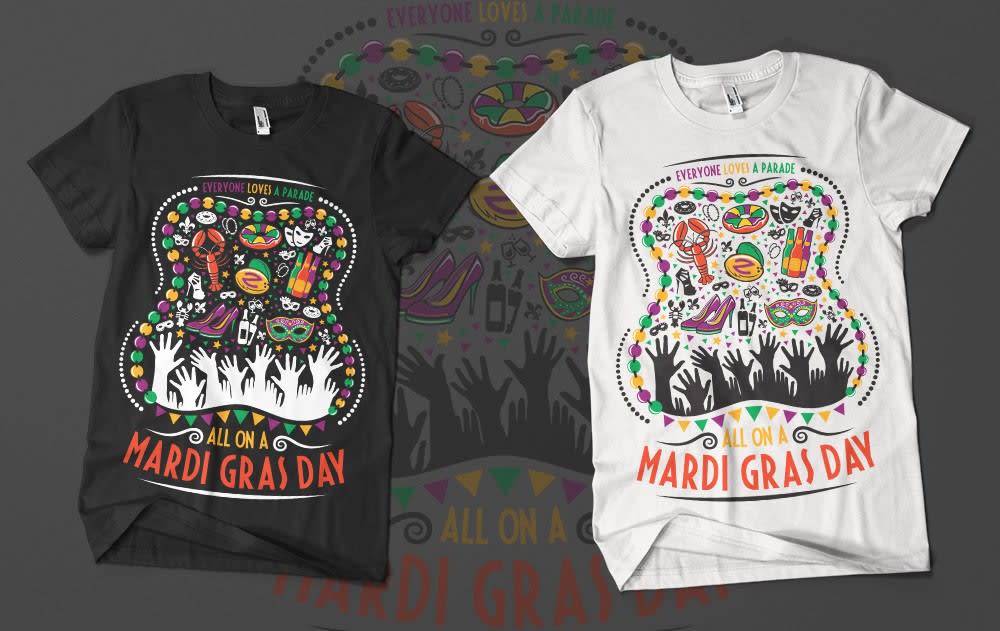
Mardis Gras t-shirt design by revoule for D Fresh via 99designs by Vista.
The ultimate party shirt marks partygoers as members of an exclusive group, and it can also be a badge of honor. Keep the concept simple: one joke, one theme or one visual hook. Milestone birthdays, reunions, bachelor and bachelorette trips, and holiday gatherings all work best with shirt design ideas that read fast and photograph well.
Spec box:
Garment weight: 160–180 GSM for casual, easy-to-wear party tees.
Print method: DTG for quick turnaround and smaller quantities, screen printing for simple slogans in bulk.
File requirement: 300 DPI PNG with transparent background, with text converted to outlines if you’re supplying vector art.
T-shirts for sports and fitness
Nobody – not the coaches, not the commentators, not even the players themselves – is as passionate about sports as the fans. When you’re trying to sell a T-shirt, a total and complete obsessive fandom is definitely a good thing. So, cater to it.
Sports and fitness shirts need energy. Fans want identity, while participants want motivation, so the design should feel active even when the wearer is standing still. That could mean vintage mascots, reworked team symbols, route-map graphics, race statistics or illustrations built from equipment and movement.
For gyms, clubs and training groups, participants are striving against the most challenging adversaries of all – their own body, genetics and plain willpower. So consider a T-shirt design that emphasizes the kind of strength and solidarity they will need to see the kind of results that they want.

Spec box:
Garment weight: 140–180 GSM moisture-wicking performance shirts, or 180–220 GSM cotton for lifestyle merch.
Print method: Screen printing for durable, bold team graphics, heat transfer or DTG for names and variable numbers.
File requirement: Vector artwork for logos and lettering; keep line thickness sturdy enough to hold up on activewear fabrics.
T-shirts for bands and musicians
Band merch should feel like part of the world the music comes from. The best designs translate the sound into mood, typography and imagery.
Band tees are a staple at most concerts, and for good reason. Just like sports fans, music lovers want to identify themselves as fans and find others like them, especially if their favorite band isn’t very well known. T-shirts help promote musicians, but also build the fan community around them.
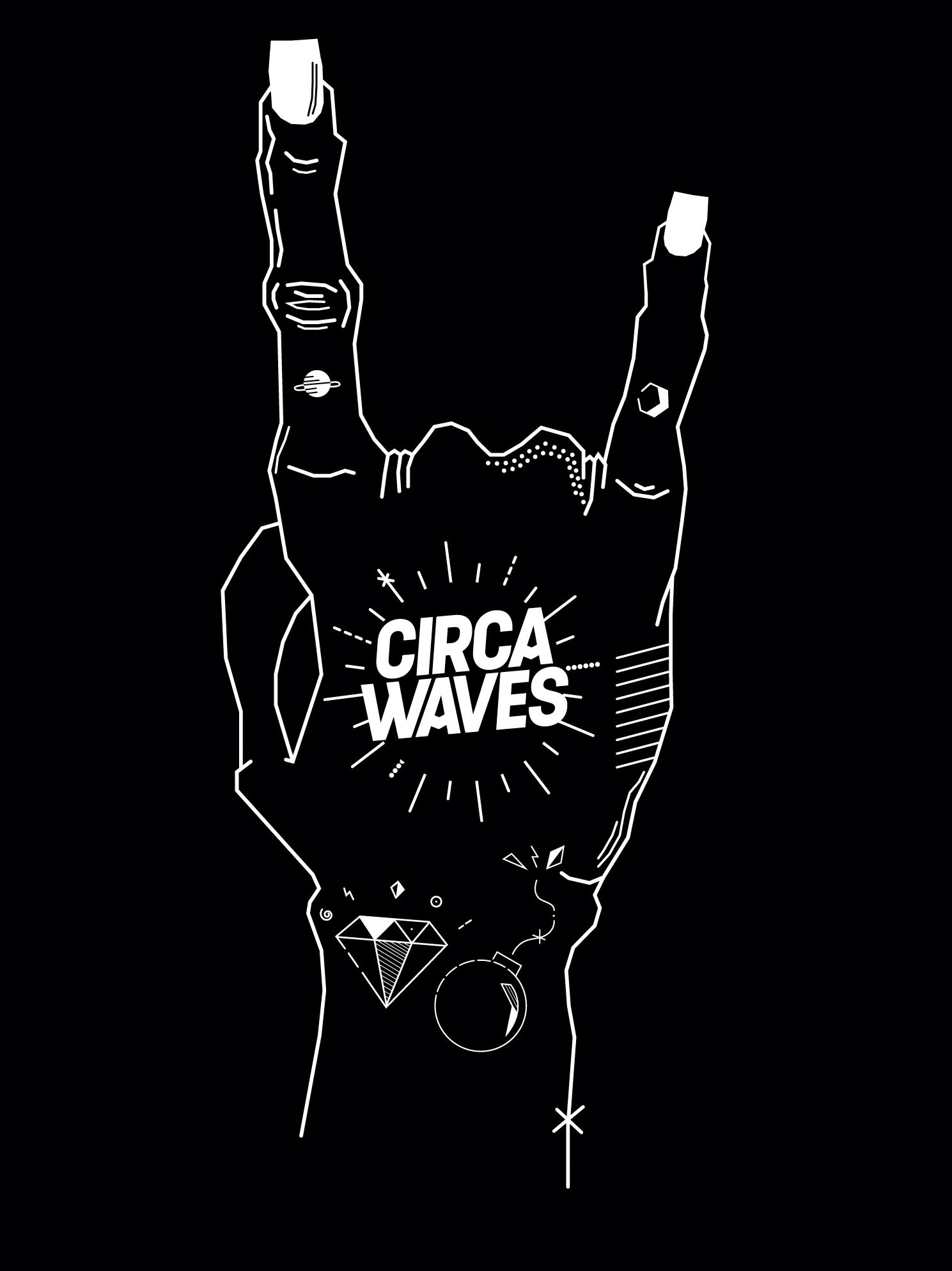
Band t-shirt illustration by Carolina.ai via 99designs by Vista.
Music is already art, so there are very few constraints on what a band’s t-shirt design can convey. Recent trends have leaned heavily into vintage fades, oversized back prints and artwork that looks discovered rather than digitally overfinished. But similar to the album cover, you’ll want something that evokes the mood or theme of the music itself, whether it’s computerized and abstract or a design that harkens back to 70s and 80s metal.
Spec box:
Garment weight: 200–240 GSM heavyweight tees for premium band merch and oversized fits.
Print method: Screen printing for vintage-style tour merch, DTG for detailed artwork with tonal shading.
File requirement: High-resolution layered artwork, ideally at print size, with distressed textures preserved rather than flattened away.
T-shirts for schools and universities
Short of making a necklace out of your diploma, school apparel is the best way for students and alumni to express pride in their education. You’ve worked hard for it, so why not show it off?
School pride and hometown pride often go hand-in-hand, and your design can pay homage to both with a clever illustration. And if you really want your students to take your wise words home with them, consider a T-shirt that dresses up your message with a custom typeface.
For younger students, playful illustration and brighter palettes usually win. For older students and alumni, cleaner design and heavier tees tend to feel more wearable.
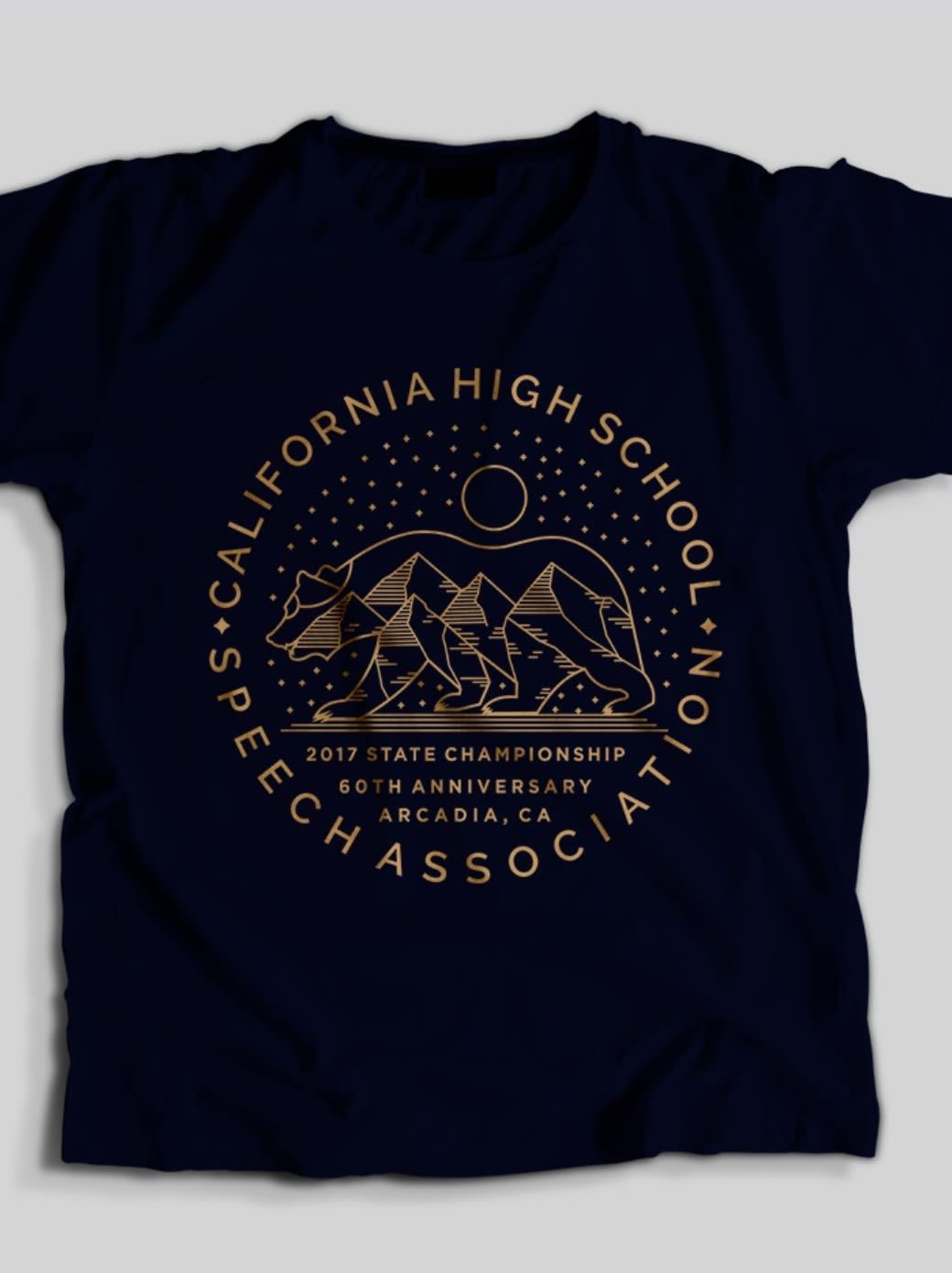
California flag inspired t-shirt design by Skilline for CHSSA via 99designs by Vista.
Spec box:
Garment weight: 170–220 GSM for versatile school merch that suits students, staff and alumni.
Print method: Screen printing for spirit wear and fundraiser runs, embroidery works well for premium staff apparel.
File requirement: Vector files for mascots, crests and type; avoid tiny details that may fill in on lower-cost bulk prints.
T-shirts for clubs and organizations
Clubs are filled with people who have similar interests and hobbies, and a sweet communal T-shirt can go a long way in reinforcing those social bonds, just like teammates wearing uniforms. Giving members cool threads to wear around town or at the gym can also help spread the club’s word of mouth.
But beware: Matching designs can be a hard sell, so make sure it’s a great one. Otherwise, a tacky group shirt is going to have your members feeling like this family.

T-shirt badge by Skilline via 99designs by Vista.
Your T-shirt sets the tone for how you will be perceived. If your club is seen as a little nerdy, an awesome shirt is a great step towards building a cool image. Or maybe your club isn’t for the faint of heart. A “join-at-your-own-risk” style can actually inspire people to rise to the challenge. Choose one strong symbol, phrase or mascot and give it enough style that members would genuinely wear it on a normal day.
Spec box:
Garment weight: 180–220 GSM for a slightly nicer feel that members will keep wearing.
Print method: DTG for small batches and flexible artwork, screen printing once the design is locked and volume grows.
File requirement: Supply artwork at final size with clean contrast, especially if printing fine text or badges.
T-shirts for non-profits and charities
Occasionally, a T-shirt design should make more of a statement than a fashion one. While nobody wants to think about anything in their closet as capitalist advertising space, a design for a worthwhile non-profit cause is a different story.
Although a T-shirt isn’t going to solve the world’s problems, its central location on the chest makes it a great space for promoting awareness. And even if the subject matter is heavy, the design doesn’t have to be. Non-profits are focused on helping others, and a cheerful design can emphasize that positivity. Use hopeful color palettes, concise messaging and artwork that leads with people, symbols or optimism rather than guilt.

Spec box:
Garment weight: 160–200 GSM for accessible, budget-friendly fundraising tees.
Print method: Screen printing for large charity runs, DTG for smaller campaigns with detailed artwork.
File requirement: High-contrast art with readable type; test light-on-dark and dark-on-light versions before production.
Graphic tees for retail
Graphic tees are what shirts were made for. Think about it. Pants, button-ups, jackets, you name it, they all tend to come either solid colored or patterned (and you just can’t show off artwork very well on a pant leg). T-shirts with awesome artwork are a great way to look simply unique and cool, and that’s the reason people look to fashion in the first place. Retail graphic tees live or die on point of view. People buy them when the design says something about their taste, humor, nostalgia or identity in one quick hit.
To make the design feel professional, think about placement as much as artwork. Chest hits, oversized backs, off-center prints and wraparound compositions can all work, as long as the design has room to breathe. When choosing colors, start with the shirt color first, then build a limited palette that contrasts clearly against it.
This is also where related categories like hoodie design ideas often begin: one strong graphic system that can flex across multiple garments.
Spec box:
Garment weight: 200–260 GSM for retail streetwear; 160–180 GSM for lighter fashion basics.
Print method: DTG for complex full-color art, screen printing for cleaner, scalable retail runs.
File requirement: Print-ready art at actual size, ideally 300 DPI or vector, with placement mockups checked before approval.
For a deeper dive into printing specs, check out Vista’s helpful guide on how to print T-shirts.
Intentional imperfection
Right now, some of the most interesting T-shirt design ideas are reacting against overly perfect AI-generated visuals. Clean isn’t the same as memorable, and a little irregularity can make a shirt feel more human and premium. That’s why hand-drawn doodles, linocut textures, rough halftones, scribbled type, collage edges and analog-first graphics are landing so well: They break the polished sameness flooding the web.
If you want this look, keep the texture real. Scan sketches instead of redrawing them too neatly. Preserve uneven edges. Let ink speckle, pencil grain and carved marks stay visible. For high-texture artwork, direct-to-garment (DTG) is often a smart choice because it holds onto small, irregular details and layered surfaces well, while screen printing works beautifully when you simplify the texture into bold, deliberate shapes. Avoid over-cleaning files, because the “mistakes” are often the whole point.
T-shirt design: One idea doesn’t work for every shirt
T-shirts have so many different uses, from professional to personal, but whatever T-shirt design goal you have, make sure you offer folks a tee just as cool as something they’d choose for themselves. The best T-shirt design ideas don’t come from copying what everyone else is doing. They come from matching the concept to the audience, choosing colors that fit the mood and making practical production decisions early instead of treating print as an afterthought. That’s also true if you’re thinking about how to market a clothing brand: Wearable, well-made designs do a lot of that work for you because people become the ones carrying the story out into the world.
T-shirt design ideas FAQs
What is the best file format for uploading a T-shirt design?
That depends on the printer, but the safest options are usually a vector file for simple logo-based art or a 300-DPI PNG with a transparent background for raster artwork. A transparent background helps avoid unwanted boxes around the design.
How do I ensure my design is centered and sized correctly on the shirt?
Build the file at the actual print dimensions, use the printer’s template if one is available and check alignment from the collar, not just the page. Most adult center-chest prints sit roughly 2.5 to 3 inches below the collar seam, but the exact placement depends on garment size and design shape.
Can I use copyrighted images or logos in my custom T-shirt design?
Only if you own the rights or have clear permission. Using protected logos, character art, album covers or brand graphics without authorization can lead to your order being rejected and may create legal issues, too.
What is the difference between screen printing and direct-to-garment (DTG)?
Screen printing is usually best for larger runs and simpler color counts because it’s durable and cost-effective at volume. DTG prints directly onto the shirt, which makes it a good option for short runs, photo-style artwork and detailed full-color designs.
How many colors should I use in my design to keep costs down?
For screen printing, fewer colors usually means lower cost, so one to three colors is often the sweet spot. If you need lots of color in a small batch, DTG can be more practical because pricing is less tied to color count.

