
All small business events – like pop-up shops, trade shows, craft markets, local fairs and community markets – give you direct access to the people you want to reach. The difference is how you handle them. Many small businesses show up ready to sell, but without a clear plan for how to connect with customers at small business events.
This guide walks you through a simple three-stage approach: how to prepare, how to engage in the moment and how to follow up so those conversations turn into something more.
- In-person events help you build trust faster, create memorable interactions and learn directly from customer reactions.
- To begin, choose the right event, define your goals and prepare materials that support engagement and follow-up.
- During the event, focus on attracting attention, starting real conversations and making it easy for people to stay connected.
- Afterward, organize your contacts, follow up quickly and keep the relationship going with relevant communication.
- To get more out of events, use marketing materials and promotional products that extend the interaction beyond the booth.
Why in-person interactions still convert better than digital alone
While digital marketing is great for reaching people, it’s small business events that convert them. Being there in person cuts through hesitation and moves conversations forward faster.
When you connect with customers at small business events, there are some key benefits:
- Trust builds faster face-to-face: Potential customers read your tone, reactions and confidence. When you answer questions on the spot, doubt doesn’t get a chance to build.
- Customers remember physical experiences: A conversation, a product demo, even the feel of your booth sticks longer than something people scroll past in two seconds.
- Events combine discovery and relationship building: Visitors come to small business events in discovery mode – already open to new brands and conversations. Instead of interrupting their day, you meet them where their attention already is.
- Printed materials reinforce brand memory: Online, a business card or flyer disappears when a tab closes. At events, it stays with your leads and gives them an easy way to come back when they’re ready to buy.
- In-person conversations reveal customer insights: Small business events give you direct, unfiltered reactions to your business and products. People ask blunt questions and point out what doesn’t click, giving you feedback you can use right away.
Pre-event preparation: How to set up your small business event for real customer connections
Everything that happens at the event starts before you even arrive. Once you’re on-site, you’re working with what you brought, how you planned it and how clearly you know what you’re trying to achieve.
Strong event planning and prep put you in control. You show up focused, equipped and ready to make the most of every interaction – with enough flexibility to adjust when something unexpected works in your favor.
1. Start with a clear event strategy and measurable goals
Before you as much as think about pop-up shop table ideas or print materials, get clear on why you’re there.
Start by defining the role this event should play for your business (remember, not every event needs to do everything):
- Product discovery: Introduce new or lesser-known products and gauge interest.
- Community engagement: Build relationships, start conversations and increase local awareness.
- Direct sales: Focus on converting foot traffic into immediate purchases.
Pick one primary role and let it guide your messaging and interactions.
Next, define what success looks like in practical terms. Without clear metrics, you won’t know what worked or what to improve next time.
- Leads collected
- Email signups
- Product feedback gathered
- Brand awareness

Then, get specific about who you want to connect with. Not every attendee is a good fit, a clear attendee profile helps you focus on conversations that actually matter.
Define:
- Demographics: Age range, location, profession
- Buying intent: Browsing casually, comparing options or ready to purchase
- Pain points: Problems they’re trying to solve that your product addresses
- Budget range: What they’re realistically willing to spend
- Familiarity with your product: First-time exposure or already aware of your brand
Use existing data to build this profile. Look at past customers, website analytics, social insights and any previous event experience.
With everything else sorted, it’s time to decide on a concrete goal or two. Make them big enough to be exciting, but small enough to manage and try to be specific.
For example: “Collect 50 email subscribers and book 10 follow-ups.”
2. Choose the right type of small business event for your goals
With your goal defined, use it to guide you toward the event that gives you the best chance of hitting it.
The crowd and mindset change from one small business event to another. Here’s how different event types tend to play out:
| Event type | Customer intent | Focus | Audience |
|---|---|---|---|
| Pop-up shops | Ready to browse and buy | Selling | Local, casual foot traffic |
| Trade shows | Comparing options and gathering info | Lead generation and networking | Industry-specific |
| Local craft markets | Exploring unique, often handmade products | Selling with storytelling | Community-driven |
| Community festivals | Social, experience-focused | Brand exposure with light selling | Broad local audience |
Small business event examples
- A coffee house could provide a weekly or monthly open-mic event with local talent as the host, or bi-weekly tasting events for new or undersold products.
- A building products company could hire someone to run lunch-and-learns at area architectural or engineering firms, host a quarterly beer tasting event at a local brewery or hold tailgate parties for the local college or professional football team.
- Salons and barber shops can combine forces and have a contest, giveaway or introduction to services in the form of a mini block party. Add a local band and some refreshments, and you’ve got a vibe going.
3. Define your priorities based on the small business event you chose
The next strategic decision on your plate is where to focus your effort. That choice will shape how your booth looks, what materials you bring and how people experience your brand.
If your goal is on-the-spot sales – try pop-up shops
In a pop-up setting, people move quickly. Your setup should match that pace.
Prioritize:
- Easy, fast browsing
- Clear pricing and simple offers
- Minimal friction at checkout
Success looks like: Customers discover, decide and buy within minutes.
If your goal is lead generation – try trade shows
Trade shows reward clarity. People compare options, so your offer needs to be easy to grasp and worth following up on.
Prioritize:
- A clear explanation of your offer
- Building trust quickly
- Capturing qualified leads
Success looks like: You leave with strong contacts and clear next steps.
If your goal is brand connection – try craft markets & community events

Here, people take their time. They’re open to conversation and more likely to remember the experience.
Prioritize:
- Storytelling that explains your product
- Personal interaction
- A memorable experience
Success looks like: Customers remember your brand and want to come back.
4. Build a simple lead capture system before the event
To make sure no leads fall through the cracks and every strong interaction has a next step, you need a simple system for collecting and storing contact details.
Your lead capture setup should match the event and how people behave in that space. Keep it quick, visible and easy to act on.
Here are a few options that work across most small business events:
- QR codes → email signup: Let people scan and subscribe in seconds.
- Tablet signup forms: Use these to help guide the interaction.
- Giveaway entry cards: Offer a clear exchange for contact details.
- SMS list signup: Let people know the value of joining your SMS list.
- Digital business cards: Share your details easily.
Make the next step obvious. If people have to think about how to sign up, they likely won’t.

Plan where these calls-to-action will show up across your setup:
- On your table or counter: Use it to capture quick signups while people browse or wait to pay.
- Next to key products: Use it to capture interest right after someone engages with a product or demo.
- On visible signage: Use it to capture attention from passersby who aren’t ready to stop.
- On printed materials you hand out: Use it to capture follow-ups after people leave the event.
A clear system, placed in the right moments, turns a quick interaction into a contact you can actually follow up with.
5. Design a booth that invites conversation, not just transactions
For many business owners, this is where it starts to get interesting. You have room to experiment, and aside from space limits and event rules, there’s a lot of freedom.
Still, as tempting as it is to go with the design you like best, it’s more important to focus on what helps people notice you, quickly understand what you offer and feel comfortable stepping in.
A strong trade show booth designusually comes down to a few core elements:
- Clear signage that explains what you do
- Visuals that support your product or service
- A layout that feels easy to approach
- Materials suited to the environment
- Consistent branding across the setup
Drive booth design inspiration from our list of the best trade show booth design ideas.
Make sure people can spot you from a distance
People decide whether to approach your booth before they’re anywhere near it. To make that work in your favor, your setup needs to be visible from afar and stand out enough to draw attention.
Visibility comes down to a few simple choices:
- Raised signage gets seen first.
- Bold contrast stands out more than muted palettes
- Fewer elements make your message easier to process from a distance
For outdoor events, use UV-resistant vinyl banners or coated poster stock. They hold color better in direct sun and keep your message readable throughout the day.
Structure your signage so people get it fast
Once your booth catches attention, people take a quick look to figure out what you offer. If that takes effort, they move on.
That’s why both your design and your message need to work together. Keep your main idea front and center, and make sure your custom posters are easy to read from a distance:
- One clear headline that explains what you do
- Supporting text only where needed
- Large, readable fonts
- Strong contrast between text and background

At the same time, avoid trying to say too much. Skip long explanations, multiple offers, or industry language that needs unpacking.
Design your layout so people can step in naturally
You can have great visibility and a clear message, but layout still matters. The way your space is arranged affects whether people approach at all.
| ✅ What works | ❌ What to avoid |
|---|---|
| Open entry pointsProducts placed within easy reachEnough space for browsing without feeling crowded | Blocking the front with tablesCreating a setup people have to walk around instead of into |
Keep everything visually consistent
From signage and marketing materials to staff uniforms and giveaways, every part of your booth should feel connected. Keep colors, fonts, imagery and tone consistent across everything – it makes your brand easier to recognize and remember.
If you plan to attend multiple events, invest in durable banners. They hold up over time and keep your setup consistent.
6. Prepare marketing materials that extend the conversation beyond the event
Even in a digital-first world, physical materials still carry weight. They give people something to take with them, revisit later and act on when the timing feels right.
At a minimum, your setup should include a mix of materials that support both engagement and follow-up:
- Business cards: Quick, reliable way to share your contact details
- Postcards: Great for highlighting a specific offer, product or promotion
- Flyers: Useful when you need to explain a bit more or showcase a range
- Branded packaging: Reinforces your brand after a purchase or sample
- Loyalty cards: Encourage repeat visits and give people a reason to come back
- Product-in-use or lifestyle visuals: Help people picture your product in real life
A simple combination of business cards, a takeaway flyer and a QR option covers most small business event needs without overcomplicating your setup.
Promotional items play a similar role, just in a different format. Instead of explaining your brand, they keep it present in everyday use. The more useful the item, the longer it sticks around – and the more often your brand gets seen.
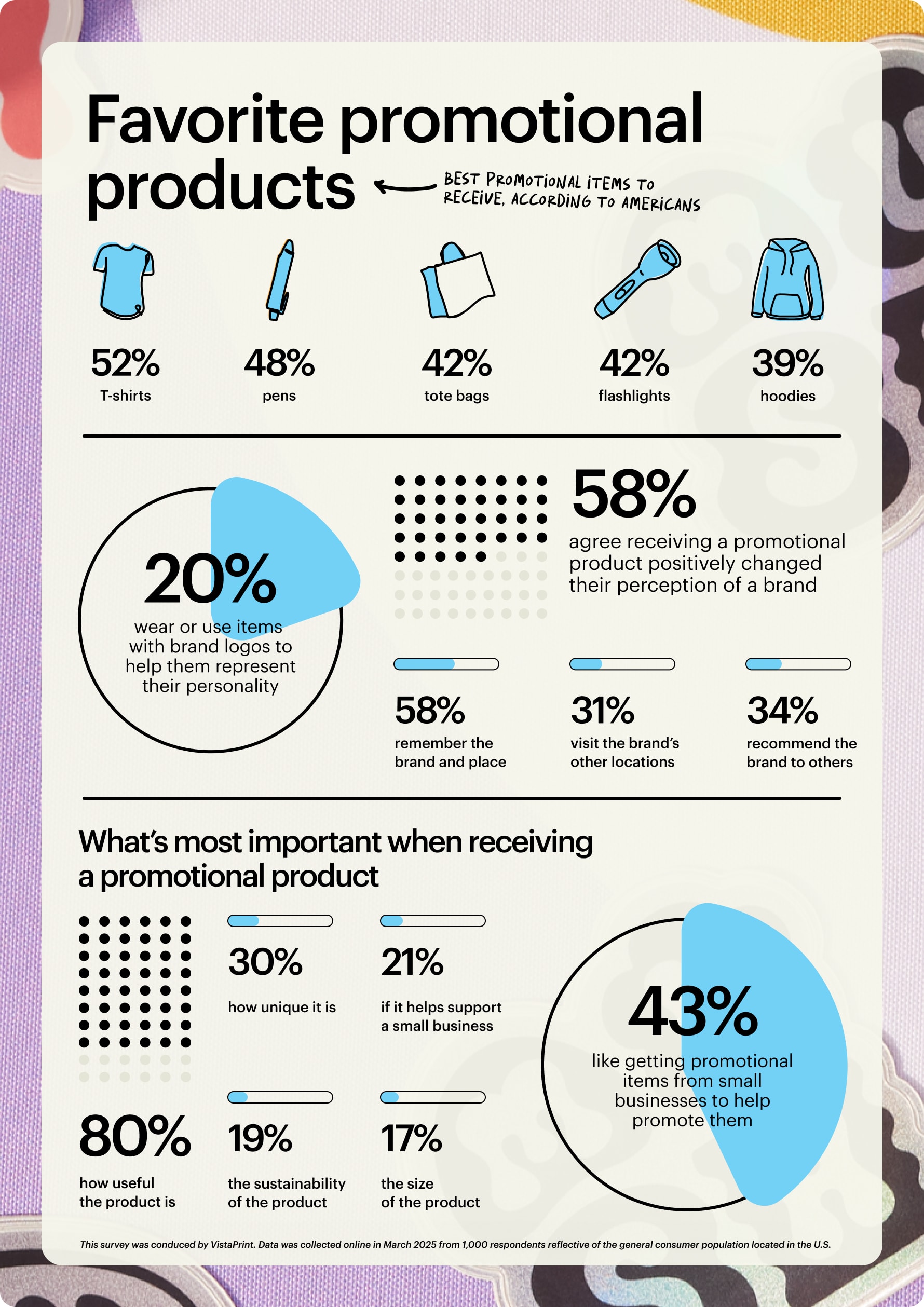
When printed materials and promotional products work together, one supports the moment, the other extends it.
During the event: How to connect with customers at small business events
Once the event starts, there’s little left to adjust. You’re working with the setup you planned and the tools you brought. From this point on, success depends on how well you engage people in real time.
7. Attract customers by creating moments that make people stop
A strong booth design helps people notice your business, but getting them to pause is a whole different challenge. Most attendees keep moving unless something gives them a reason to slow down.
Start with quick, low-effort interactions. Anything people can try without committing time or attention lowers the barrier to stopping:
- Offer product samples that can be picked up and tested in seconds.
- Run short demos that show the product in action without a full explanation.
- Create “try-it” moments where people can engage without needing instructions.

Movement helps too. A static booth fades into the background, while visible activity signals that something is happening:
- Prepare or assemble products in front of people.
- Rotate items on display instead of leaving everything fixed.
- Encourage light interaction that others can see from a distance.
How you invite people matters just as much. Keep it simple and low-pressure.
Instead of:
❌ “Let me tell you about this product.”
✅ Try:
- “Want to try this?”
- “You can test it here.”
- “Feel free to take a sample.”
The less effort it takes to engage, the more people will actually do it.
8. Start conversations that build relationships, not just sales
Once someone stops, what you say next decides whether they stay.
When it comes to small business events, the strongest interactions feel less like pitches and more like genuine conversations. Not eager to be pushed into something, people are more likely to come back when they feel understood.

To get context and ease into the interaction, start with open-ended questions:
- “What caught your eye about this?”
- “Have you been to this market before?”
- “What kind of products are you usually looking for here?”
Then listen. Let them talk and use what they share to guide the conversation. Bring in your story where it helps explain why your product exists or how it solves a specific problem.
Other than that, keep the focus on them – what they need, what they’re looking for, what would make this worth their time.
When it feels natural, introduce the next step. But instead of asking for contact details upfront, offer something useful:
- “If you’d like the event discount, you can scan here.”
- “We send a monthly product drop list if you want to join.”
- “You can enter our giveaway here.”
9. Turn conversations into lasting connections with simple digital touchpoints
As the conversation builds, give people an easy way to stay connected.
No matter what you do, try to keep things casual. For instance, a quick “scan and save” using event QR codes comes across like a natural next step, not a request.
- “If you want to see the full range later, you can scan this.”
- “You can scan here to get the event discount.”

These small prompts let people take action without breaking the flow. They can save your details, browse products or follow your brand in seconds. Used well, these touchpoints link your booth to everything that comes after.
Make sure the scan-and-save destination matches the moment. If someone shows interest in a product, send them straight to it, not a generic page.
Post-event follow-up: Turning event conversations into loyal customers
Once the event wraps up, the focus shifts from interaction to follow-through. The conversations are done, but the opportunity is still there. What you do next determines which connections turn into customers.
10. Organize and prioritize the contacts you collected
Start while the details are still fresh. A quick pass now saves time later and makes your follow-up more relevant.
To turn a long list of names into something you can actually use, first group your contacts by intent:
- Ready to buy
- Interested but need more information
- Potential partners or collaborators
- Local connections worth staying in touch with
Then, add a short note to each contact: what they asked, what they showed interest in, anything that stood out. Even a few words will help you pick up the conversation naturally later.
11. Follow up within 48 hours to stay top of mind
The faster you’re done with the previous step, the better, because the window is short. People move on quickly, especially after busy events.
As soon as you’re done categorizing leads, send them a short and specific follow-up:
- Send a short email that picks up where you left off.
- Connect on social media with a quick message.
- Share a product link or event-only offer.
Reference your conversation so the follow-up doesn’t feel generic.

12. Keep the relationship going with helpful content and offers
Most people won’t buy right away. Stay visible without pushing by focusing on being useful:
- Add them to your email list.
- Share product tips or short guides.
- Let them know about upcoming events.
- Offer a first-purchase incentive.
Here, a few well-timed touchpoints will do more than constant updates.
13. Review what worked so your next event performs even better
Finally, when both the main event and associated post-event tasks are over, take a step back and look at what actually drove results.
Focus on the signals that matter:
- How many leads you collected
- Email signups or social follows
- Sales during the event
- Purchases that came after
- Which materials or displays drew the most attention
Look for patterns, specifically what got people to stop, engage and follow up. Use that insight to adjust your setup, messaging and approach for the next event.
How different businesses can connect with customers at small business events
Now that the flow is clear, it helps to see how it plays out in practice. The exact approach depends on your business and the event type. Here are a few examples.
| Business type & event | Pre-event setup | Booth & engagement ideas during the event | Follow-up strategy |
|---|---|---|---|
| Handmade jewelry brand at a craft market | Print story cards, price tags and a vertical banner. Add a QR card linking to your online store. Promote your booth on Instagram. | Use tiered stands for visibility.Add a mirror for try-ons.Include a “Scan for 10% off” sign.Package purchases in branded boxes or bags. | Send a follow-up email with new pieces and a limited-time offer.Share upcoming market dates. |
| Skincare brand at a pop-up shop | Prepare ingredient cards, mini guides and loyalty cards.Use a branded table runner and clear product labels. | Offer quick consultations or a skin-type quiz.Hand out samples.Invite visitors to scan for tips and a discount. | Send a personalized email with product recommendations and a first-purchase code. |
| Food brand at a market or festival | Print a menu board, recipe postcards and flyers.Prepare branded napkins or packaging stickers. | Offer samples and keep them visible.Add a “Scan for recipes” sign.Display ingredient or sourcing details. | Send a recipe roundup and invite subscribers to follow your social channels. |
| B2B service business at a trade show | Print brochures, business cards and a backdrop banner.Create a QR card linking to booking. | Run a short demo or case study.Invite visitors to scan and book a call.Highlight results on posters or handouts. | Send a follow-up email, include a case study and suggest a short consultation. |
Take your event prep to the next level with our guide for how to prepare for a small business event.
Ready to connect with customers at your next business event?
The businesses that see real results know exactly why they’re there, come prepared and stay tuned in to every interaction. From the way people first notice the booth to what they take with them when they leave, nothing is left to chance.
Put the work in upfront, show up with materials that hold attention and treat every conversation as something worth continuing. When it all comes together, you don’t just leave with sales, but with people who remember you.
FAQs about connecting with customers at events
What branding materials work best for a pop-up shop?
Use materials that support quick decisions: clear price tags, small product signs and branded packaging. Add one strong visual element, like a table runner or vertical banner, to anchor your space.
What marketing materials should I bring to a trade show?
Bring materials that help people evaluate and follow up: a short brochure, business cards and a clear one-page summary of your offer. Skip anything that takes too long to read on the spot.
What makes a craft market booth stand out?
A booth stands out when people can understand it without asking. A clear product display, visible pricing and a setup that invites people to touch or try products usually draw the most attention.
How do I choose the right promotional products for an event?
Pick items that match how your audience lives and moves during the event. If it’s something they can use immediately or carry easily, it’s far more likely to stay with them after they leave.

