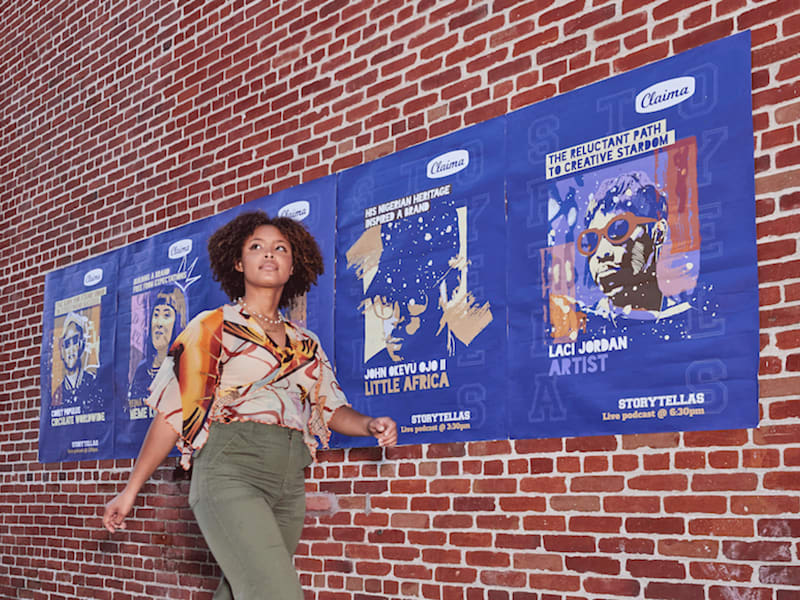
From jingle-filled TV ads to viral TikToks, advertising has taken quite a journey. But throughout the evolution of advertising, one constant has never failed to attract and entice, always staying—quite literally—in the public eye. Outdoor advertising, from posters to billboards, remains a popular and effective way to grab the attention of passersby, especially for small businesses looking to stand out locally without relying on digital ads. In this guide, you’ll learn how to harness the power of outdoor advertising to grow your brand, boost sales and support a wider marketing strategy.
- Outdoor advertising is any form of advertising that reaches people in public spaces outside their homes.
- The benefits of outdoor advertising include high visibility, cost-effectiveness and its ability to engage audiences quickly.
- Common types of outdoor advertising include billboards, posters, banners, flags, transit advertising, vehicle signage and murals.
- Keep the message simple, choose the right location, know your audience and design with creativity and context in mind.
- Always have a clear goal such as driving foot traffic, increasing local awareness or supporting a marketing campaign.
What is outdoor advertising?
Outdoor advertising, or out-of-home (OOH) advertising, refers to advertisements designed to reach people outside their homes. This includes everything from billboards and posters to digital displays and vehicle signage.
This type of business advertising is all about capturing attention in public spaces and places where people spend time, like on busy streets, at bus stops or while commuting. It has evolved alongside cities and technology, adapting to how and where people move through the world.
The goal of outdoor advertising is to put your brand message in front of as many people as possible. It’s all about maximizing visibility and making sure your brand stands out. Its effectiveness comes from the fact that outdoor adverts have huge reach—with bus shelter ads alone reaching 92% of London’s population per week.

Why is outdoor advertising useful?
It’s no secret that people generally don’t like being targeted by adverts. Many actively avoid digital ads, whether by skipping YouTube ads or using ad blockers. However, people spend a significant amount of time outside their homes, which means there are plenty of opportunities to capture their attention in a way they can’t avoid.
By placing ads on billboards, buildings and vehicles, you can deliver your brand message to diverse audiences without worrying about ad blockers. For small businesses, outdoor signage is particularly effective when used alongside digital marketing to reinforce the same message across physical and online touchpoints.
Key benefits of outdoor advertising:
- High visibility: Displayed in high-traffic areas, outdoor signage ensures your message reaches a broad audience.
- Cost-effective: Compared to other forms of advertising, outdoor ads are cheaper. OOH marketing costs significantly less than television ads, making it an affordable option for many small businesses.
- High engagement: Outdoor adverts, especially dynamic and digital ads, are more engaging than traditional advertising formats.
- Hard to ignore: Unlike TV, radio or internet ads, you can’t mute or skip outdoor ads. They’re in the physical world, so they’re noticed even when people are in a rush or distracted.
- Amplifies other channels: Advertising can amplify the reach of other marketing channels by up to 90% in a given week.

However, like any marketing strategy, outdoor advertising has its drawbacks:
- Limited space: Outdoor ads need to be simple and to the point, which can make it difficult to convey complex messages or provide detailed information.
- Limited durability: Outdoor ads are exposed to the elements, which can affect their visibility and lifespan, especially in extreme weather conditions.
- Competition: It can be challenging to make your outdoor ad stand out against other businesses’ unless it’s creatively designed or strategically placed.
- Limited targeting: While you can choose the location of your ad, outdoor advertising can’t target customers based on demographics or behaviors like digital marketing can.
The 7 most common types of outdoor advertising
Outdoor advertising has developed and evolved over the years, with new and innovative business sign ideas popping up all the time. Let’s take a look at some of the most common types of outdoor advertising.
1. Billboard advertising
When you think of outdoor advertising, chances are you’ll instantly think of billboards—large-scale ads found on busy streets and highways. The colorful, eye-catching designs are created for high visibility and instant clarity.
Billboards are widely recognised for their ability to reach large audiences quickly, particularly in high-traffic areas. Roadside billboard ads are great for visibility and drive action—with online brand searches increasing following exposure to billboards.

Source: A billboard design by Windmill Designer™ via 99designs by Vista
For small businesses, billboards don’t have to mean massive national placements. Local roadside billboards can still deliver a strong impact at a more accessible scale.
If you’re considering this type of outdoor advertisement, keep the message simple and impactful. Include:
- Your brand name and logo
- Product or service details
- Promotions or discounts
- Event announcements
- Location-specific messaging (e.g., “Only 3 blocks away!”)
- Time-sensitive offers or countdowns
Digital billboards are dynamic and modern ads, utilizing LED technology to display moving digital images, animations and videos. You’ll see digital billboards in busy city centers such as Piccadilly Circus, Times Square or Beijing Road. Digital billboards allow messages to change by time of day, location or promotion, making them useful for short campaigns, events or time-sensitive offers.
2. Posters
Posters serve a similar purpose to billboards, except they contain more information than billboards, as people can stop and read them. They’re often displayed on public walls, bus stops, store windows and areas with heavy foot traffic.

According to the 2024 Small Business Marketing Report by VistaPrint in partnership with Wix, posters and banners help 23% of consumers find small businesses. This makes posters a practical choice for small businesses looking to increase local visibility on a budget. Poster location is key—focus on high-traffic areas like bus stops or local events where people are likely to have the time to stop and engage with your ad.
To bridge the gap between traditional and digital advertising, and drive immediate online engagement, add a QR code to your poster. This can link to your website, a sign-up form, a price list or a product page. By linking your physical advertising to digital touchpoints, you increase conversions and make your outdoor advertising more effective.
3. Banners and flags
Banners and flags are one of the most flexible and cost-effective types of signs for small businesses. They’re easy to set up, highly visible and ideal for promoting time-sensitive messages such as sales, events or new openings.

Outdoor vinyl banners work especially well on storefronts, fences or temporary structures, where they can clearly communicate an offer or announcement from a distance. Their large format provides space for bold visuals and short, impactful messaging.
Flags, such as feather or teardrop flags, naturally catch the eye of passersby. This makes them effective in busy areas like sidewalks, entrances, car parks or event spaces, where standing out quickly matters.
For small businesses, banners and flags are most effective when they’re:
- Placed close to entrances or sidewalks.
- Designed with simple brand messaging that can be read at a glance.
- Used to support wider campaigns and offers seen online or in-store.
It’s important to install banners securely and safely. Learn how to hang banners to ensure they stay visible and professional-looking in different weather conditions.
4. Transit and mobile advertising
Transit and mobile advertising is placing ads on the exterior and interior of public transportation stations and vehicles such as buses, trains, taxis and company cars or vans. These are a popular choice of outdoor ads, as they reach people during their everyday routines or commutes. You’re guaranteed to have a regular audience to target and there’s plenty of time for them to engage with and read your content.
Mobile advertising includes vehicle signage such as car decals, door magnets, branded vans and even people wearing branded T-shirts. These mobile ads travel across areas, reaching a wide and diverse audience. And as many Americans spend many hours in a car, mobile advertising can be cost-effective, especially if you own a company vehicle. Car door magnets and decals are especially popular with small service-based businesses, such as trade, catering and local delivery companies, turning everyday travel into brand exposure.
For small businesses, transit advertising works best when paired with opening hours or a limited-time offer.
Transit and mobile outdoor advertising comes in several formats, such as:
- Car decals or branded vehicles, where ads are placed on personal or commercial vehicles.
- Mobile billboards displayed on trucks or vans, and driven through high-traffic areas.
- Planes flying banners, often at events or large gatherings.
- Branded buses or taxis with ads on the sides or windows, increasing brand visibility in urban settings.
- People carrying signage or wearing branded clothing in areas with heavy foot traffic.
Mobile advertising can have a significant impact. Studies show that mobile advertising can deliver stronger recall thanks to their movement and visibility across multiple locations.
5. Window decals and A-frame signs
Window clings, decals and A-frame signs are highly effective forms of signage for small retail businesses because they work right at the point of decision, where customers are already nearby and ready to act.
Window decals are ideal for displaying opening hours, promotions, seasonal messages or brand visuals without taking up sidewalk or floor space. Because they stick or cling to your windows, they attract attention without blocking customers from seeing inside. This helps to create a strong connection between outdoor advertising and the in-store experience.

A-frame signs are perfect for sidewalks, pavements and entrances. They’re easy to update and move, and are especially useful for cafes, salons and retailers that rely on foot traffic. A clear message like a daily special, limited-time offer or directional cue can encourage potential customers to stop and walk in.

For the best results, your window decals and A-frame signs should work together with your wider retail store signage, reinforcing consistent branding and messaging across your storefront.
6. Wallscapes and murals
Wallscapes and murals are a more artistic approach to outdoor advertising often found in urban areas, typically seen on the side of buildings and large walls. These creative displays can transform an ordinary wall into an outdoor ad space, blending art with advertising in a memorable way that catches eyes, captures attention and engages passersby, converting them into customers.
7. Digital out-of-home advertising
Digital out-of-home (DOOH) advertising uses digital screens in public spaces to show ads that change based on location, time of day or audience. This allows businesses to display relevant messages in specific places, helping ads feel timely and engaging.

Source: Digital outdoor advertising design by artomoro ™ via 99designs by Vista
While large-scale DOOH is often associated with bigger brands, smaller businesses can still benefit through local digital screens with flexible short-term placements.
An innovation in digital out-of-home advertising is the use of dynamic creatives—ads that automatically adapt their content based on live data inputs. This means that a single ad template can display different messages depending on factors like weather, traffic conditions or local events. For example, a fast-food chain can promote hot coffee on cold days and iced beverages during heatwaves, all managed through automated systems. This level of personalization not only grabs attention but also drives higher engagement and return on investment.
How to create effective outdoor advertising
Effective outdoor advertising involves creativity and strategy. Here are some key elements to consider when creating outdoor business signs.
Simple yet eye-catching design
People will only have a few seconds to absorb your message, so simplicity is key. Overcomplicating your outdoor ad can dilute its impact. The key to outdoor advertising is a short and clear message, paired with striking visuals. Avoid cluttering your design with too much text or details and focus on what’s important.
Check out our guide to signage design to help communicate your brand message effectively in seconds.
Context is key
The context in which your ad will appear significantly impacts its effectiveness. Consider:
- Size: How large does the ad need to be to stand out in its environment? Find out more about banner sizes in our guide.
- Backdrop: What’s the environment surrounding your ad? Does it blend well or stand out enough?
- Lighting: Is the area well-lit? If not, you may need to use brighter colors or different materials.
- Proximity to viewers: Will people be close enough to read and engage with the ad? For example, a billboard on a highway will need larger fonts and simpler images than a poster on a street corner.
Answering these questions helps determine design elements such as font size, color contrast and image dimensions, so your outdoor ad’s message comes across clearly, no matter where it’s displayed.

Know your audience
Effective outdoor advertising is all about resonating with the target audience. To create ads that connect, you need to understand your audience’s demographics, needs, motivations and behaviors so you can tailor your ad’s design and message accordingly. For example, a sign targeting busy professionals might use a minimalist design with an emphasis on convenience, while one aimed at families could be more colorful and playful.
Explore our list of creative small business sign ideas for inspiration.
Consider the location
Placement is crucial to the success of your outdoor ad—its visibility and relevance to your audience are everything. For example, if you’re selling premium steaks, don’t put your billboard outside a vegan restaurant.
Choose a location where your ad will be seen by your target audience at the right time. High-traffic areas near public transport hubs or popular landmarks can help boost engagement.
Apply consistent branding
Outdoor ads should feel instantly recognizable as part of your brand, using colors, fonts and tone of voice consistently across outdoor signs, flyers, packaging and digital channels. A consistent brand identity builds familiarity, and over time, that familiarity builds to trust. The more your audience sees your brand’s signature style, the more likely they are to recognize it, connect with it and choose you over competitors.
The best fonts for signs are easy to read, but still aligned with your brand identity.
Utilize tech
Incorporate interactive elements using QR codes, integrating social media or adding dynamic content that changes based on real-life factors such as the weather or the time of day.
Track QR scans, promo codes or landing page visits to measure ROI and understand how outdoor advertising impacts conversions.
Quality outdoor business sign ideas
The right outdoor business sign can catch the attention of passersby, increase brand recognition and drive foot traffic. Let’s look at a few outdoor advertising ideas that work well for small businesses.
A food, cafe or restaurant business
A local cafe, restaurant or food business might use posters in windows, paired with sidewalk A-frame signs outside its store location, to promote a deal or special. This works because it reaches people when they’re nearby and deciding between options. Clear pricing, simple messaging and strong visuals help drive foot traffic, while repeated exposure builds local brand recognition over time.
Service-based business
A trades business, like a plumber, electrician or cleaning company, can use branded van or car decals as a form of mobile advertising. Every journey becomes an advertising opportunity, helping the business reach multiple neighbourhoods as they drive from job to job, without ongoing costs. This type of advertising builds familiarity and trust, as people regularly see the brand in their area and associate it with a reliable local service.

Retail or lifestyle brand
A boutique, gym or salon might use window posters or flag banners with bold visuals and minimal text to communicate its brand personality. These types of outdoor ads are effective because they stop people in their tracks and encourage them to take notice. Visually striking or photo-worthy signage designs can also prompt people to take pictures and share them on social media, extending the reach of your ad and brand.
Embrace the power of outdoor advertising
As advertising continues to evolve, outdoor ads remain a fantastic tool for businesses looking to extend their reach. From posters to digital billboards, outdoor advertising gives marketers and businesses the opportunity to get creative and design signage that catches eyes and attracts custom.
Outdoor advertising FAQs
What are some outdoor business sign ideas for small businesses?
Posters, billboards, vehicle signage and murals can boost visibility and engage local audiences. Make them something passerbys want to interact with, for example, inspiring them to take a picture, scan a QR code or use a time-sensitive discount.
How does outdoor advertising fit into a wider marketing campaign?
Outdoor advertising works best when it supports other channels, such as social media, email and in-store marketing. This way, it can be used to reinforce the same marketing message across different touchpoints.
What other marketing materials should match my outdoor ads?
Flyers, brochures, business cards, packaging and digital marketing should all reflect the same branding as your outdoor adverts to build recognition and trust with your audience.
How can small businesses stay on brand with outdoor advertising?
Use consistent colors, logos and messaging, and design your signage as part of your overall brand identity.

