Even in our increasingly digital world, offline marketing remains vital. A sizable 64% of consumers prefer to shop in person, and 58% of small business owners rely on business cards, according to Vista’s 2025 Small Business Marketing Guide. That’s exactly why offline marketing tactics matter for your small business, especially at a local event.
From farmers markets and street fairs to charity runs and business expos, local events create real-world opportunities to get seen, remembered and talked about. In this article, we’ll explore 10 ways small businesses can market at events to:
- Show up more effectively in person
- Build local visibility and recognition
- Create stronger connections that can lead to sales
Whether you’re a boutique shop, a cozy cafe or a burgeoning startup, there are local and event marketing opportunities abound. If you’re looking for event marketing for small business owners that feels practical and doable, this guide is for you.
- Offline marketing tactics work best when they focus on presence, not just promotion.
- Different event types call for different physical materials, offers and signage.
- Strong event marketing for small businesses relies on practical assets like banners, table displays, printed handouts and useful swag.
- The right offline setup can build sales, leads, goodwill or partnerships depending on the event.
- Simple tracking tools like event-only vouchers, unique URLs and offer codes make offline ROI easier to measure.
What is local marketing?
Local marketing means showing up in the real world with physical materials, a clear presence and a plan adapted for the kinds of community events your business wants to be part of. Unlike broad-scale marketing aimed at global or national audiences, local marketing targets individuals within your immediate community, whether it’s locals or visitors passing by your brick-and-mortar store.

When marketing locally, you’re not aiming to be the talk of the town in Tokyo or London. You’re focused on becoming the go-to spot for people just around the corner. According to the Vista 2025 Small Business Marketing Guide, consumers are shopping at small businesses 39% more than the previous year in order to support local enterprises. This makes local marketing tactics that much more valuable.
Why is local marketing important to small businesses during events?
Events give small businesses a rare advantage: people are already out, already engaged and already in discovery mode. When you show up well offline, you don’t have to interrupt someone’s scroll or fight an algorithm. You just need to make a strong impression in the moment.
The main benefits of local event marketing are:
- Increased foot traffic: Local marketing activities during events attract more people to your storefront, increasing potential customers.
- Competitive edge: By focusing on local marketing during events, small businesses differentiate themselves from larger competitors and stand out in the crowds.
- Opportunities for partnerships: Events provide a prime opportunity for small businesses to collaborate with other local vendors or organizations, expanding their reach within the community by creating mutually beneficial partnerships.
- Sales boost: With increased visibility and community engagement, local marketing efforts during events can boost sales and revenue for small businesses, capitalizing on the heightened interest and enthusiasm of event attendees.
It also gives you a chance to find your brand’s target audience in a much more human way: by seeing who stops, what questions they ask and what they actually pick up. That makes events one of the best ways to promote your small business when you want visibility that feels immediate and local.
10 offline marketing tactics to boost your small business
The right offline marketing strategies can help you turn event buzz into real-world traffic, giving people more reasons to notice your business, stop by and come back after the event ends.

Local offline marketing tactics for large events
Not every event needs the same setup. A weekend market, a charity 5K and a business expo may all count as local events, but the way you show up at each one should look very different.
1. Build your setup around the event type
A smart starting point is to match your goal to the event type. Your goal will shape everything from signage to handouts.
- Markets and festivals are great for sales and lead generation. Applicable goals are sales and having a booth that’s easy to browse.
- Fundraisers and charity runs are better for visibility and goodwill, so good goals are brand sentiment and community.
- Showcases and expos are ideal for networking, credibility and B2B conversations. Make your goal to start conversations and book follow-ups.
If you’re working with a limited budget, your goal matters even more. It helps you avoid wasting money on generic materials and focus on inexpensive marketing ideas that match the audience and setting.
2. Use the right signage hierarchy
One of the easiest ways to improve your physical presence is to think in layers. Different signs do different jobs.
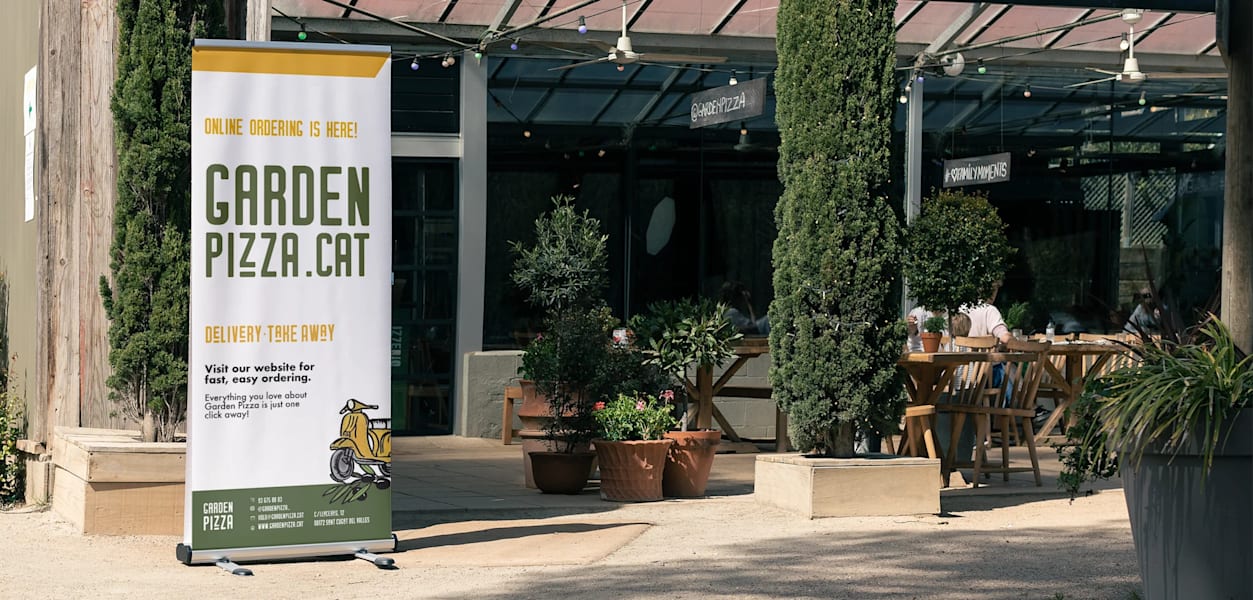
A-frame signs are great for sidewalk traffic and quick directional messaging. Vinyl banners help people spot you from farther away, especially outdoors. Table runners and tablecloths make your setup look clean and professional at close range. Market stall signage should tell people what you sell in seconds.
The goal is simple: make it easy to notice you from a distance, understand you up close and remember you after the event.
3. Make markets and festivals feel shoppable
Markets and festivals are one of the clearest opportunities for offline selling. People are already in browsing mode, so your booth should feel easy, inviting and worth stopping at.
Start with the basics: Use clear market stall signage, outdoor banners people can read from a distance and branded packaging that makes even a small sale feel polished. Then think about flow. Can people understand what you offer without asking? Can they pick something up, compare options and buy quickly?
Useful swag works well here too. Tote bags, paper bags, branded sleeves or takeaway packaging help your brand keep moving through the crowd instead of staying at your table.

4. Use event-only offers people can actually carry away
A useful offline play here is a hot drop exclusive printed voucher. Offer something people can redeem later online or in-store, and print the event name or a unique code on it. That gives you a simple way to track offline-to-online conversion without relying only on a QR code. Discounts still work, but they work better when they feel tangible. Instead of a vague sign that says 10% off, give people something physical to take with them.
Printed vouchers, bounce-back cards and event-only coupons are practical because they keep working after the event ends. They also help you measure which events actually drove visits or sales. The more specific the offer, the better. “Free drink with this card before Monday” is stronger than “Visit us sometime.”
5. Choose useful swag, not throwaway trinkets
A lot of branded giveaways get picked up and forgotten five minutes later. A better approach is to choose items people will genuinely use in that setting.
At farmers markets or festivals, customers can use tote bags to carry their purchases. At charity runs, water bottles, cooling towels or T-shirts are more relevant. At business events, branded notebooks or premium folders are more useful for attendees than novelty items.
The rule is simple: pick swag with utility. If it helps someone during the event or becomes part of their routine afterward, your brand stays around longer.
6. Sponsor quietly at fundraisers and charity runs
Not every event calls for a sales booth. At fundraisers, charity walks and community races, a quieter presence can be more effective.
One smart offline move is silent sponsorship. Instead of pushing for a full booth, sponsor the water station with branded cups, support the check-in table with signage or provide finish-line swag such as towels or shirts. You still show up physically, but in a way that feels useful and community-minded. That kind of presence can build strong brand sentiment because it feels supportive rather than salesy.
7. Bring professional materials to showcases and business expos
Business expos and showcases are a different kind of event. Here, your materials need to do more of the talking for you.
A business card still has a place, but it shouldn’t be the only thing you hand out. Brochure holders, premium rack cards and neatly printed one-pagers can explain your services, packages or tiers much more clearly. This is especially useful when your business needs a little more explanation than a quick pitch can give. A strong printed takeaway helps people remember what you offer once the event is over.
Local offline marketing tactics for smaller events
You don’t need a huge event to make offline marketing work. Smaller community events often give you more time, more conversations and a better chance to stand out.
8. Add a simple physical game or raffle
Interactive hooks do not need to be expensive or digital. In fact, some of the best ones are refreshingly low-tech. A spin-the-wheel game, prize draw or business card raffle gives people a reason to pause and start a conversation. It can also help you collect contact details without relying on a tablet or screen. Keep the mechanism simple, the prize relevant and the entry process easy.
9. Create a booth people can understand in five seconds
A good booth is clear before it is clever. People should be able to glance over and understand what you sell, what the price point is and what to do next.
That means readable signs, an uncluttered table, a clear display of products or printed materials and one obvious call to action. Too many props, too many messages or too many tiny signs can make even a great business easy to ignore.

10. Connect your offline materials to online follow-up
Offline and online work better together. Your printed materials should make that handoff easy, whether that means a social handle on your signage, a hashtag on packaging or a printed voucher that leads people to a landing page later. That way, your offline presence does not disappear when the event ends. It becomes the start of an ongoing relationship.
Bridge the gap between offline and online local marketing
The strongest offline marketing tactics do not try to copy digital marketing. They do something digital cannot: they let people experience your business in person. A banner can catch a glance. A printed voucher can be tucked into a pocket. A tote bag can travel through the neighborhood all afternoon.
That physical presence is what makes event marketing for small businesses so useful. When your materials are chosen with intention and matched to the event, they do more than help people find you. They help people remember you.
Offline marketing tactics FAQs
What are the most effective offline marketing tactics for a limited budget?
The most effective low-budget tactics are usually the simplest ones: clear signage, printed flyers or vouchers, one useful branded giveaway and a booth setup that is easy to understand from a distance. If your budget is tight, spend on visibility first and extras second.
How do I choose the right local event for my small business?
Start with your goal. If you want direct sales, markets and festivals are usually a good fit. If you want goodwill and community visibility, fundraisers and charity events make sense. If you want partnerships, leads or B2B conversations, business expos and showcases are often stronger.
What are the essential event marketing materials I need to bring?
Most small businesses need a strong sign, a clean table setup, a simple printed handout, branded packaging or takeaway material and one clear call to action. Depending on the event, that might also include outdoor banners, brochures, rack cards, vouchers or practical swag.
How can I connect my offline tactics to my online social media presence?
Add your social handle to signage, packaging and print materials so people can follow you later without guessing where to find you. You can also create an event hashtag, encourage customers to tag your business or offer a printed incentive that points them to a specific page or post-event offer online.
How do I track the ROI of event marketing for small businesses?
Use event-only vouchers, unique discount codes, printed offers tied to a specific event or landing pages created just for that audience. You can also track how many sign-ups, redemptions, inquiries or in-store visits came from the event. The simpler the tracking method, the more likely you are to use it consistently.

