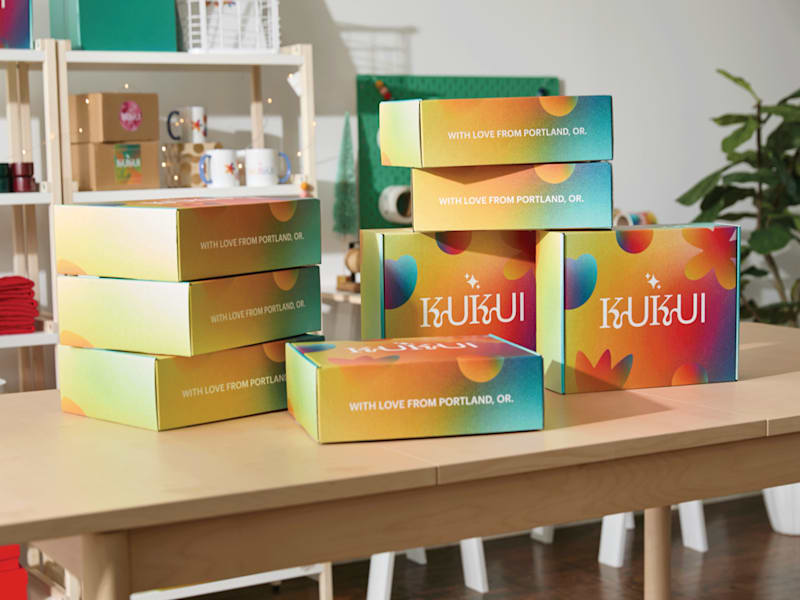
E-commerce packaging is the outer container and protective materials that get an online order safely to your customer. Choose well, and you can reduce damage, control shipping costs and make your brand memorable before the product even leaves the box.
For small business owners, the challenge is balancing a lovely presentation with a sensible budget. Nobody wants a shipping bill that costs more than the goodies inside. The best packaging starts with protection, fits efficiently and adds personality where it counts.
This e-commerce packaging guide compares materials, explains dimensional weight, walks through practical durability checks and shows how to build an unboxing experience that earns its keep.
- Poly mailers usually cost less for soft goods, while corrugated boxes give fragile products the rigid protection they need.
- Box size can increase your billable shipping weight, even when the product itself is light.
- Drop-test complete packages before ordering supplies in bulk, using DIY checks to spot weaknesses.
- Custom tape, roll labels and inserts can give plain packaging a recognizable look without a major investment.
- Track packaging costs, damage rates and repeat purchases to see whether your upgrades pay off.
Understanding e-commerce packaging materials (and when to use them)
E-commerce packaging materials combine an outer container with internal cushioning to protect products from knocks, crushing and movement.
The three main types are corrugated boxes, poly mailers and padded envelopes:
| Packaging type | Primary material | Choose it when shipping | Main limitation |
|---|---|---|---|
| Poly mailers | Lightweight polyethylene | T-shirts, fabric accessories and other flexible, non-fragile goods | No cushioning or crush protection |
| Corrugated boxes | Fluted paperboard between flat liners | Glassware, boxed cosmetics, heavier goods and multi-item orders | More weight and storage space, cushioning still matters |
| Padded envelopes | Paper or plastic with a cushioning layer | Small, sturdy accessories that need protection from scuffs and light knocks | Limited resistance to crushing or bending |
When should you use poly mailers versus corrugated boxes?
Choose a poly mailer if compression won’t damage the product or its presentation. Choose a box if the item can break, bend or lose its shape. A padded envelope suits sturdy products needing a little cushioning, but fragile electronics and delicate jewelry may need a protective inner box or a different shipping container.
Plain poly mailers are usually the cheapest e-commerce shipping container for suitable soft goods because they use little material and add little weight. Compare the complete packed shipment, though: a cheap bag stops being a bargain if it leads to replacements.

Understanding box strength and fluting
An Edge Crush Test (ECT) rating measures corrugated board’s resistance to edgewise compression in pounds per linear inch. Common ratings include 32 ECT and 44 ECT; the higher number indicates greater edge-crush resistance. These numbers aren’t the finished box’s maximum load. Size, construction, humidity and cushioning also affect performance, so confirm the supplier’s recommended capacity.
Fluting is the wavy paper layer inside corrugated board:
- E-flute: Approximately 1/16 inch thick, with a smooth surface suited to detailed printing and compact mailer boxes.
- B-flute: Approximately 1/8 inch thick, offering a thicker profile for protective boxes and inserts.
Custom printed mailer boxes combine structure with a premium presentation. Start your product packaging design with the product’s protection needs, then choose graphics that suit the space.
How box size dictates carrier shipping costs
Dimensional (DIM) weight is a calculated shipping weight based on the space a package occupies.
When DIM pricing applies, carriers generally compare dimensional weight with actual packed weight and charge using the higher figure.
DIM weight in pounds = exterior length × width × height in inches ÷ carrier divisor
- Pack and seal the order, including every insert and protective layer.
- Measure the outside at its widest points and apply the carrier’s rounding rules.
- Multiply the dimensions, divide by the applicable divisor and round the DIM result up to a whole pound.
- Compare it with the actual packed weight, using the service’s weight increments.
Know your carrier’s rules
| U.S. carrier/service | Standard DIM divisor | What to check |
|---|---|---|
| FedEx | 139 | Service rules and any account-specific terms |
| UPS Daily Rates | 139 | Your rate type and shipping agreement |
| UPS Retail Rates | 166 | Whether retail rates apply to your purchase |
| USPS Ground Advantage | 139 | DIM applies above 1 cubic foot, or 1,728 cubic inches |
USPS changed its divisor from 166 to 139 in July 2026 and now rounds DIM measurements up to whole inches. Older guides may show the previous rule. Check current service terms before buying labels.
For lightweight USPS Ground Advantage parcels, weight-based prices use 4-, 8-, 12- and 15.999-ounce tiers, followed by whole-pound increments. Weigh the packaging too: an extra insert can push an order into the next tier.
A smaller box, a smaller billable weight
Imagine a mug shipment weighing 2 pounds, including packaging, using a service that applies a 139 divisor at both sizes:
| Packed exterior size | DIM calculation | Rounded DIM weight | Billable weight |
|---|---|---|---|
| 12 × 12 × 12 inches | 1,728 ÷ 139 = 12.43 | 13 pounds | 13 pounds |
| 8 × 8 × 8 inches | 512 ÷ 139 = 3.68 | 4 pounds | 4 pounds |
That’s a nine-pound reduction in billable weight, provided the smaller box still accommodates adequate cushioning. USPS’s volume threshold means this example won’t produce the same DIM charges with Ground Advantage.
To estimate savings, quote both sizes for the same service and destination. For example, if those quotes are $16 and $11, you save $5 per order, or $500 across 100 orders. These are hypothetical prices, not carrier quotes.
To find the right fit, measure the wrapped product and allow for the cushioning it needs on all six sides. Order a sample before committing; don’t squeeze a fragile item into a smaller box just to lower the bill.
Group your best-selling products into size tiers and start with three or four box sizes if that covers your orders. Use internal dimensions to check fit and packed external dimensions for shipping calculations. The right shipping containers leave room for protection without yards of unnecessary filler.

How to test the durability of your shipping packaging
Packaging durability testing checks whether the complete product-and-package combination withstands handling without damage.
ISTA develops professional transit tests covering hazards such as shock and vibration. Its procedures use specific sequences and drop heights that vary with the package. A DIY three-foot drop check is an early screening exercise inspired by those principles, not an ISTA test or certification.
For a lightweight, nonhazardous parcel you can handle safely:
- Pack a representative order. Use the exact box, cushioning, tape and inserts planned for customers.
- Record the setup. Photograph it and note the materials, packed weight and dimensions.
- Choose a clear test area. Use a hard, level surface that won’t be damaged. Keep feet clear and wear closed-toe shoes.
- Try several orientations. From about three feet, drop the package onto its base, top, long side, short side, one corner and one edge.
- Inspect and improve. Check the product’s appearance and function, along with seams, cushioning and movement. Stop if the package splits or the contents become exposed.
If something breaks, more tightly packed filler isn’t automatically the answer. Fragile items need cushioning that absorbs impacts and prevents contact with the walls or neighboring products. Tissue adds presentation; it isn’t dependable shock protection. Try suitable kraft paper cushioning, protective wrap or fitted corrugated inserts, then retest with a fresh package.

If seams open, check tape selection and application. Reinforced water-activated custom tape can bond to corrugated surfaces and make opening attempts visible. Follow your carrier’s tape requirements, which can differ.
Repeat checks after changing materials and monitor real deliveries. Use a packaging test lab when products are particularly fragile, expensive or require documented performance testing.
Designing a profitable unboxing experience
An unboxing experience is the sequence of packaging details a customer encounters while opening an order.
Give each detail a job:
| Packaging detail | Customer benefit | Business goal |
|---|---|---|
| Recognizable logo and colors | Connects the delivery to your store | Brand recognition |
| Neat, secure product arrangement | Makes the order feel carefully prepared | Confidence in the purchase |
| Useful insert with one clear action | Helps the customer enjoy or reorder the product | Engagement and retention |
Start with affordable branding
A plain kraft or white box can look polished with a well-placed logo label and coordinated tape. Keep colors and typography consistent with your website, and put decoration where customers will see it.
Here’s how VistaPrint options can support a gradual upgrade:
| Your next step | Product option | Starting quantity |
|---|---|---|
| Brand standard boxes | Custom roll labels | 50 labels |
| Add branded sealing | Water-activated packaging tape | 1 roll |
| Personalize apparel shipments | Custom poly mailers | 100 mailers |
| Test a premium presentation | Custom mailer boxes | 1 box |
Minimums depend on the selected product and options, so check before ordering.
As sales grow, try custom interior box printing: a cheerful greeting, a bold pattern or a short brand story creates a reveal without needing extra layers. Order a sample to check color, fit and the overall effect. Keep the product as the star.
Connect the package to the next purchase
A “digital bridge” connects physical packaging to a useful online destination. Add a QR code to a packaging insert with one clear invitation:
- Encourage another order: Link to a relevant offer, such as 15% off a refill.
- Build confidence: Share a setup video or product-care guide.
- Invite participation: Ask for an honest review or an unboxing photo, and get permission before reposting customer content.
Explain what scanning does, include a short web address and test the printed code on several phones. Send people straight to the promised destination. These small touches support wider customer retention strategies.
Measure whether the upgrade earns its keep
Use a dedicated landing page or offer code to track visits and redemptions. Compare similar groups receiving standard and upgraded packaging, allowing the same time for repeat purchases. Scans show interest; incremental profit tells you whether the investment works.
For example, an extra $0.40 across 100 orders costs $40. If the upgrade generates four additional orders contributing $15 each after discounts and variable costs, that’s $60 in added contribution and $20 after packaging costs: a 50% return. This is an illustration, not a promised result.
Also track damage rates, packing time and packaging weight per order. Removing an unnecessary layer can reduce material use while making fulfillment quicker. For sustainability, record supplier-confirmed recycled content and give customers disposal instructions suited to the materials. Check local recycling options before making broad recyclability claims.

Build a packaging strategy that grows with you
A scalable packaging strategy balances protection, shipping costs and presentation as your order volume changes.
Start with a few reliable sizes, test representative orders and use low minimum order quantities to keep cash available. Review your packaging design cost alongside postage, packing time and replacement costs before committing to bigger runs.
Customer feedback will show where the next upgrade matters. Perhaps it’s a sturdier insert, a better-fitting mailer or a thank-you card that makes reordering easy. You don’t need every finishing touch on day one. Build a package that delivers on your brand’s promise, then improve it as you learn.
E-commerce packaging FAQs
How can I make packaging easier to reuse for returns?
Choose mailers with a second adhesive strip or boxes that can be reopened and securely resealed. Include clear return instructions and ask customers to retain protective inserts. Packaging should only be reused if it remains strong enough for another journey.
How should I store unused boxes and mailers?
Keep supplies clean, dry and off the floor, away from direct sunlight and large temperature swings. Store boxes flat where possible and rotate older stock forward. Follow supplier storage guidance, especially for adhesive products that may have a recommended shelf life.
Where should I put the shipping label?
Place it flat on a large, smooth outer surface, with the address and barcode clear. Avoid seams, edges and corners that could distort it. Remove or cover old shipping labels, and keep decorative stickers away from routing information.
Should I include a packing slip or gift receipt?
A packing slip helps customers check multi-item orders and identify anything missing. Include the order number, item list and support details. For gifts, offer a version without prices and send the buyer’s receipt digitally so the surprise stays intact.
How can I make packaging more accessible?
Look for easy-grip opening tabs, readable instructions and closures that don’t demand lots of hand strength. Test opening with people who have different dexterity needs. Thoughtful, frustration-free packaging should preserve transit protection while making the product easier to reach.

